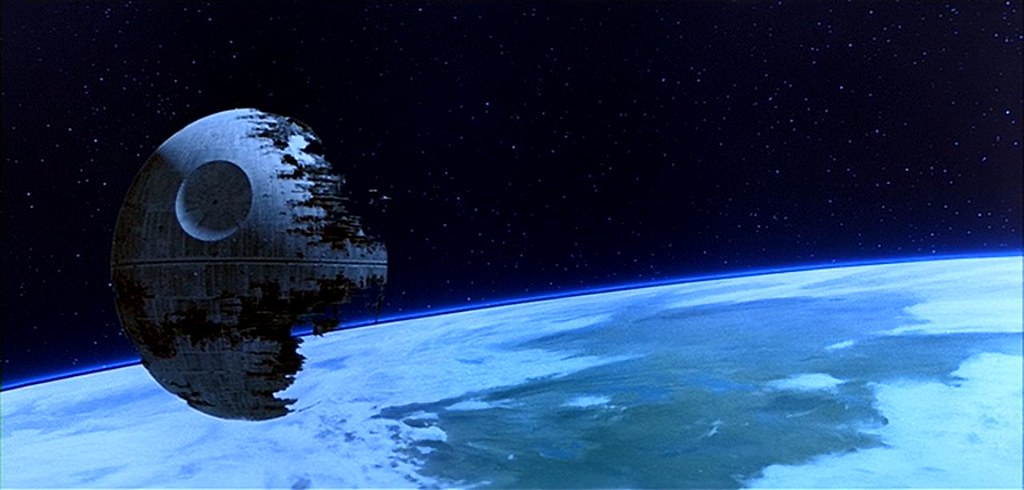
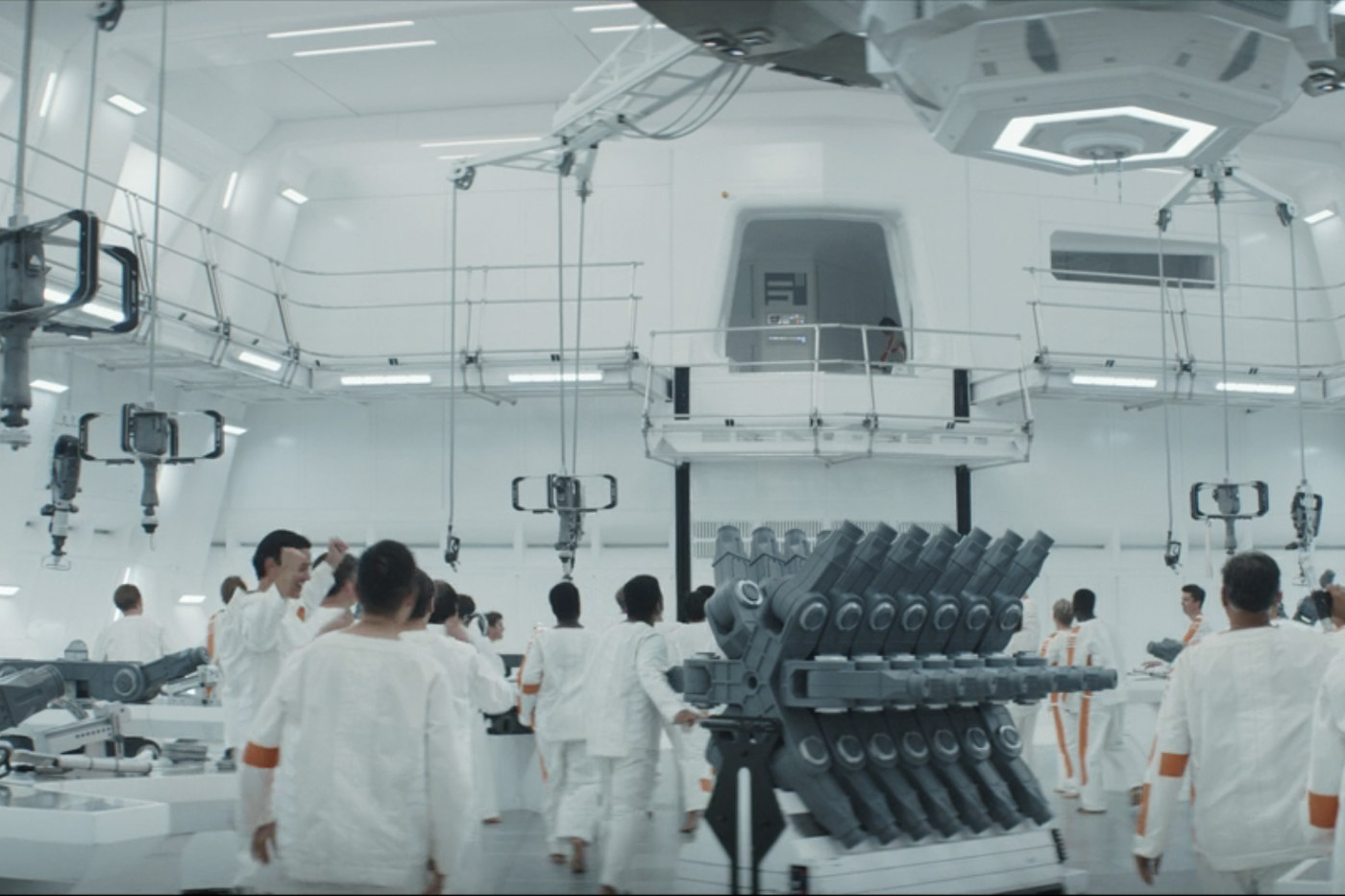
The Season One finale of Andor cemented the series as one of Star Wars’ best projects to date and almost certainly the most complete of its offerings on Disney Plus. The episode also featured a post-credit scene that clarified a much-theorized plot point from earlier in the season as it showed to what end the parts being made in the prison on Narkina 5 were being used: to assemble the first Death Star. While that scene makes for yet another interesting connection to the events of Rogue One, namely why Cassian was willing to give his life to ensure the Death Star plans got to the Rebels after potentially learning he helped build the weapon, it also may end a long-standing debate first put forth nearly 30 years ago about the second Death Star.
In Kevin Smith’s 1994 film Clerks, the film’s deuteragonists, Randal and Dante, enter into an ethical debate about the destruction of the second Death Star as seen in Return of the Jedi. Though DS-2 was, as the Emperor put it, “fully armed and operational”, it was still under construction when it was destroyed by Lando Calrissian. As Randal explained to Dante in Clerks, something about the attack “just never sat right” with him. As Dante questions him, Randal reveals that he believes a project of that magnitude would take more manpower than even the Empire could muster, meaning they must have brought in independent contractors to finish the job. Assuming they all died in the explosion, Randal believes they were innocent “casualties of a war they had nothing to do with” but Dante is not so sure. Though he doesn’t express it, Dante seems to believe that anyone willing to build a Death Star isn’t innocent. The debate is famously settled when a third party comes in and, while paying for his coffee, tells the pair that any real contractor thinks with his heart and “not his wallet.”
The events of the post-credit scene of the season finale of Andor seem to render the debate moot. While Randal was likely correct in presuming that the Empire didn’t have enough manpower to build DS-2 so quickly, neither he nor Dante posited the possibility that the Empire simply employed droids. Given the fact that droids played an integral role in constructing DS-1, it stands to reason they’d play at least an equal role in the construction of DS-2 meaning that the number of innocent independent contractors who meet their doom at the hands of Lando. Maybe Smith can work the events of Andor into another film down the road.
Quentin Tarantino, the acclaimed creative behind indie megahits like Pulp Fiction and Reservoir Dogs, has been on a bit of a tear lately in regards to superhero cinema. A recent interview with the Los Angeles Times saw the director call filmmakers who work with Marvel Studios “hired hands“, and claim that modern auteurs like himself “can’t wait” for comic book movies to fail. Not long after, Tarantino continued his tirade to imply companies like Marvel Studios had killed the “movie star”, effectively making characters more famous than the actors who play them.
This is, of course, not a surprising stance for the famously old-fashioned talent to take, but it is unexpectedly harsh for someone with a long history of almost working on comic-based projects. Throughout his career, Tarantino has been attached to four separate superhero adaptations and has admitted to using comic-adjacent concepts as the basis for some of his released projects. Kill Bill, one of Tarantino’s seminal works, famously includes a comic-inspired monologue, and the director is known to have rows of superhero books stored in his home. He even recently revealed that Inglorious Basterds, another fan favorite from his resume, was heavily inspired by Marvel’s Howling Commandos line from the 1940s.
For what it’s worth, Tarantino does not seem to despise the idea of adapting comics. He once said that, in his 20s, the idea of making films based on his favorite superheroes was all he wanted to do, but that he’d since “grown out” of that phase and moved on to focusing on original concepts. It would appear that his true qualms with superhero adaptations stem more from their unexpected impact on the film industry, and his perception that they’re produced at a high rate with low quality. As such, it’s intriguing to look back on the films his name was once attached to, and ponder what could have been different in a world where Tarantino was among those who had left their mark on the history of superhero cinema.
Luke Cage: Hero For Hire
Perhaps the closest Tarantino ever came to actually making a Marvel movie. The Jackie Brown filmmaker spoke with MTV in 2013 and dropped the bombshell he had once actively attempted to get a Luke Cage: Hero For Hire film off the ground. He claimed the idea for the project came very early in his career after he completed production on his directorial debut, Reservoir Dogs. That puts Tarantino’s pitch somewhere around 1992, nearly a decade before Blade, Spider-Man, and X-Men put comic book movies back on the map, and a lifetime before Netflix’s Luke Cage series made the character a household name. At the time, Marvel Studios had not yet been created, so Cage’s film rights were among the countless of their kind being bounced from company to company. As it turns out, however, Tarantino nailed down their then-owner, and a potential star, in a strong effort to get Hero For Hire made:
After ‘Reservoir Dogs,’ I had considered doing a ‘Luke Cage: Hero For Hire‘ movie. Ed Pressmanowned it at that time and we talked about it. And I talked with Larry Fishburne about being Luke Cage and he really liked that idea.
Quentin Tarantino
In the same interview, Tarantino explained that Hero For Hire fell by the wayside when the idea for Pulp Fiction grabbed his attention. As time continued to slip by, Hero For Hire suffered a quiet creative death. Much later, in a 2020 podcast interview, Tarantino added that some of his geekier pals were to blame for the Luke Cage film’s demise. Apparently, they felt dramatic actor Laurence Fishburne was not suited for the title role and had pestered Tarantino about casting action star Wesley Snipes instead. Never a fan of being told what to do, the director said this back-and-forth “ruined the whole damn thing”, despite Cage being his “absolute hero” at the time. Ultimately, Tarantino said he felt like he “made the right choice” in committing to Pulp Fiction as his second feature.
Silver Surfer
Around the same time, after Reservoir Dogs and before Pulp Fiction, Tarantino is reported to have written a full-blown script for a film based on Marvel’s cosmic mascot, the Silver Surfer. What’s more, he supposedly brought the script to German studio Constantin Film, who owned the rights at that point. In the early 90s, several creatives saw the immense potential in a Silver Surfer adaptation, but most studios – Marvel included – felt there was no money to be made in Silver Surfer on the big screen. The visual effects required to bring a movie like that to life were considered too expensive, and as a result, every attempt to develop a cohesive film was shot down. This, unfortunately, included Tarantino’s treatment, which was supposedly around 500 pages long.
Green Lantern & Iron Man
Years later, after superhero films had gained steam but prior to the Marvel Cinematic Universe’s emergence, Tarantino was offered two separate major adaptations from big-name studios. Green Lantern and Iron Man, both in varying stages of development in the late 2000s, were pitched to the Django Unchained director by their respective producers as his first tentpole picture. Obviously, he passed on both. While Tarantino has never publicly commented on his opportunity to bring Iron Man to life, which came at a time before the involvement of Robert Downey Jr. or any of the factors that eventually made it a huge hit, it likely came to him in a scenario similar to what he described for Green Lantern:
I was offered the ‘Green Lantern’. Not since it’s been a script, but just like, ‘Hey we own the ‘Green Lantern.’ Would you like it?’
Quentin Tarantino
Again speaking to MTV, Tarantino conceded that, by the time Green Lantern and Iron Man arrived at his door, he had fully grown past his phase of wanting to adapt other people’s material. He elaborated, saying if he were to ever make a superhero film, it would have to be something entirely of his own design:
It wouldn’t be an existing comic book character. I’m a writer. I’d want to use my imagination and not have to fight with geeks’ memories of how this character should be and, ‘Oh, I cast an actor as opposed to a bodybuilder’ or it’s not as good as the way Neal Adams drew him.’ If I were to do something like that, I would want the fun of coming up with the superhero myself.
Quentin Tarantino
With only one film left in his 10-film career plan, Tarantino will likely never make a superhero movie. Unless, of course, he decided he wanted to contribute to the trend, and use his imagination to show the current crop of directors how he thinks it should be done.
Season One of Andor concluded with a bang. A series of them actually, as the people of Ferrix stood against the Empire in what could only be described as a revolution. The revolt may go down in the books as the first open act of defiance against the Empire, but as audiences already know, the Empire isn’t going down quite yet. In fact, it’s still building to its peak level of terror. To that end, the episode came with the first post-credit tag of the series which served as a chilling reminder that the worst from the Empire is yet to come.
Set deep in space, the tag shows a group of small droids shuffling around and installing some very familiar-looking components into a much larger assembly. As the camera pulls back, it’s revealed that the droids are putting together a layer of the Death Star’s Superlaser. Given Andor’s 5 BBY setting and the massive undertaking of assembling a station the size of the DS-1, its construction fits the timeline as well as many fan theories that have swirling about since Episode 8.
The Superlaser’s power came from the combination of 8 separate laser beams which were converged into the one massive, planet-killing beam that made the Death Star the most terrifying weapon in the galaxy. Though no details were given, it seems as though the droids are using the components to assemble channels for the individual beams.
Of course, the most chilling aspect of the post-credit scene is the realization that the components being installed were built by Cassian and his fellow inmates in the prison on Narkina 5. The tag adds context to so much of Andor, Rogue One and really any other projects that take place in the timeline prior to A New Hope. The prisoners at Narkina 5, a place that felt so incredibly oppressive, were working tirelessly and competitively to create the Empire’s most oppressive weapon.
For Cassian, coming to learn that he’d build part of the Death Star could go a long way in explaining his commitment to its destruction in Rogue One, where he’s willing to give his life to ensure the plans get to the Rebels. Finally, with the Empire becoming aware of the growing threat of a Rebellion and the fact that the tag shows the importance of the parts the prisoners have been building, it provides a terrifying additional layer to the idea that the prisoners of Narkina 5 were never getting out and also that by escaping, they may have paused the project just long enough to let the Rebels catch the break they needed to ultimately destroy the Death Star!
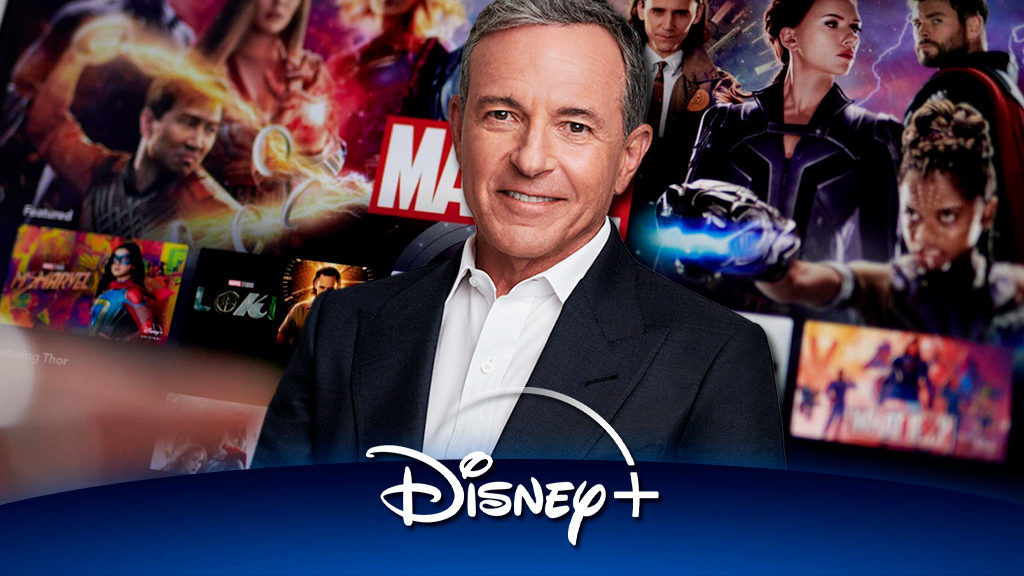
There’s a lot happening over at Disney since Sunday’s announcement that Bob Iger will return as CEO and take back control of Disney after passing the torch to Bob Chapek. It’s not every day that a former executive just takes over a position shortly before the holidays and with an announcement on a Sunday of all things. Not even a day later, the development continued with Chapek‘s right-hand man, Kareem Daniel, leading the streaming revolution also leaving the company, someone who had much more control over projects than some might think.
Now, the big question is what exactly this new direction means for Disney and especially Disney+. The streaming market has hit a bumpy road once things calmed down with the pandemic. In many ways, we saw a slight counter-development as people finally felt safer going out again, which lead to many doubts about the potential and profitability of the streaming market. Netflix hasn’t helped in that regard with them throwing as much money as they can against the wall to find their “next big franchise” for better and for worse.
The rise finds demand also showed its fangs with Marvel Studios, who started producing a few Disney+ shows and started ramping up as demand during the pandemic skyrocketed. While some believe it turned into a “quantity over quality” matter, one cannot deny that Marvel made the best of the situation, as it filmed many of its projects during the pandemic with many restrictions holding them back. In a perfect world, the studio may have kept its originally planned course and developments but this isn’t about what ifs.
What we are aiming to talk about is what will be, as Iger‘s return and Daniel‘s exit raise some interesting questions about what this means for Disney+ moving forward. The most important aspect is that creatives are back in the center, a significant showcase of what made his reign stand out as the company’s leading man. The dangers of algorithm-driven filmmaking have always shown their thorns throughout streamings history and this could rejuvenate hope in the market.
Not just that, but it also likely hints at Marvel Studios gaining a bit more control over how they tackle the development of their series. At this point, Marvel Studios is capable of pumping out up to four or five series per year. Not a small undertaking for any production company in the markets even if it expanded to do just that. They made the best of the situation with some of Marvel Studio’s most out-there and creator-driven projects yet. Still, Iger’s return might mean the studio has a bit more control over just how much they produce.
Many are quite concerned about R-rated content on Disney+, but that might not truly be an issue. The Star expansion internationally and a strong focus on more adult content were already put in motion before Iger left his position. He even highlighted Deadpool during the 20th Century Fox acquisition. We might still see some more family-friendly offerings in the future, but it doesn’t seem like he’ll suddenly force projects to become more PG-13, especially with how the studio has been growing with its new library. Of course, this is just speculation and nothing concrete outside of some fear of the old Disney model showing its hands.
There is one major aspect that could see a shift; even if it won’t be noticeable immediately. Up until now, Chapek’s goal was to drive subscriber numbers as fast as possible. To do so, they needed to bet on their cash cow to do exactly that, which was Marvel Studios and even Lucasfilm. So, they faced the challenge of having to push out as much as possible to keep that number growing. While Marvel studios might have been just as ambitious, it’s hard to not think there was some growing demand internally to get out as much as possible.
As noted, whatever the aftermath will be from Iger‘s return, we won’t see it for quite some time. Daniel leaving was the first signal that a new yet familiar era is set to return to the company and Marvel Studios will likely reflect that development. We might see them dial it back once the current projects that are already in production have been released. The Multiverse Saga is generally the Marvel Cinematic Universe going through its sophomore season and with post-Endgame blues affecting some, they can currently use the era to experiment.
The Disney+ shows are a new venture for the production company, and Marvel Studios tried to take its cinematic experience into a new market; with the help of Marvel TV’s experience after merging with the division. One can feel about their consistency in quality one way or another, but it’s definitely been interesting to see Marvel go beyond its usual ventures in many ways. Special Presentations opened up the possibility to move away from high-budget series with unique ventures and who knows if we’ll see more of those moving forward.
Iger‘s era is just about to begin, and we’ll very likely be stuck with many questions for some time. We don’t know if they’ll replace Davis and rebuild the streaming division, or potentially take a completely different direction moving forward. Perhaps Marvel will have more control over its own segments connected to the streamer, as originally envisioned when the Disney+ venture first started picking up steam. Whatever the future may bring, all eyes will be on Kevin Feige on how he’ll tackle this new direction.
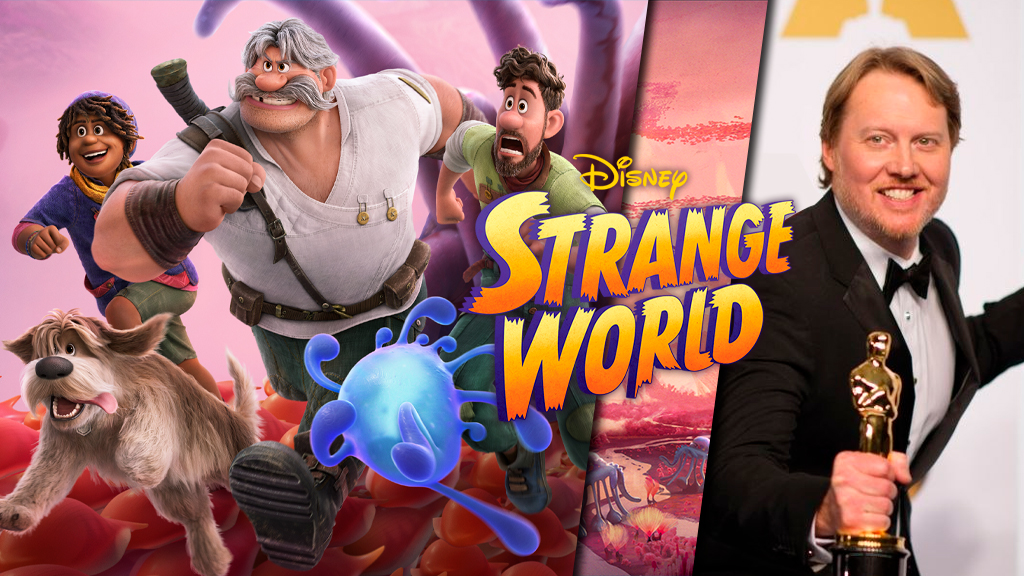
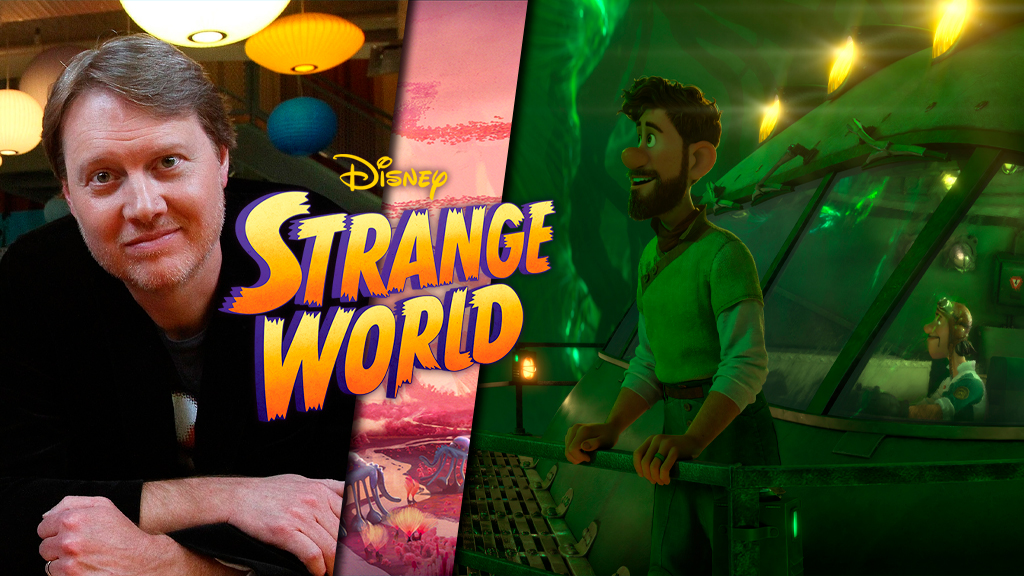
Walt Disney Animation Studios has been making movies since 1937’s Snow White and the Seven Dwarfs. With such a long history, and so many projects to pull from, it’s not a surprise that each successive production from Disney is filled with an increasing amount of Easter eggs and hidden references for fans to find. Strange World, the upcoming 61st animated film from Disney, is apparently no different. During an exclusive interview with Murphy’s Multiverse, directors Qui Nguyen and Don Hall were asked if audiences should expect to see any familiar objects or contraptions snuck into the background of their movie, and according to them, the answer is a resounding “yes“.
Nguyen was especially excited to answer the question, revealing the film has everything from the classic “Hidden Mickeys” to full-blown cameos from previous Disney characters :
There’s quite a few hidden Easter eggs throughout the movie. I’m not gonna name the places, because that kind of spoils the fun of finding them, but there’s references and there’s actual, full-on characters from Big Hero 6, Raya and the Last Dragon, Atlantis, there’s definitely Hidden Mickeys. Winnie the Pooh, even. So, it’s out there for you to find and to hunt for, but it’s in there.
Qui Nguyen
The selection of films supposedly referenced in Strange World makes sense, considering the creatives behind it. Big Hero 6 is one of Hall‘s great achievements, and Nguyen recently broke out co-writing Raya and the Last Dragon with Adele Lim. Neither was involved with Atlantis: The Lost Empire, but referencing that project makes sense, considering the similarities in content. Strange World revolves around the Clade family, as they embark on an adventure into an unknown world in hopes of discovering something that might save their home. Jake Gyllenhaal, Jaboukie Young-White, Gabrielle Union, and Dennis Quaid star, with Lucy Liu and Alan Tudyk in supporting roles. None of these performers are playing Winnie the Pooh in the movie, but as it turns out, he might still be in there somewhere.
Marvel Studios Thunderbolts won’t hit theaters until 2024, but it’s already becoming incredibly interesting. Word that the villain of the film is set to be an “evil Superman” has sparked an incredible amount of debate and speculation as to who it is that the Super Soldier-heavy team will take on in the film. Over the years there have been plenty of “Superman” analogs on the pages of Marvel Comics, but not too many of them really fit the bill as “evil.” One, however, does have a bit more of a bad streak in him than the rest and an origin that’s tied to the Super Solider Serum making him a more likely option than the rest.
The MCU loves its Super Soldier Serum. First mentioned in 2008’s The Incredible Hulk as General Thunderbolt Ross’s pet project, the backstory of the original serum, and its creator, Dr. Abraham Erskine, was filled in in 2011’s Captain America: The First Avenger. More was learned about the Serum in Captain America: Civil War and The Falcon and The Winter Soldier and at current, there are about a half dozen known Super Soldiers in the MCU including Bucky Barnes, Alexei Shostakov and John Walker, all of whom are set for roles in Thunderbolts. While The Falcon and The Winter Soldier seemed like the end of the line for new Super Soldiers in the MCU, it’s possible that the “evil Superman” set to antagonize the Thunderbolts could be one of the comics’ most powerful Super Soldiers ever: Robert Reynolds, aka The Sentry.
While Doctor Erskine created the Super Soldier Serum for the United States, several countries developed their own serums and it might be the right time to find out about one more country’s work on it: Canada. In the comics, Canda’s Department K, a shady little part of the Canadian government, scraped together what they could from Project Rebirth, the Weapon Plus experiment that created Captain America, and tried to recreate the effects as part of Project: Sentry. The result of their work was a serum, The Golden Sentry Serum, that was thousands of times stronger than the U.S. version. That serum was ultimately consumed by a drug addict named Robert Reynolds, who turned into a superhero known as The Sentry.
For years, The Sentry was one of Earth’s greatest protectors; a hero amongst heroes. The Sentry found himself up against a great evil, The Void, who became his archenemy. However, when the equally powerful and destructive Void was revealed to be a part of himself, The Sentry worked with Doctor Strange and Mister Fantastic to make the entire world, including himself, forget he ever existed. This worked so incredibly well that The Void disappeared and Reynolds went on to become a balding, overweight, middle-aged man that had no idea of the power within him.
A direct adaptation of The Sentry wouldn’t truly result in an “evil Superman”, but Marvel Studios rarely directly adapts anything and just based on the little information provided above, it doesn’t take much imagination to see how the character could end up in opposition to the Thunderbolts. Just exactly what to expect from the MCU’s Sentry is a little tricky to predict. If he were truly the fully powered-up version of the character from the comics, the Thunderbolts wouldn’t stand a chance against him, meaning whatever version of the Serum he takes, it probably won’t result in him gaining “the power of a million exploding suns.” But it doesn’t mean that a version of the character can’t or won’t exist, even if he’s not Candian.
All the plot really needs is someone willing to be working on Weapons Plus behind the backs of others and Thunderbolts has no shortage of people like that among its cast of characters. Harrison Ford’s Thaddeus Ross, who is rumored to be the U.S. President by the time the film rolls around, has always had an interest in the serum. Julia Louis-Dreyfus‘ CIA Director Valentina Allegra de Fontaine, who has been assembling the Thunderbolts for some time now, seems to have a great affinity for Super Soldiers, having collected 3 of them for her team. Other options could exist as well as the entire cast of the film isn’t known at this time. What does seem clear though, is that the true villain of the film won’t be the “evil Superman”, but whoever made him in the first place.
Given that the future of the MCU will include the X-Men, Thunderbolts is as good a time as any to learn that someone has restarted the Weapon Plus Program that, in the comics, created Weapon 1, Steve Rogers, and Weapon X, Wolverine, among its many Super Soldiers. Even Ted Sallis, aka Man-Thing, has a history with Weapon Plus in the comics. Weapon Plus had a broad reach in the comics and Phase 5 would be an ideal time to continue to add to its MCU backstory while potentially preparing for the arrival of the mutants on the scene.
Val made her Vibranium lust known in Black Panther: Wakanda Forever and while it’s really hard to imagine her team of Thunderbolts being able to take on the combined might of both Wakanda and Talokan in order for her to get her hands on some (though it should be pointed out that a fully powered Sentry could do whatever he chose), the possibility that she might be connected to an ongoing, covert Weapon Plus program does bring another precious metal to mind. It’s obviously just wild speculation, but they need to do something drastic quickly to make Val’s character interesting and having her be the link from Cap to Wolverine might just do it. Should Val somehow be behind whatever they choose to call the MCU’s Project: Sentry (Project: Sentry has a nice ring to it), a lot of things start to make sense, both in the present and the future.
At the end of the day, a Super Soldier experiment gone wrong really does make for the best choice for the “evil Superman” of Thunderbolts and it isn’t much of a stretch to see how easily Robert Reynolds’ comic book origins as Sentry could be tweaked to fit the ongoing narrative of the MCU. Will he be strong enough to rip the God of War in half? Probably not. But he’ll almost certainly be strong enough to take on John Walker.
Strange World, the next entry in Disney’s long history of animated projects, features an absolutely stellar voice cast. Brokeback Mountain star Jake Gyllenhaal headlines a group of performers that also includes Twitter icon Jaboukie Young-White, former Jaws 3-D actor Dennis Quaid, one-time Love & Basketball breakout Gabrielle Union, and Charlie’s Angels standout Lucy Liu. With such an insanely talented cast, one would likely not be alone in asking the simple question – “how did they pull that off?“.
During a recent interview, Murphy’s Multiverse got the chance to question co-director Don Hall on just that. The veteran filmmaker, known for previous works Big Hero 6 and Winnie the Pooh, began his answer by crediting casting director Amy Roberts, revealing she had these specific casting choices in mind from the very beginning of the creative process:
We had an amazing casting director named Amy Roberts who, after reading – I think – the first draft of the script…it could have just been the treatment, probably, kind of suggested these actors and we were blown away. Y’know, of course. We’re fans of all their work, we love all of their films and everything.
Don Hall
Hall continued to explain how the team locked Gyllenhaal and company in, allowing them a real chance to impact their characters and the film’s final product:
We just fell in love with that idea, pursued that idea, met with them, tried to give them an insight of what we were trying to do, and then open up a real collaboration. So that it wasn’t just, they’re coming in and reading some lines and leaving. It was about investing in the character and letting them shape their character as well.
Don Hall
Strange World hits theaters on November 23rd, and is set to follow the Clade family of adventurers as they traverse an unknown landscape in search of something that may save their home. Hall and co-director Qui Nguyen have promised character relationships are central to the story, so it sounds like the cast will have plenty of room to flex their creative muscle along the way.
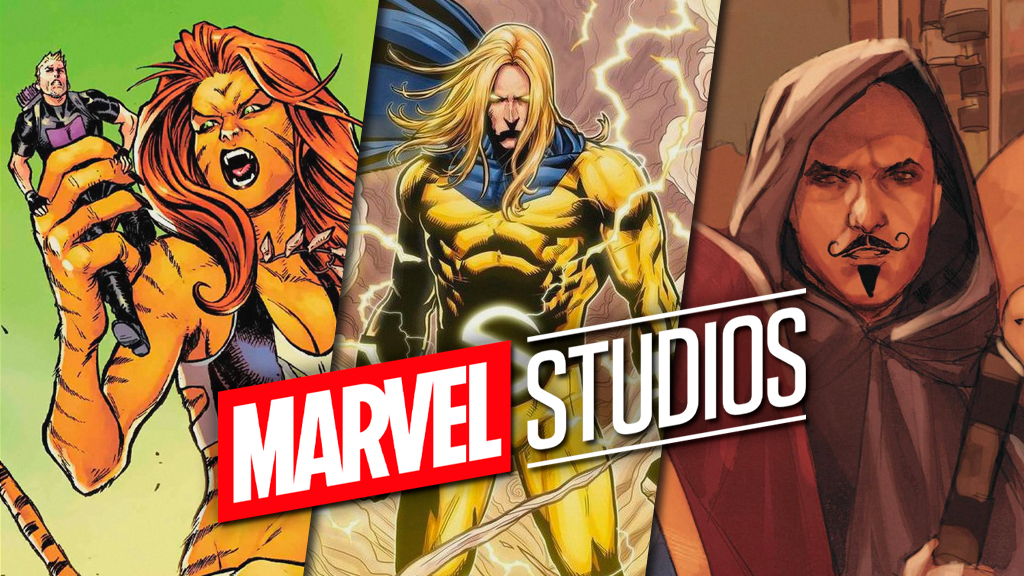
Once upon a time, it was hard to imagine characters such as Wonder Man, Jack Russell and Man-Thing could exist in the Marvel Cinematic Universe. Sure, all the characters are outlandish, dare I say comic book-ish, for one reason or another, but Marvel Studios has moved beyond the core group of Avengers and into the depths of the roster where some of their most
Doctor Druid
Marvel Studios toned down the weirdness of Doctor Strange’s adventures quite a bit in translating the Sorcerer Supreme from page to screen. But believe it or not, there’s another master of the mystic arts who has had even weirder adventures in the pages of the Marvel Comics: Doctor Anthony Druid. Doctor Druid actually predates Strange, having been created in 1961 and like Strange he sought out the Ancient One and learned some magic.
It’s not so much that Druid himself is too wack for the MCU, though he does lean a bit too heavily into hypnosis sometimes; it’s more that the majority of his adventures in the pages of the comics took him to some locations that probably won’t end up being a bit part of the MCU. Trips to Deviant Lemuria, Weirdworld and Atlantis or all on his resume. He’s a little more occult than what we’ve seen in the MCU so far and though he has been an Avenger in the comics, it’s hard to imagine him holding down a spot on the roster in the future.
Jack of Hearts
Of all the characters on this list, the thought of Jack not ever making his way into the MCU is the one that’s toughest to take. The character first appeared in Deadly Hands of Kung Fu #22 after having been teased in previous issues. A human-alien hybrid, Jack’s powers came as the result of being exposed to an experimental fuel source, Zero Fluid, created by his father during an attack on his laboratory by the evil corporation known as…The Corporation.
Even though Jack’s alien mother’s homeworld of Contraxia is already an established location within the MCU after having been visited in Guardians of the Galaxy Vol. 2, Jack is a tough character to imagine adapting to the screen, at least in any recognizable way. His origin story’s connections to an alternative fuel source would fit right into the modern world and the MCU, but his powerset would make him one of the most powerful characters in the shared universe. And then there’s his look. It’s an absolutely fabulous comic book design that just wouldn’t carry over to the big screen. So what is Jack of Hearts without his trademark look and his “my cells are full so I’m going to explode” timer always at risk of going off? He’s not Jack of Hearts, whatever he is. Too strong and too wack for the MCU.
Sentry
Nearly everything about Sentry sets up for a surefire blockbuster tentpole superhero flick, other than one key piece of his backstory: nobody within the Marvel universe remembers who he is. The origins of Robert Reynolds’ transformation into Sentry fit right into a key piece of the foundations of the MCU: the Super Soldier Serum. However, it’s not quite the fairy tale story of Steven Rogers. Methhead Roberty Reynolds broke into a lab and got into some serum that granted him the power of “a million exploding suns.” He went on to become one of Earth’s mightiest and most beloved heroes until The Void, an entity that bonded with Reynolds, took over and created chaos. With the help of a few of Earth’s heroes, including Doctor Strange, things were fixed up and the entire world, including Reynolds, forgot the Sentry ever existed.
The reality of adapting Sentry to the MCU is that he’s simply too powerful to exist despite the fact that he would fit right into the modern MCU and the future. One of the great things about the character in the comics has been the exploration of how a character with his power could exist within society. He’s also a wonderful case study in mental health. They might adapt him for a film (there are rumors even now that he’s going to be the villain in Thunderbolts), but the TRUE Sentry, at the end of the day, however, he’s simply too wack to become a great character in the MCU. Enjoy him in the comics because that’s about as good as it’ll ever get.
Silverclaw
Maria de Guadalupe Santiago’s backstory is probably as wack as any character in the Marvel Universe. Maria’s father held a deep belief in the old gods of Central America, specifically putting a significant amount of stock into the tales of the Volcano goddess, Peliali. After disappearing into the jungle for some time, Maria’s father came back with baby Maria, who he claimed was the daughter of Peliali. You can sort of compare Maria to DC’s Beast Boy in that she can change into a number of different animals, all native to Central America, of course. Over the years, she’s been an anaconda, a cheetah, a crocodile and…a sloth. Her powers manfiested uncontrollably when she was young and, after her father died, she found herself in an orphanage run by Catholic nuns who were none too happy to have a pagan werekid running around. Fortunately for Maria, Iron Man’s butler Edwin Jarvis saw a commercial for the orphanage, sponsored her and somehow she eventually ended up in America and became an Avenger.
Thor, Black Panther and Moon Knight have already introduced different pantheons of gods to the MCU, so it wouldn’t be out of the question to have the Incan gods join them. However, it’s unlikely the Avengers are going to take on an abundance of werepeople. It’s also hard to imagine a non-mutant shapeshifter joining the team, especially one that, at first glance, looks like Gene Simmons. Silverclaw has never been a popular character (she has not been seen in the comics for a decade or so) and might be a touch to wack to find her way on an MCU-based Avengers team anytime soon.
Tigra
On one hand, if Jack Russell can exist in the MCU, Tigra can, too. Jack is a werewolf. Tigra is kind of like a werewolf, except she transforms into a cat…and wears a bikini. Greer Nelson has been an Avenger and a West Coast Avenger, a team that seems like it’s destined for the MCU sooner rather than later. She’s been an instructor at the Avengers Academy. She has some really great stories and has had important relationships with a lot of big players in the MCU, including Moon Knight. However, while a version of Grant Nelson/Tigra might bound into the MCU, it’s really hard to see where the tiger-striped, bikini-clad version fits in. At one point in time, the character was supposed to share the stage with Dazzler in an animated series for Hulu but, unfortunately, that never came to fruition. That may have been the best shot the weretiger had at the spotlight.
Strange World, the upcoming 61st film from Walt Disney Animation Studios, looks like it will deliver on its pulpy title. Trailers for the film, which stars Jake Gyllenhaal in the lead role, have promised a grand adventure through an unknown landscape, with plenty of gorgeous visuals to aid in the excitement. Of course, designing a brand-new world is not easy work, and the visual development team likely went through several iterations before landing on the final product. During an exclusive interview with Murphy’s Multiverse, co-director Don Hall was asked how the creatives decided upon their look for the “Strange World” presented in the film, and his response was far funnier than anticipated:
It’s a very broad aesthetic, which is just organic and round. There’s just not a lot of hard edges or straight lines. Everything’s very organic and kind of goopy. One term that kept coming up, and it became a term for all of the vis dev, but it started with the Venture. When the Venture was being designed, it was like you took an air ship and just went [mimics squishing]. It kind of made it ‘chonky’, and so that became our word for everything in the strange world. ‘Just make it chonkier’. ‘Can you up the chonky?’. “A little bit more chonky’. It’s like everybody knew what you were talking about.
Don Hall
“Chonky” might not be a word in the English dictionary, but it’s certainly one everybody understands. Adorably plump cats come to mind, as well as large babies and, apparently, fictional airships flown by an animated Gabrielle Union. Hopefully, the film’s “chonky” aesthetic lands with audiences when Strange World hits theaters on November 23rd.
Cookie Consent
We use cookies to improve your experience on our site. By using our site, you consent to cookies.
This website uses cookies
Websites store cookies to enhance functionality and personalise your experience. You can manage your preferences, but blocking some cookies may impact site performance and services.
Essential cookies enable basic functions and are necessary for the proper function of the website.
Name
Description
Duration
Cookie Preferences
This cookie is used to store the user's cookie consent preferences.
30 days
These cookies are needed for adding comments on this website.
Name
Description
Duration
comment_author_email
Used to track the user across multiple sessions.
Session
comment_author_url
Used to track the user across multiple sessions.
Session
comment_author
Used to track the user across multiple sessions.
Session
Statistics cookies collect information anonymously. This information helps us understand how visitors use our website.
Google Analytics is a powerful tool that tracks and analyzes website traffic for informed marketing decisions.
Contains information related to marketing campaigns of the user. These are shared with Google AdWords / Google Ads when the Google Ads and Google Analytics accounts are linked together.
90 days
__utma
ID used to identify users and sessions
2 years after last activity
__utmt
Used to monitor number of Google Analytics server requests
10 minutes
__utmb
Used to distinguish new sessions and visits. This cookie is set when the GA.js javascript library is loaded and there is no existing __utmb cookie. The cookie is updated every time data is sent to the Google Analytics server.
30 minutes after last activity
__utmc
Used only with old Urchin versions of Google Analytics and not with GA.js. Was used to distinguish between new sessions and visits at the end of a session.
End of session (browser)
__utmz
Contains information about the traffic source or campaign that directed user to the website. The cookie is set when the GA.js javascript is loaded and updated when data is sent to the Google Anaytics server
6 months after last activity
__utmv
Contains custom information set by the web developer via the _setCustomVar method in Google Analytics. This cookie is updated every time new data is sent to the Google Analytics server.
2 years after last activity
__utmx
Used to determine whether a user is included in an A / B or Multivariate test.
18 months
_ga
ID used to identify users
2 years
_gali
Used by Google Analytics to determine which links on a page are being clicked
30 seconds
_ga_
ID used to identify users
2 years
_gid
ID used to identify users for 24 hours after last activity
24 hours
_gat
Used to monitor number of Google Analytics server requests when using Google Tag Manager
1 minute
Marketing cookies are used to follow visitors to websites. The intention is to show ads that are relevant and engaging to the individual user.
Pinterest Tag is a web analytics service that tracks and reports website traffic.