Tag: Movie Features

  • ‘Quantumania’ Mid-Credit Scene Explained

    ‘Quantumania’ Mid-Credit Scene Explained

    Season 1 of Marvel Studios Disney Plus streaming series Loki made it clear that the future of the MCU was going to be full of Kangs. Ant-Man and The Wasp: Quantumania introduced one of the most menacing Variants of the character in Kang the Conqueror but the savvy fans who stuck around while the credits rolled got more Kang for their buck. Nothing but spoilers to follow…

    The mid-credit scene of Quantumania took a turn for the weird and introduced fans to an arena full of Variants of Kang. As wild as it seems on screen, the idea of a Council of Kangs was ripped right from the pages of Marvel Comics. There have been a few iterations of the Council of Kangs in the comics and this one feels like a bit of an amalgamation of them all in that it is apparently filled with actual Kangs (not fake Kangs) from different timelines throughout the Multiverse. Though it may well be more similar to the Kang Collective in its composition, we’ll keep calling it the Council of Cross-Time Kangs for now and wait for Marvel Studios to give further details. Whatever the name, this horde of Kangs is coming together for a “code red” situation involving one of their own. While the short scene doesn’t really give enough context as to what exactly the body is all about, there are at least a few identifiable Kang Variants in the group who may provide some hints of what to expect over the course of the Multiverse Saga.

    Rama-Tut

    In the comics, the Rama-Tut Variant comes from a reality in which a young Kang uses a time machine to travel back to Ancient Egypt. Shortly after arriving, Kang conquers the people of the time and installs himself as their Pharoah, Rama-Tut. In the MCU, placing a Variant in Ancient Egypt provides potential for a tie-in to the mythology established in Moon Knight. It also opens the door for the Variant to come across a character that Marvel Studios should be eager to work into the MCU sooner rather than later to wash away the horrid depiction of him done by fox: En Sabah Nur. The two have a fascinating history in the comics that involved Nur being enslaved by Rama-Tut and then being shot and left for dead. Of course, Nur is better known as one of Marvel’s most powerful mutants, Apocalypse, so there’s some interesting potential for this story to evolve in the Multiverse Saga.

    Immortus

    Another easily identifiable Variant of Kang is Immortus. The simplest description is that Immortus is a Variant of the Variant known as Rama-Tut. In one timeline, Kang abandoned his station as Rama-Tut, traveled to the 40th century and attempted to master both time and the realm of Limbo. From his place outside time, Immortus attempted to manipulate all timelines and realities so that only his Variant could end up ascending to become…him. Ultimately, Immortus felt he became a tool of the Time Keepers (who were seen in Loki) and another Variant emerged to make sure he didn’t follow that path. While you probably can’t trust a Kang, this Variant of the character is the most manipulative and untrustworthy of them all and is sure to cause a problem for the other members of the Council at some point..

    While there are certainly other Kangs present (A Skrull Kang, one that may be Mr. Gryphon and one that may be Scarlet Centurion), these two are the ones most likely to get up to no good…along with the other Variant of Kang who didn’t join the council and looks primed to appear in Season 2 of Loki.

  • All Roads LED Here: Marvel’s Future with Stagecraft May End

    All Roads LED Here: Marvel’s Future with Stagecraft May End

    If there ever was a piece of technology that went from being “the future” to having the Internet complain about it ruining experiences, it would be Stagecraft. The technology is quite simple, as it makes use of LED screens and pre-rendered elements to give actors something to act from. The Mandalorian popularized it and it became a useful tool during COVID and put Industrial Light & Magic on the map for many productions.

    Cinematographer Greig Fraser has been a strong proponent against the use of greenscreen (but still uses them heavily for some of his biggest projects under new names like “Sand Screens” in Dune) and was one of the first to push the technology forward. He went on to make good use of the Stagecraft in The Batman after pioneering it for The Mandalorian. Still, even that great film couldn’t avoid some people feeling it was a little flat in its design give or take.

    As its use went on, that complaint started to pick up more and more speed. It got to a point where the main criticism was that this technology creates a lifeless experience and truly only creates something that is “too polished.” Not really great for every project already filming at the time as its criticism took centerstage. Marvel went all in with projects potentially making good use of it, Thor: Love and Thunder, the upcoming Guardians of the Galaxy Vol. 3, and the just-released Ant-Man and the Wasp: Quantumania.

    Marvel is already constantly under a magnifying glass for its use of a green screen and CG over the years. Especially once the pandemic hit, it felt like a free-for-all on what problems one can find and focus primarily on the few times it just wasn’t 100% right. So, the use of a technology that is already at a stage of heavy criticism during a time when filmmaking was at its most difficult was going to face some new challenges.

    Thor: Love and Thunder was the first to release that technology and the criticism of flat backgrounds has returned. Many discussions online were questioning what was the cause: bad lighting or just generally if the technology is too early for the big screen given how limited it is in scope. Its use, however, was highly praised by those working on the projects in how they combined real set pieces with the technology giving them more flexibility.

    It’s a strange fight, as there’s an expectation that “shot on set is always better,” which is definitely the case given its tangibility, but also downplays the value of this technology and its use. We want to move away from greenscreen but also push away any alternatives, especially for projects like Ant-Man and the Wasp: Quantumania that explore a completely foreign world. Director Peyton Reed has experience working with the tech and likely was excited to return to its use.

    The film also received similar criticism due to the technology and the usual CG comments that have dominated Marvel discourse for quite some time now. It starts blending together where it’s difficult to truly tell if it’s Stagecraft or the CG that makes it difficult as a topic overall. Though some have also praised the CG and Quantumania‘s very mixed reception creates a difficult point of discourse. Yahoo’s review of the film just called it “almost wholly on green screens” which just completely sidelines the tech while, for example, CNet‘s just generally praises the world created.

    CG is a sour topic and Marvel became quite the focus given its size and popularity. Post-Endgame, there’s also a big “it’s not like it used to be” mentality that has just been pushed forward by the pandemic’s restrictions on the industry. A film like Quantumania also will rely more on CG given that it takes place fully in a non-realistic world and given its design choices, it wanted to be as wacky as possible; something praised and loathed from one review to the next.

    We know that Guardians of the Galaxy Vol. 3 was initially announced to use the technology; another franchise that makes a lot of use of greenscreens and sets given its space-focused storyline. Yet, James Gunn seemingly decided against its use due to it not being able to bring his vision to life for the final film in his trilogy. So, he would’ve used it if it were fitting for what he was trying to accomplish.

    By all accounts, that would seemingly be the end of its use with this week’s release of Quantumania. Yet, there is one more hint that exists for use on The Marvels. Sadly, it’s just a very unreliable source in the form of IMDb. The upcoming Captain Marvel sequel includes credits for Stagecraft artists Robb Gardner, supervisor Christopher Django Johnston, and more. The only thing is, there’s no real official announcement about the use of the technology.

    So far, we haven’t had any official announcements for future projects and it almost seems like they won’t be focusing their use on the technology moving forward. Select projects like Black Panther: Wakanda Forever did not make use of the tech. So, they aren’t forcing it into every project and there’s definitely a surprising silence on its future use after heavy promotion for Quantumania.

    At this rate, it does seem like they aren’t going to rely too heavily on it anymore. It should also be noted that all productions released this year used the technology in 2021 while COVID was still at a high point. Thor: Love and Thunder was produced in 2020 when it was even unpredictable, which makes the expectation of its necessity higher. Yet, we’re about to enter a very different era for Marvel Studios’ productions.

    It should be noted that non of the 2024 releases have even started filming just yet. In a way, we’re returning to some normalcy and their usual production schedule from before the pandemic moving forward. There hasn’t been a single production in 2022, which is curious and perhaps a showcase of rearranging pieces around the board. Quantumania was originally the ending of Phase 4 and the reception seems to hgihlight that.

    Stagecraft might still get used but we shouldn’t expect any major promotions of its use for future titles. It probably will only be a sparing addition to production if there ever is truly a necessity given whatever the production is working on. Perhaps this year will signal the final “COVID era productions” from Marvel Studios with a potential new future going into the next year. Phase 5 may have not kicked off how some wanted, but it doesn’t mean Marvel is truly over, it may just be getting started once again.

    Source: YouTube, GameRant, IndieWire, DisInsider, Movieweb, IndieWire, Total Film, IMDb, ILM

  • Revisiting Superior Iron Man

    Revisiting Superior Iron Man

    As Marvel Studios has grown into one of the most consistently successful production entities in Hollywood, the value of information about the studio’s upcoming projects has spawned an industry of its own. No other IP has the cachet of Marvel Studios IPs and those with information on those projects–the scoopers, leakers, insiders and influencers–have a major impact on how a small fraction of the audience perceives upcoming projects. If we’ve learned anything from WandaVision, it’s that Marvel Studios’ fanbase has a bit of an issue separating speculation from rumors and separating legitimate rumors from gobbledygook and no one example better illuminated that than a flatly false rumor that lingered around the direct follow-up to WandaVision: Doctor Strange in the Multiverse of Madness.

    One year ago today, Marvel Studios released the official trailer for Doctor Strange in the Multiverse of Madness just ahead of Super Bowl LVI. Partly because of Marvel Studios’ overly intense secrecy and partly because of a new creative team taking over the film late in the game, an unusually high number of rumors sprang up around the film, most of which came from a new wave of “insiders” who hadn’t established any sort of track record in regards to being an accurate, trustworthy source of information. However, what was true then and is more true now is that a track record of accuracy isn’t necessary for “inside information” to gain traction online. Fans want to hear what they want to hear and if the “inside information” checks off a few boxes, it spreads like wildfire.

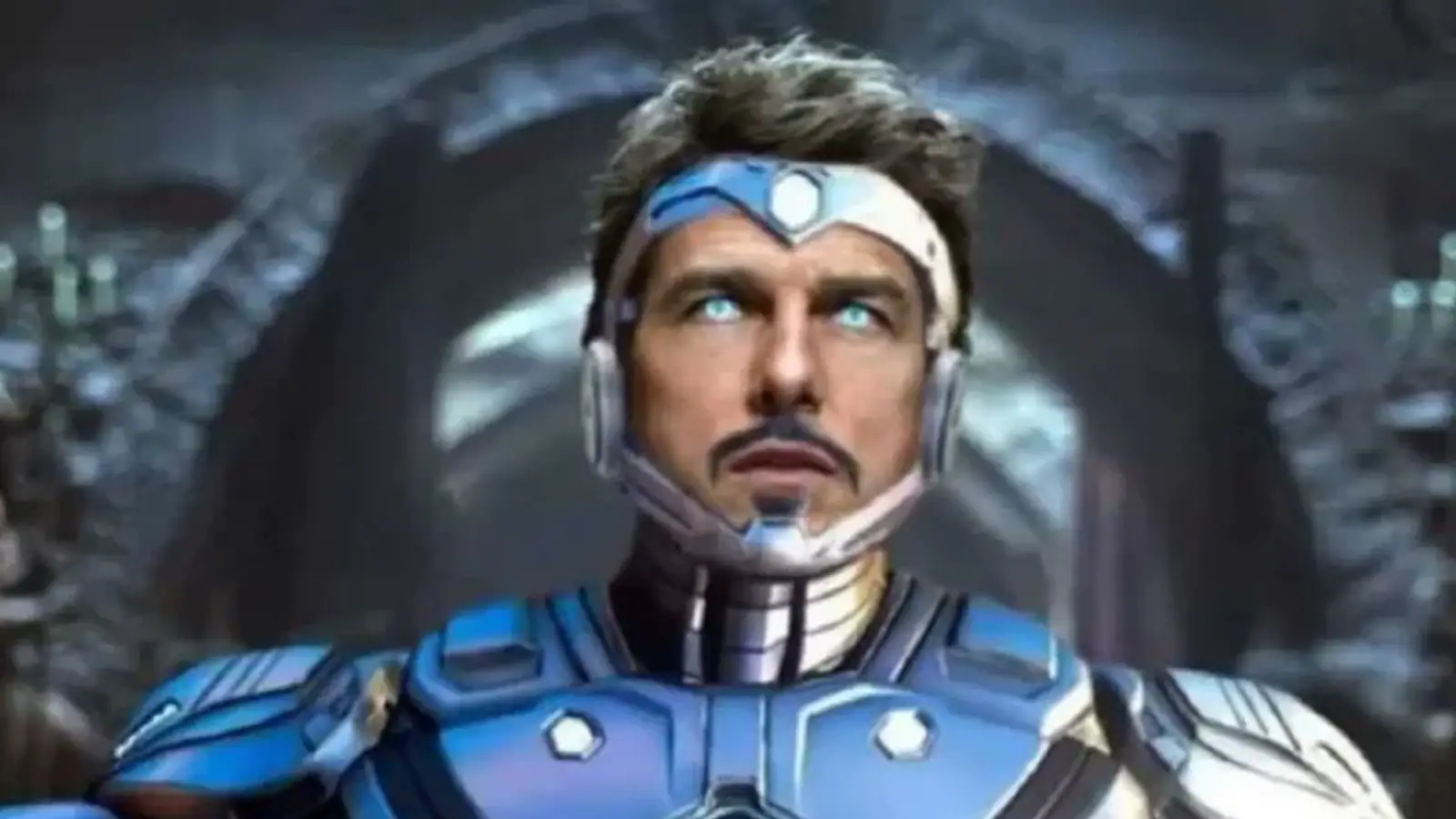
    And so, the legend of Tom Cruise‘s Superior Iron Man was born. It’s not worth tracking down where the rumor began much less digging into how it was ever able to cross over from the small fraction of fans who typically follow the rumor mill so closely into mainstream media; it happened and fans wanted to believe it so desperately that when the Super Bowl trailer for Doctor Strange in the Multiverse of Madness debuted, thousands of fans took to Twitter to proclaim that the screenshot of Lashana Lynch‘s alternate universe Captain Marvel seen below was in fact Cruise‘s Superior Iron Man.

    Even as higher-resolution screenshots from the trailer emerged, fans held strongly to their beliefs that they were seeing Marvel Studios debut Tom Cruise‘s MCU character in a trailer. Fans held so strongly to this belief, which was strongly stoked online by insiders old and new, that when the movie debuted and Cruise wasn’t in it, they were furious and shocked that they had been misled despite all the evidence they needed to know Cruise wasn’t in the film was quite literally right in front of them. Some convinced themselves that the actor filmed scenes for the movie but that Marvel Studios ultimately chose to cut them.

    After the fact, Multiverse of Madness writer Michael Waldron explained that not only did the studio not cut footage of Cruise from the film but that there never was any footage because Cruise was, as anyone with access to the internet could have known, busy shooting back-to-back Mission: Impossible films. Though Waldron admitted he thought the idea would have been pretty cool because Cruise was offered the role of Tony Stark in 2008’s Iron Man before declining, it never progressed past the idea stage. Interestingly enough, rumors of a Superior Iron Man appearing in Avengers: Secret Wars (which doesn’t even begin filming for at least another 18 months) have already begun popping up online and you can bet it won’t be long before Cruise’s name gets associated with them again and fans take the bait…again.

  • 5 Asian Superheroes We’d Like to See in ‘Shang-Chi 2’

    5 Asian Superheroes We’d Like to See in ‘Shang-Chi 2’

    A new rumor made the shocking claim that the as-yet untitled sequel to Shang-Chi and the Legend of the Ten Rings will introduce a new wave of Asian superheroes into the Marvel Cinematic Universe. With so many options from which to choose, we thought we’d narrow it down a bit. Here are 5 Asian heroes from the pages of Marvel Comics that we’d like to see in the Shang-Chi sequel.

    Amadeus Cho

    The time might finally be right for Amadeus Cho to make his entrance into the MCU. His mother, Helen, appeared in 2015’s Avengers: Age of Ultron, and fans of Amadeus have been waiting for him to follow her since. The current “present day” of the MCU seems to have moved as far along as 2026 and the Shang-Chi sequel is at least a couple of years away, which could provide enough time for Helen to have had Amadeus, and his twin sister Maddy, and for them to have aged up to 12 or so by the time the film hits theaters. That’s not too far off from the age the characters were when they first appeared in the comics and assuming there isn’t another time jump coming that we don’t know about yet.

    Why would Marvel Studios introduce a pre-teen/teen hero into the MCU? Other than the fact that he’s one of the 10 smartest people in the world (he was listed as the 7th smartest when he first appeared) and is essentially a walking hypercomputer and a brilliant strategist. If, as the new rumor also suggests, time travel is involved, Cho would be uniquely positioned to help the heroes quickly calculate when and where they need to be.

    Additionally, the time is right for Cho to make his debut because it seems the MCU is setting the stage for a pair of stories that Cho was part of in the comics. The rumored World War Hulk project could include Cho as he played a big role in it in the comics. Cho also developed a close relationship with Hercules, who was recently introduced into the MCU. It’s certainly not “now or never” for Cho but now is as good of a time as any.

    Lin Lie

    Shang-Chi introduced the quasi-mystical dimension of Ta Lo to the MCU and, with it, the idea that there is a rich and hidden history of magic, both good and evil, that could be explored down the line. Other dimensions and hidden cities like Ta Lo exist and so too do other ancient evils like the Dweller in Darkness. The MCU is also starting to find itself populated with mysterious and powerful artifacts that when wielded by the right person are capable of incredible things. If Marvel Studios wanted to add another character to their roster of heroes that checks off a couple of those boxes, Lin Lie should be near the top of their list.

    Lin is the descendant of Fu Xi, a legendary Chinese hero who created a powerful sword which held defeat and imprison the God of War, Chiyou, and his demon horde. Lin inherited the sword in modern day just as Chiyou’s spirit was released from it’s prison. Lin took on the name Sword Master for a time before becoming the Immortal Weapon known as the Iron Fist.

    Lin Lie has always felt like a character who was designed with an MCU future in mind. The Sword of Fu Xi could join the Ten Rings and the bangle of Kamala Khan as artifacts of ancient and alien origin that seem to be a major part of the coming battle against Kang. Additionally, the Shang-Chi sequel, like its predecessor, is rumored to feature some mystical, magical madness. It wouldn’t be a stretch for the film to take another trip back in time and introduce another ancient evil…and who knows, maybe a Kang Variant played a role in the forging of Sword Master’s sword.

    Mr. Lao

    If you hadn’t caught on yet, the inclusion of Mr. Lao probably gives away the team we’re hoping is assembled in Shang-Chi 2: the Agents of Atlas.

    The Atlas Foundation fits nicely into the Multiverse Saga and into a time travel film because of its ancient origins. In fact, the MCU origins of Atlas Foundation could easily be reconned to have connections to a Kang Variant. Either way, the Foundation’s long history with advanced weapons and mysticism could make them a formidable ally in the fight against Kang.

    Mr. Lao, a human who was transformed into a Lung Dragon, could serve nicely as the expository device for the Atlas Foundation’s long history while recruiting Shang-Chi and the other heroes to his cause as Agents of Atlas.

    Wave

    A relatively new hero from the pages of Marvel Comics, the Filipino hero Pearl Pangan would give the team an elemental powerhouse. Pearl gained the power of hydrokinesis after a run of the mill Marvel science accident. As the hero Wave, she stood tall as an Agent of Atlas during Malekith’s invasion of Earth in the War of the Realms event.

    The addition of Wave to the roster would not only give the team a truly superpowered member but also introduce the MCU’s first Filipino superhero.

    White Fox

    The South Korean superhero Ami Han is about as good of a fit as anyone for the world of mysticism first seen in Shang -Chi. Han is a member of South Korea’s National Intelligence Service and of their superhuman response team, Tiger Division.

    A formidable hand-to-hand combatant and high-level intelligence agent, Ham would serve the team with those skills alone. However, it’s her identity as a shape shifting Kumiho and the rare power set that comes with it that ties into the mystical world of Ta Lo and other like it.

    Kumiho are the nine-tailed foxes of legend who seduce and kill mortal men. Han is the last known Kumiho in existence in the comics. Han’s mesmerism and energy absorption would provide the Agents of Atlas unrivaled powers against their potential foes.

    After being introduced in 2006, the Agents of Atlas were reconfigured in the comics recently as a collective of heroes from across Asia. If Shang-Chi 2 is truly looking to add more Asian heroes (and it wouldn’t take inside information to imagine it might), the new version of the Agents of Atlas is a ready-made solution. While we only chose 5, there are plenty of other options, including others who serve as agents of the Atlas Foundation in the comics already. And of course, should Shang-Chi 2 be introducing the time, Randall Park‘s Jimmy Woo should get his time to shine as the rightful khan of the organization.

  • Up Next: The Annihilation Saga

    Up Next: The Annihilation Saga

    Marvel Studios is only one-third of the way through its Multiverse Saga and with the onset of Phase 5, fans will soon learn the true nature of the saga’s big bad. Though the Multiverse Saga won’t wrap up for another few years (if it keeps its current pace), Disney has already planted flags for four post-Secret Wars theatrical projects meaning, to nobody’s surprise, that they plan to continue phasing and saga-ing beyond the Multiverse Saga. Whatever that new saga holds, it will ultimately have to culminate in a major event worthy of drawing heroes from every corner of the universe to help save the day and while any number of comic book events could be adapted to provide such a threat, an epic multi-event run from the late 00s and early 10s might not only be the best bet but also already be in the earliest stages of being established in the MCU. It’s possible that Marvel Studios could be teeing up Phases 7-9 to become the MCU’s Annihilation Saga.

    What is Annihilation?

    Much like the Infinity Saga and the Multiverse Saga, the Annihilation Saga wouldn’t be the direct adaptation of one of Marvel Comics’ major events or any particular run, but rather inspired by several different runs and centered on a threat worthy of large-scale team-up films on the level of Avengers: Infinity War, Avengers: Endgame, Avengers: The Kang Dynasty and Avengers: Secret Wars and while there’s no shortage of such threats, one might be closer to making his way into the MCU than the rest: Annihilus.

    Originally introduced as a Fantastic Four villain, Annihilus has grown in power over the years and has become a threat to the existence of the entire universe. The ruler of a pocket dimension known as the Negative Zone, Annihilus, with the power gifted to him by wielding the Cosmic Control Rod, set his sights on conquering Earth and then the entire “positive” galaxy. Thus, in 2006, Annihilus was the main antagonist of the Cosmic crossover event, Annihilation, in which he lead his Annihilation Wave out of the Negative Zone and wreaked havoc on the galaxy as he attempted to extinguish all life within it. Should the MCU wish to make The Living Death That Walks the main antagonist of its next saga, Annihilation would be cornerstone content for it; however, a significant amount of groundwork would need to be done ahead of time and it looks like Marvel may already be pouring the foundation.

    The Fantastic Four

    Matt Shakman‘s Fantastic Four will introduce the First Family to the MCU along with opening the door to hundreds of characters and settings closely associated with them. No details about the film but the Fantastic Four have such a rich history with Annihilus and The Negative Zone that it would be a shame to allow the character to be introduced any other way. That said, there’s no reason for the First-Born Son of Oblivion to be introduced in the 2025 film when there’s plenty of time over Phased 7 through 9 for him to make his debut.

    Galactus and His Heralds

    A Silver Surfer solo project is heavily rumored to be headed to Disney Plus at some point in the Multiverse Saga and while the Sentinel of the Spaceways would certainly be a major player in an Annihilation Saga, his master and the horde of heralds who served him over centuries were a major part of the Annihilation event as Annihilus coveted the Power Cosmic. Rumors of Galactus’ presence in 2025’s Fantastic Four have recently heated back up and it’s been said that the Silver Surfer project would stream prior to Galactus’ appearance. Marvel Studios could use that solo project as a way to deliver the rich and complex history and mythology of Galactus and his heralds ahead of Fantastic Four which would allow for those characters to move smoothly into their roles in the Annihilation Saga. While his former heralds served as soldiers in the war against Annihilus, the “Galactus event” turned the tide of the war.

    Nova

    There was no greater hero in the war against the Annihilation Wave than Richard Rider and it was Rider who ultimately ended the war by killing Annihilus. Xandar, home to the Nova Corps, was one of the first planets to fall to the Annihilation Wave. Rider survived and allowed the Xandarian Worldmind to merge with him while also agreeing to host the entirety of the Nova Force. With the help of many friends and heroes, Rider formed the United Front which brought members of some of the galaxy’s fiercest civilizations together in the fight against the Bug King. Though it’s currently unclear what format it will ultimately take, a solo Nova project is in the works at Marvel Studios which means Rider could be introduced and set up just in time for Annihilus to give him the push he needs to become Marvel’s greatest Cosmic hero.

    Adding these characters to the mix during the Multiverse Saga would allow them to join forces with whichever Guardians of the Galaxy survive Guardians of the Galaxy Vol. 3 and Earth’s Mightiest Heroes to defend both the galaxy and Earth against an incredibly powerful threat.

    How Would It Take Shape?

    As has been the case through the first two sagas, not every second of every project needs to serve the endgame of that saga. While there are sure to be connections in nearly every project, what’s important is that the characters get put in the right places in time for the main event and that’s just a matter of smart scheduling. Following (or even prior to) the events of Avengers: Secret Wars, the concept of the Negative Zone could be introduced in any number of ways. Reed Richards discovered it and its anti-matter properties in the comics and could easily do so here. Having the Fantastic Four visit the Negative Zone and be perceived as a threat by Annihilus, however, is a pretty simple first step. All Annihilus has ever desired is to conquer all there was, so upon learning of there being more to conquer other than the Negative Zone, the wheels are set in motion.

    Any number of events either during or after Secret Wars could be used to explain how Annihilus locates The Crunch, the physical meeting point of the 616-universe and the Negative Zone and the portal through which he launches the Annihilation Wave. Should the first Nova project be one of Marvel Studios Special Presentations, it could tell the tale of how Xandar fell to Thanos, how Richard Rider became Nova and how Xandar was rebuilt. Depending on how grand their plans are for the character, Marvel Studios could use use the next project, Nova: Annihilation Day, to show how Annihilus grew in power and the sheer might of the Annihilation Wave.

    Marvel Studios seems to love two-part conclusions to their sagas and that’s where the creatives at the studio could get…creative. Thanks to the heroics of Richard Rider and the United Front, the Annihilation Wave never reached Earth in the comics but Annihilus attempted to conquer and/or destroy the planet plenty of other times. The Fantastic Four and Adam Warlock played a hand in stopping Annihilus in several of those stories and could team up with Nova and The Avengers, respectively, to stop The Lord of The Negative Zone in the two-part finale to the Annihilation Saga: Avengers: Annihilation and Avengers: Annihilation Earthfall. It’ll all come together much better when talented people get involved.

    Of course, there are any number of other major villains and events that could shape the next saga, including the impending arrival of the X-Men, so don’t start etching this in stone just yet. However, Annihilus is one of a handful of villains whose means, motive and opportunity have been on par with those of Thanos and Kang in the comics, putting him at least on the list of possible big bads set to star in his own saga.

  • The Skinny on The DCU’s ‘Swamp Thing’

    The Skinny on The DCU’s ‘Swamp Thing’

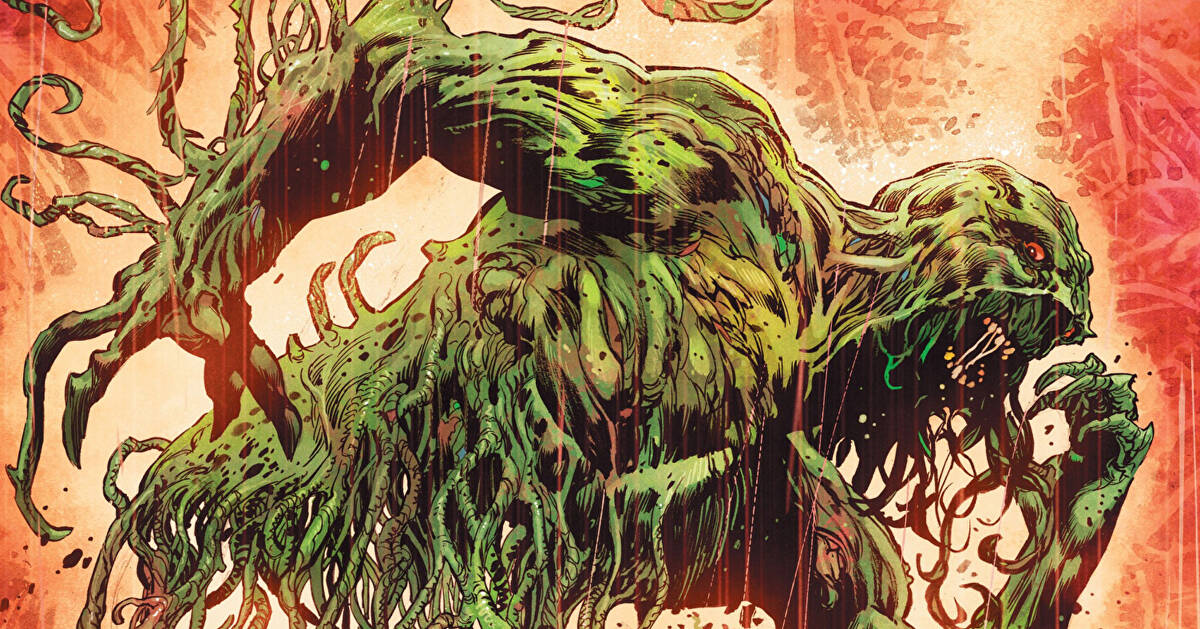
    James Gunn and Peter Safran have revealed the first half of the first chapter of the new DCU. In total, 10 projects are expected to be rolled out by the end of 2027, with 5 films and 5 streaming series adding to the interconnected Gods and Monsters story of the DCU. With so much to take in, it can be a bit overwhelming. To make it easier, here’s the skinny on Swamp Thing.

    Gunn and Safran have expressed their commitment to making sure that the DCU is full of diverse projects and Swamp Thing, which is being developed as a theatrical release, fits the bill. “Each set of filmmakers bring their own aesthetic to these films, and the fun is seeing how these tonally different works mash-up in the future,” said Safran of the DC Studios slate of projects, adding that Swamp Thing will be “tonally different” but “interconnected” to the rest of the slate.

    Set to be a horror film, Safran says that Swamp Thing will “investigate the dark origins” of the titular character and is among a handful of surprising projects in development, according to Gunn.

    Sources: DC, Variety

  • The Skinny on The DCU’s ‘The Authority

    The Skinny on The DCU’s ‘The Authority

    James Gunn and Peter Safran have revealed the first half of the first chapter of the new DCU. In total, 10 projects are expected to be rolled out by the end of 2027, with 5 films and 5 streaming series adding to the interconnected Gods and Monsters story of the DCU. With so much to take in, it can be a bit overwhelming. To make it easier, here’s the skinny on The Authority.

    The second film in the first half of the Gods and Monsters slate is The Authority, which Gunn calls a “very different kind of superhero story” and a “passion project.” The film is probably the most unlikely on the list given the history of the team of heroes it involves. The Authority was created as part of Jim Lee’s WildStorm universe which was eventually purchased by DC comics and, during the New 52 publishing initiative, integrated into the mainstream continuity. Fans may not be quite familiar with the team, which Safran compared to Jack Nicholson’s Colonel Jessup in A Few Good Men saying, “they know that you want them on the wall, or at least they believe that.Gunn gave a little more detail of what to expect from this win-at-all-costs group.

    They are basically good-intentioned, but they think that the world is completely broken and the only way to fix it is to take things into their own hands, whether that means killing people, destroying heads of state, changing governments—basically, whatever they want to do to make the world better. We’ll see how that journey goes for them. There are morally gray characters (in our DCU), of which these are.

    James Gunn

    The film is currently being written, though Gunn did not reveal who was penning the project though he indicated he’s helped outline the story.

    I only have seven days in the week, all of which are used in the service of DC storytelling. I’m working all the time. I can only do what I can do. So we’re going to have to make a decision at some point. Whether or not, you know, is it better for me to, you know, I can write more. I already wrote all of that. I’ve written a lot of that. I’ve worked a lot on the outline for The Authority myself.

    James Gunn

    No release date has been slated for The Authority, though if DC Studios plans to put a second movie out in 2025, this project could potentially make that date.

    Sources: DC, Collider, Variety

  • Theory Thursday: Victor Timely’s Time Has Come

    Theory Thursday: Victor Timely’s Time Has Come

    New information from insider Daniel RPK seems to have indicated that a Variant of Kang known as Victor Timely is set to make his debut in the MCU in 2023. Via his Patreon, Daniel RPK shared that Loki Season 2 will feature another new Variant of Jonathan Majors‘ Kang who is “an inventor from the past wanting to buy stuff from people to affect the future.” Though RPK added he could not confirm that this Variant will be Victor Timely, speculation about the character has revolved around that identity. This isn’t the first time the character’s name has come up, either, given that the insider teased a mention or appearance of Timely in Ant-Man and The Wasp: Quantumania. Who is Victor Timely and why are so many fans sure this is him? Fascinating questions to which there are probably multiple great answers, to be sure, and while we can’t provide the correct answer we can theorize!

    Who is Victor Timely?

    Interior art from Avengers Annual #21(1992)

    Kang is a complex villain and the convoluted and continuous retconning of the character in the pages of Marvel Comics over the years has made a true understanding of him daunting. In one respect, that’s actually worked in the favor of those penning whatever the latest adventures of the character are because they can be as mysterious and crazy as they want given pretty much nobody knows exactly what went on with Kang to begin with and when time travel is involved, anything is possible…and that is the essence of Victor Timely.

    Victor Timely’s origins come from a retcon to Kang’s story first published in 1992’s Avengers Annual #21. The issue tells the story of what happened following Kang’s first defeat at the hands of the Avengers. Kang retreated to the past, where under the alias of Victor Timely he founded a city and rose to fame as an inventor and industrialist. His work as Timely quietly shaped the century while he built a fantastical and quasi-temporal base of operations, Chronopolis, from where he could access timelines that other versions of himself had conquered. On Earth, Timely worked from a location–complete with a door that transported him to Chronopolis–and his advancements in technology ultimately put his products into every robot, cyborg and computer, allowing him full access to nearly every piece of technology on the Earth.

    Why Does Victor Timely Make Sense for the MCU at This Point in Time?

    The short answer is time. One of the reasons fans debated whether or not Kang would make for an appropriate villain in the MCU is the convoluted nature of the character’s comic book past. Marvel Studios seems to have addressed that fairly well in Season 1 of Loki by indicating that He Who Remains was the victor of a Multiversal War among Kangs who has since spent his time pruning timelines and making sure that the Multiverse doesn’t come back into existence and bring Kang Variants back with it. When Sylvie killed He Who Remains, it set loose a chain reaction of events (the repercussions of which will be explored in Season 2 of Loki) including the emergence of an infinite number of Kangs. It’s all pretty confusing, but by the time Loki Season 2 comes around, the Kang Variant that we are theorizing to be Victor Timely will have already lived a life full of experiences and opportunities we are unlikely to see in full on screen.

    By following the rules of time travel and the Multiverse as they are currently understood, should a Kang Variant travel back in time (as Timely did in the comics), it would create a Nexus Event and a new timeline. The new future for the Variant, which takes place in the past, can’t change what happened on his old timeline, but it certainly can be conquered in the new timeline. So the Avengers may have beaten that Kang, but can they beat this Kang? And what is this Kang up to? The comics–and an Easter egg from Season 1 of Loki–could give some hints.

    While the Variant of Kang set to appear in Ant-Man and The Wasp: Quantumania, Kang the Conqueror, is stuck in the Quantum Realm, he also seems to have lived quite a life already and is well aware of his multiple pasts. It’s possible that this Variant is an older version of Victor Timely. In the comics, Timely traveled time to get a head start on the Avengers by cornering the market on technology while also secretly constructing Chronopolis from where he could access all timelines. The fantastical city within the Quantum Realm that’s been seen in promotional material for Quantumania is almost certainly Chronopolis and Kang almost certainly used it for its intended purposes for a long, long time before being trapped there. It’s possible that the Victor Timely Variant of Kang set to appear in Loki Season 2 is there, in part, to explain to audiences how Chronopolis came to be and to fill in the gaps about who the Conqueror that fans meet in Quantumania is.

    If that half of Timely’s story could be adapted from the comics, the other half could be adapted just as easily. RPK’s information suggests that Timely is an inventor in the past and in a very Back to the Future twist (that’s Kevin Feige‘s favorite movie, by the way) is looking to impact the future. That future, a future in which Timely’s technology, not Tony Stark’s, is what drives the world may have already been glimpsed in the Void in Season 1 of Loki. The fifth episode of Season 1, entitled “Journey into Mystery”, revealed an alternate version of Stark Tower, Qeng Tower, had been cast into the Void following the reset of one timeline. That timeline would have been reset at the behest of He Who Remains, whose main purpose was to keep other Variants of himself from taking control. In the comics, Timely continued on by feigning death and “handing down” the company from Victor Timely to Jr. to III. It wouldn’t take much imagination to change it up in the MCU and have him “sell” the company to a new owner who might rename it Qeng.

    So why is Victor Timely right for the MCU right now? Telling his story in Season 2 of Loki after meeting him in Ant-Man and The Wasp: Quantumania not only tells the past of the Conqueror trapped in Chronopolis but also why he’ll be a threat to the Avengers in the future as the man behind Qeng Enterprises.

    What is Qenq Enterprises?

    Qeng Enterprises appeared in just a couple of comics during Mark Waid‘s 2015 Avengers: Ultron Forever but could be set to play a much larger role in the MCU. In the comics, Qeng Enterprises was the Earth-bound base from which Kang planned to launch his New Qeng Dynasty. In the MCU, it could be the equivalent of the point from which he accessed Chronopolis in the comics and the temporal location that the Avengers choose to target him as he wages his Multiversal War. In Loki, the tower has clearly taken heavy damage and given the crazy time-traveling shenanigans in play now, fans may already have seen the outcome of the Avengers’ war on the Kang Dynasty in a blink-and-you-miss-it Easter egg.

    Why is Kang Stuck in Chronopolis?

    How does a man like Kang, who has conquered so many timelines become trapped in a city of his own design? in the comics, the ability to move discretely between timelines was powered by an object of unfathomable chronal power: the Forever Crystal. More than one theory has discussed the possibility that the Forever Crystal has already been seen in the promotional footage for Quantumania and that it is the McGuffin of that film. If Scott Lang retrieves the Forever Crystal for Kang, he could put into motion the events of The Kang Dynasty.

    Summary

    The Kang Variant known as Victor Timely sets up shop on Earth, shapes a century or two through his own technology while building and then using Chronopolis to conquer other timelines. At some point in his journey, he becomes trapped in the Quantum Realm. Once he escapes, hehas enough power and/or weapons at his disposal to take on the Avengers, who had previously defeated him, he launces his attack from Qenq Tower. Looping in a previous theory, the Avengers have acquired powerful weapons (potentially created by other Kang Variants) and defeat Kang. What impact could an assault on Qeng Tower and or Chronopolis have on the Multiverse? That’s a theory for another day.

  • A Few Oscar Predictions in A Beautifully Crowded Year

    With the start of the new year comes growing anticipation for the Oscars. Most critics groups have sent their votes in and the Oscar shortlist has been widely scrutinized. 2022 was one of the better years for feature films, especially amid the pandemic, as small-budget features and half-million-dollar projects finally made it to the screen. Everything from The Whale to Top Gun: Maverick found an audience, nationally and internationally. Below are a few films to have your eye on, specifically for a nomination and hopefully for a win. Keep in mind, these are just a few favorites among a year of great films. 

    *Denotes a shortlist nomination

    Nope 

    Categories:

    • Best Actor-Daniel Kaluyya
    • Best Actress-Keke Palmer
    • Best Sound
    • Best Original Screenplay

    After a solid debut over the summer, Nope isn’t getting as much attention as it deserves, potentially because of the horror bend and the timing of its release. The film turns the mirror and camera back on society in a fresh way and is a great follow-up to wide releases Us and Get Out. Peele and Carmen Cuba assembled a great cast for a great script. The focus of the film is sharp and nods to monster movies of the past and present. Themes of family and heritage get their focus, as does the idea of story in general and how we define it. Any nomination is deserved, but bringing home a trophy would be splendid as well.

    The Batman 

    Categories:

    • Best Sound* 
    • Best Visual Effects*
    • Best Adapted Screenplay

    The Batman, another solid debut early in the year, takes place in a new DC Universe that’s not connected to iterations before it. Matt Reeves and his team chose to craft the world of Bruce Wayne after he’s been on the job for a few years. The assembled cast doesn’t get as much screen time as one might like, but they’re great nonetheless. And though the film has an amazing score, it didn’t get shortlisted, but it’s still fun to appreciate the development of Batman as a monster, hero, and even his Bruce Wayne “mask.”

    Glass Onion: A Knives Out  Mystery

    Categories:

    • Best Supporting Actress-Janelle Monae
    • Best Adapted Screenplay
    • Best Costume Design

    Glass Onion is another great cast full of characters that work well together. When focused on the core group, the film doesn’t feel overloaded with cameos for the sake of it. More fleshed-out characters would have made the film even stronger, but their shared history, even as it’s slowly revealed, is earned. The film doesn’t blow the audience away with mystery, though the woven narrative is just mysterious enough to stay a bit ahead and entertain.

    The Fabelmans

    Categories:

    • Best Picture
    • Best Director-Stephen Spielberg
    • Best Cinematography-Janusz Kaminski

    Every nomination for Spielberg’s semi-autobiographical film could easily be a win because The Fabelmans hits all the markers: great story, great cast, great cinematography. The only expected snub will be Gabriel LaBelle, who plays Sammy Fabelman. Every actor pulls their weight in the film, even Seth Rogan, as they push the audience to reflect on their own story. The Fabelmans is a great comment on family, comparison, and perspective. 

    Black Panther: Wakanda Forever

    Categories:

    • Best Supporting Actress-Angela Bassett
    • Best Sound
    • Best Makeup and Hairstyling*

    Wakanda Forever works in an entirely different space than every other Oscar contender this year but certainly will receive at least one official nomination. Hopefully, it earns a statue, much like its predecessor. The film balances Chadwick Boseman’s passing, sequel pressure, and everything in between to craft a strong narrative about two societies that find themselves at war even though a larger threat looms in the background. Ryan Coogler, the faithful director and screenwriter, and the team crafted a tangible support system as the film both debuts Namor (Tenoch Huerta) and tastefully continues the Black Panther series.

    Everything Everywhere All At Once

    Categories:

    Best Actress-Michelle Yeoh

    Best Actor-Key Huy Quan 

    Best Supporting Actress-Stephanie Hsu

    EEAAO is the movie that could sweep the Oscars or find itself repeatedly snubbed or welcome multiple first-time award winners. The film, directed by The Daniels (Daniel Kwan and Daniel Scheinert) and starring Michelle Yeoh, Ke Huy Quan, and Stephanie Hsu, focuses on a mother’s relationship with her estranged daughter. It’s an amazing reflection on familial relationships and internal motivation, as well as life choices. The film brilliantly allows Evelyn Wang (Yeoh) to experience multiple lives at the same time instead of living one particular life over again, and of course, lessons ensue.

  • Rearview Mirror: A Phase 4 Retrospective-The Year with No Marvel

    Rearview Mirror: A Phase 4 Retrospective-The Year with No Marvel

    With Ant-Man and The Wasp: Quantumania set to kick off Marvel Studios Phase 5 in February, what better time to take a comprehensive look back at the ups, downs, ins and outs of Phase 4. First up, the year that wasn’t.

    Long before Avengers: Endgame hit theaters in 2019, Marvel Studios was already well into the planning stages of the Multiverse Saga. Disney Plus was set to play a major role in said saga, which looked set to introduce a slew of new heroes and villains. James Gunn’s Guardians of the Galaxy Vol. 3 was originally expected to kick off the new saga but after that went off the rails for a bit, exactly what to expect and when to expect it was a mystery until October of 2018 when the 2020 film slate was exclusively revealed to consist of only Black Widow and Eternals. When Murphy’s Multiverse went live in November of 2019, Marvel Studios had officially confirmed the news about the two films and also slated the first Disney Plus series, The Falcon and The Winter Soldier for a Fall 2020 release. 2020 wasn’t set to be the big, blockbuster opening year to Phase 4 that fans may have expected but it looked the be the calm before the storm as 2021 was set to feature 3 big films and 4 streaming series including the first animated series made by Marvel Studios…and then, before anyone could process it, Marvel Studio’s very 2020 existence was gone.

    Things started off calmly enough in January 2020 as production on The Falcon and The Winter Soldier resumed following their holiday break. The production shot scenes involving the Flagsmashers at a State Park in Georgia, did some work in the downtown Atlanta location that served as Madripoor and was scheduled to head to Puerto Rico. Then, things started to get weird.

    On January 9th, director Scott Derrickson and Marvel Studios amicably parted way on Doctor Strange in the Multiverse of Madness, which was set to begin principal photography in May. Just a couple of days later, before a second earthquake in Puerto Rico altered the course of the production of The Falcon and The Winter Soldier. By mid-January, production on one of Marvel’s 2021 streaming series, Hawkeye, which was scheduled to begin in July, had been delayed indefinitely.

    Even as all that unfolded, Shang-Chi and The Legend of the Ten Rings began filming in Australia in February and productions in Atlanta for Loki, Ms. Marvel, She-Hulk and the untitled third Spider-Man film were all on track and Thor: Love and Thunder, which Christian Bale had just joined, was set to get underway down under in October.

    By early February, Sam Raimi emerged as the front runner to take the reigns on Doctor Strange in the Multiverse of Madness as the studio remained committed to beginning production in May. Then, Hawkeye got back on schedule, booking a September start of production in Atlanta. With Puerto Rico off limits, The Falcon and The Winter Soldier was headed to Prague. All seemed good in the world…

    On March 3rd, 2020 the following information was shared to supporters of Murphy’s Multiverse Patreon:

    I expect production delays to happen. Things may begin shooting, stop shooting and begin again later. They may get pushed several weeks entirely. I believe it’s possible, even probable, that some projects may see release dates shifted. I believe it’s possible, though I can’t speak to probability here, that some projects may not release at all. I believe Disney may have to consider shutting down their U.S. parks for as little as a few weeks and as long as a couple of months (they’ve already closed parks in Hong Kong, Shanghai and Japan to the tune of a $175 M loss). None of this is good. Not even Disney can afford to keep losing money at this rate.

    By March 10th, rumors or release dates shifting started to pick up steam and by March 13th, word reached Murphy’s Multiverse that The Falcon and The Winter Soldier would not make its intended Fall 2020 release. By March 21st, Marvel Studios shut down all of its productions indefinitely (the linked article was published and available for some time before we were asked to take it down as many of the members of various crews had not been informed of the pauses on productions). The COVID-19 pandemic was in its earliest and most frightening days and like everything else, the world of Marvel Studios stopped in its tracks.

    With nothing but uncertainty staring them in the face, Marvel Studios had no choice but to start making movies. In early April, they made the first in a series of delays to their film slate pushing Black Widow from its intended May release to November and pushing Eternals into 2021. Additionally, with no clear answers about the safety of the production crews, Marvel Studios production stoppage continued with the studio eyeing a September restart.

    In early May, the Czech Republic opened back up to film crews, giving fans hope that The Falcon and The Winter Soldier might just make its 2020 release date after all. By June, things started to slowly heat up again as Hollywood and the rest of the world grew accustomed to working remotely. News of Evan Peters role in WandaVision proved to be the biggest news in months, Marvel Studios continued to search for the perfect Kamala Khan and production on The Falcon and The Winter Soldier resumed.

    As productions got back on track, so too did casting, hiring and planning for the future. Hailee Steinfeld landed the role of Kate Bishop in Hawkeye, director Nia DaCosta landed the Captain Marvel 2 gig and there was finally some movement on Marvel Studios’ Fantastic Four. Then, just as Ant-Man 3 got put on the 2022 slate, Jonthan Majors was cast in it as Kang and fans started to think just maybe they’d see Black Widow in November, the winds shifted once more. In September, as all of Hollywood shifted dates and release platforms, Disney became aware that a November release was not possible for Black Widow and began to search for a new date.

    As confidence in a theatrical release for Black Widow plummeted, hope arose that WandaVision would skip over The Falcon and The Winter Soldier and release in 2020, perhaps as early as Thanksgiving. A trailer for the project was released in late September, marking the first new Marvel marketing material of the year. Just a few days later, however, Marvel Studios officially pulled the plug on the 2020 release of Black Widow, pushing it 6 months further down the road into May 2021.

    Productions resumed and began and, alas, WandaVision didn’t quite make into 2020. By October, production had gotten underway on Spider-Man: No Way Home and in December word of Charlie Coxs role in the film was shared to the disbelief of pretty much everyone. A year that began with so much hope and saw so much struggle ended with the promise of Cox’s return.

    For those that remember it well, 2020 was all about the news and rumors as any little tidbit gave fans something to cling to while we waited to understand what was happening around us. While it was expected to be slow year for Marvel Studios, nobody could have expected it to be the year with no Marvel Studios presence.