Tag: Movie Features

  • “Everything Dies”: Why the MCU Should End

    “Everything Dies”: Why the MCU Should End

    Part of the Journey is the End

    The Marvel Cinematic Universe is not only the biggest movie franchise of its time but the biggest movie franchise of all time. Even if it might have peaked for some when Avengers: Endgame hit theaters in 2019, there’s little reason to think that its cultural impact in 2022 hasn’t surpassed that. With Disney+ now available, the number of projects being released each year has more than doubled, and Marvel Studios doesn’t seem to be slowing down any time soon with more than two dozen projects set for release in the next few years alone. But all good things must come to an end and this means that the MCU as we know it should eventually do the same, although on its own terms so as to become something more.

    New Avengers #1 (2013)
    New Avengers #1 (2013)

    It certainly does not come down to a lack of demand, but that should not be the only metric Marvel Studios should take into account when making franchise-wide decisions. Identifying issues that might be hurting a massive franchise that has passed its 14th anniversary is extremely important, especially if Marvel has its sights set not only on the next few years but, more significantly, on the next couple of decades. 

    Storyline Issues

    The stories being told are the core of the MCU and issues that prevent them from being as good as can be should be addressed as a top priority. These can be due to several things, but most end up being a consequence of the same core issue: the shared universe.

    Avengers: Endgame (2019)

    Due to the intricacy of having so many stories being told through different IPs that either need to come together or stay apart in a way that feels justifiable, it’s perhaps fair to say that both movies and TV shows have had to compromise when it comes to the stories they set out to tell. A character that would have been perfect for a certain situation might not be available due to having a scheduled appearance somewhere else. Or maybe it is felt that its introduction deserves a bigger stage. While choices being made always aim at a better overall franchise, they end up not helping each individual project to be as good as it could be. This problem is only getting bigger and more noticeable as the years go by with the number of storylines, characters, and major events being introduced, especially since earlier storylines didn’t take into account the now real possibility of using a number of previously unavailable characters. While it still seems manageable at the moment, Marvel Studios should now be looking into how to stop while they’re ahead, in order not to hurt the entire brand in a way that might put their past achievements on the line.

    Accessibility Issues

    Going back to 2019, as Avengers: Endgame was set to premiere, both new and old fans were often gearing up for a complete MCU rewatch as the culmination of 11 years of storytelling was soon approaching. At the time, it only took watching 21 movies, something that while being no small feat, pales in comparison to what is needed to accomplish the same thing today.

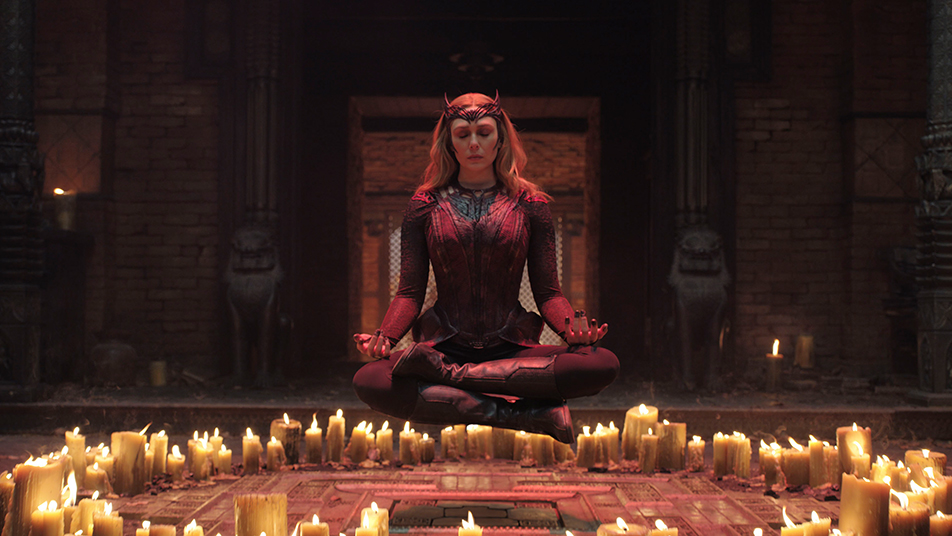
    Doctor Strange in the Multiverse of Madness (2022)

    As of now, the post-pandemic MCU has not only added 5 new feature films (soon to be 6), but also 6 new TV shows (soon to be 7), something that likely isn’t helping with how new fans approach the franchise as a whole since it is becoming increasingly difficult to go back and experience it in its entirety. This will probably lead to casual fans choosing select projects to watch while feeling daunted by the magnitude of the rest of the franchise, meaning they’ll probably be missing out on the connective tissue between IPs that makes the MCU so special. So, in a way, and considering the previous point regarding storylines, they might be experiencing lackluster stories without the bonus of the shared universe experience. Die-hard fans will have another vision, as living through the interconnectivity between the projects might somewhat help to hide the imperfections needed to get there. But since Marvel Studios should be focused on bringing in new fans, while of course still appeasing old ones, the fact that the MCU has become too big for newcomers should be a cause for concern. A nice jumping-on point would do the trick, since new fans haven’t gotten that yet, not even after Avengers: Endgame.

    How it Should All End

    So, considering all this, should Marvel Studios just call it a day and shut down? Of course not. As stated above the MCU as we know it should perhaps end, but only for a neo-MCU to rise from its ashes. And as all signs point to the overall storyline being told at the moment leading to a Secret Wars-inspired event, Marvel Studios might just have an ace up its sleeve when it comes to approaching its future beyond the aforementioned event. If they choose to, obviously.

    Secret Wars #0 (2015)

    Marvel Studios has been pretty loose when adapting comic events. Age of UltronCivil War, and Infinity War are all examples of that. So even if Secret Wars is coming, there is still much room for how it will end up getting translated into live-action. But if the ending somehow stays similar, it may solve just about every issue pointed out above faced by the MCU. At the end of the 2015 comic series, following the collapse of the multiverse and the creation of Battleworld, Earth is restored as Marvel’s Earth-Prime. While not making everything that came before meaningless—in fact, it was everything leading up until then that made this new Earth both a possibility and a reality—this allowed for stories to be retold from a fresh perspective, while also allowing for better integration of all storylines into a single, unified universe. And this is what the MCU will need by the end of its Secret Wars.

    Why It Will Be for the Best

    For several years, there wasn’t either the budget or the character rights to put the perfect MCU on screen from the start. And nowadays, it has become an issue how to integrate certain characters that should have been a part of it earlier on. Certain storylines were simply avoided due to those constraints while others, even though they worked, had to be adapted in a way that perhaps diminished their appeal and overall impact. Allowing the MCU to scale itself down only to follow that up with a steady-paced growing, aware, and capable franchise that is willing to use all its moving parts/characters/storylines in the best possible way, could only mean good things for this new incarnation of the MCU in the long run.

    Secret Wars #9 (2016)

    Several actors could keep playing the same characters, new ones would enter the frame, and even legacy characters would be able to return without making audiences feel cheated in the way they were invested in their previous iterations. It would just be a case of letting go in order to both cherish and appreciate the past but also accept that a brighter future might be ahead. No sacrifice made up until then would have been in vain and it would all still have started in a cave with a box of scraps.

    The MCU is dead. Long live the MCU!

  • ‘Doctor Strange in the Multiverse of Madness’ Reflects Marvel Studios’ Biggest Challenges Moving Forward

    ‘Doctor Strange in the Multiverse of Madness’ Reflects Marvel Studios’ Biggest Challenges Moving Forward

    There’s something rather interesting about Doctor Strange in the Multiverse of Madness. A lot of discourse surrounding the film has mainly been about the Illuminati and its members, Sam Raimi’s directing style, and how it “feels different” from the usual Marvel fare. Yet, after the film’s release, there’s been a hot debate regarding its rating as a PG-13 film, which has sparked an online discourse on if it should’ve been R-rated given some of the takedowns at the hands of Wanda. While some are understandably annoyed by the notion that one looks bad at horror elements in genre films, it does highlight Marvel studios’ biggest challenge when advertising the Doctor Strange sequel and ironically highlighting the current trend within its Phase 4.

    A Multiversal Level of Expectation

    Dr. Strange in the Multiverse of Madness: Die Charaktere von Dr. Strange 2

    The term “multiverse” has become synonymous with the potential of cameos and actors returning in roles they once popularized. Spider-Man: No Way Home certainly proved that very fact with Tobey Maguire and Andrew Garfield‘s return. Yet, it also became a hindrance finding dragging expectations for Multiverse of Madness to new levels, as people expected a romp throughout Marvel’s extended cinematic history. The tease of Patrick Stewart‘s return definitely raised the bar in that regard, with many expecting more Fox characters arriving in the Marvel Cinematic Universe.

    Ironically, it’s been an underlying issue ever since WandaVision was first teased, as many put out their hopes that each time she shows up, the X-Men and mutants would make their arrival within the cinematic franchise. Yet, that was obviously never the intention; Evan Peters‘ Ralph Bohner should’ve been the very obvious warning for that very notion. Yet, on some level, Marvel Studios must’ve been aware of that expectation as their marketing started leaning hard into the “who might appear” notion of the project.

    Illuminati getting a highlight in the last trailer almost seemed like a call to get people to wonder who else might show up and deter any thoughts of “so it’s only the Illuminati” early on. The rumor mill has gone rampant in a way that true believers started guessing who could appear with Kang, Deadpool, Wolverine and so many more getting even just a passing reference. Yet, the Doctor Strange film stayed true to what it is, a Doctor Strange story. The marketing doesn’t shy away from it either; they barely even hid Scarlet Witch’s turn to evil. Yet, people may have still expected an Avengers-level crossover leading to its potential frontloaded box office due to what No Way Home offered them only a few months before.

    Any story dabbling in the multiverse is going to have this preconception built-in, may it be the eventual arrival of Kang and even other franchises like Warner Bros.’s upcoming The Flash film. Even comparisons made to Everything Everywhere All At Once are a showcase of a story element being interpreted in a specific way, while also letting previous releases shape the “expectation” going in. Multiverse of Madness was never advertised in any way similar to the Michelle Yeoh film, but it naturally became the “next” benchmark going into the other. Even if it’s an indie film with no real expectations going in, story, structure, or brand-wise, it was about the multiverse and that’s all it needed for “easy” comparison material.

    A Horror-Defining Genre of Challenges

    Doctor Strange in the Multiverse of Madness | Cineplexx AT mobile

    There’s an interesting juxtaposition between the film’s take on horror and how it was presented through its marketing. We’ve known for a while that this was going to be a horror film, a genre that is popular but also extremely niche. The highest-grossing horror film to date is the first entry of 2017’s It at a domestic gross of $327.5M. Even the more action-oriented Meg couldn’t break beyond $145.4M, which is quite far away from its 1975 inspiration Jaws, which was the originator of the term “blockbuster” release.

    The 2017 film broke horror boundaries to gross $701M worldwide and still stands at the top of the board if you go by unadjusted box office numbers; a showcase of an exception rather than the rule. Yet, the film was very obviously an R-rated horror film with the added nostalgia factor from the 1990s It miniseries. In a way, it was the first true blockbuster horror film in a while to make bank, but it never shied away from what it is. Yet, even that film couldn’t escape a B+ CinemaScore rating when it was released.

    There was a lot of discussion surrounding Multiverse of Madness‘ CinemaScore with a B+; some even hinting at the general audience’s not liking the film as a result. Yet, if you look at horror’s history with that broad of a target demographic, they rarely score above B. Even the well-received Scream revival from 2022 with a 76% acceptance rate by critics and 81% Audience Score couldn’t escape a B+ scoring. Last year’s Candyman received a B rating even with a 72% Audience Score and 85% Tomatometer score from critics. It’s simply a genre that doesn’t seem to mesh well with the general audience; something that tends to get forgotten in the discussion. Marvel Studios’ latest is compared with Marvel Studios’ previous, but that might not be as simple anymore

    Moving forward, if their projects start to dabble more with new concepts and different directions, this might become the norm. Not that every film in the MCU will end up with a B or B+ evaluation, but that there will be more projects that may stick out from some more audience-friendly fare. Spider-Man: No Way Home has a strong A+ rating, which strongly showed in its cinematic staying power. Shang-Chi and Black Widow enjoy an A and A- rating respectively. The latter two dipped their toes in kung fu and spy cinema as the base of their inspirations. So, Doctor Strange and even Eternals may be exceptions rather than the rule, which we could see happen more often.

    Weight of Audience Expectations

    Doctor Strange In The Multiverse Of Madness 'Will Make Evil Dead II Fans  Very Happy,' Says Kevin Feige – Exclusive | Movies | Empire

    Doctor Strange in the Multiverse of Madness has faced a sharp drop in its second weekend by 67%, but the film still is only a few days away from crossing $700M. While it seems unlikely it’ll become the first horror film to pass $1 billion, the film is definitely taking many cues from Raimi‘s time with Evil Dead and Drag Me to Hell. If it comes to superhero storytelling and that director’s name, Spider-Man is what many might think of. In a way, we did expect horror elements, but Marvel Studios purposefully hid away any brutal takedowns that took place in the film. There are hints of Wanda crushing an Ultron bot, but no one expects her to literally turn Mr. Fantastic into spaghetti before his head pops.

    In a report by Deadline, besides the rather bizarre “Uncle Vinny” section, a statement is made that only 27% of viewers would rewatch the film. It includes a curious statement by the Kentucky-Delaware exhibition head Rick Roman, who highlights that the film lacks rewatchability.

    The movie has to be loved and enjoyed enough to want to see it a second time. My moviegoers feel the film is not good enough to see again.

    Rick Roman

    The article highlights that viewers’ negative reactions were mostly in regard to the “MCU discussion about storylines that may have jumped the shark and high expectations from the trailer to the actual film” which connects to the points made above. People have continuously expected the multiverse storylines to be the next Captain America: The Winter Soldier that reshapes the entire franchise moving forward. This is even highlighted by the Uncle Vinny rant in the article that there’s no clear path because Marvel Studios decided to play a long con this time around.

    Word-of-mouth definitely played a key fact, as people probably expected horror but not Evil Dead going into the film. Some may have hoped for their usual Marvel fare and were met with something quite different and, like Eternals, unabashedly trenched in a different genre. One could make a similar discussion with the Chloé Zhao film, which faced a harsher critical reception. In a way, the echoed indie film’s reception from the general audience, which doesn’t usually get CinemaScores to begin with. So, the only current comparisons would be The Northman‘s B and The Unbearable Weight of massive Talent at B+.

    It even reflects the critical reception of these stories, as many are pointing out to “X director’s style not meshing with Marvel’s usual flair” highlighting a very interesting trend in how perception has shaped what makes an “MCU film.” While critically, there has been an ongoing wish for more innovation and creative freedom in regards to Marvel projects. Yet, as it has happened, we’re seeing the natural reaction of something being “off” due to it not following the preconceived notion. If one expects specifics going in, anything that moves away from that will stick out like a sore thumb, which might be something that falls once those expectations are dropped on a rewatch; only if it actually gets one.

    Can’t Make an Omelette Without

    Doctor Strange Multiverse of Madness: Diese Figuren sind tatsächlich dabei!
    The same Deadline mentioned earlier highlighted that their approach to “plus-ing,” a Disney process where they keep adding to a project even if it’s deemed as the “worst” at one point, could potentially be reaching its limit. The concept strongly focuses on building upon what worked and what didn’t, which some tend to connect with a more formulaic and I strongly disagree with the “factory” view of their productions, as more and more behind-the-scenes statements highlight how surprisingly effective the company is at improvising. Yet, the standardized view of how more mainstream productions work has led to overshadowing what Phase 4 really is trying to do.

    It’s hard to deny that most of the current projects stand out for different reasons; even if controversial ones. Marvel Studios very likely saw the challenge of following Avengers: Endgame and tried to take a step back rather than double down. Complaints have become so varied, that they may be reflecting how the general audience is feeling post-COVID many have felt a loss of control. Now, if the perceived “usual Marvel fare” is starting to try out new things and evolve to stay relevant, some might need a while to adjust.

    Moon Knight‘s mind-bending fourth episode may have ruffled some feathers with those expecting a more straightforward experience. Thor: Love and Thunder is very likely going to continue this trend, as Taika Waititi has publicly teased its romantic comedy elements. They may or may not fully dive into similar to Multiverse of Madness‘ horror, and it is very much something Waititi has been dabbling with such as his work on Our Flag Means Death. We might see a wild variety of receptions throughout Phase 4 as Marvel Studios continues to find a more diverse footing to break beyond expectations and offer different audiences unique experiences.

    One thing is clear, the general audience still enjoys these films. Even if massively frontloaded, one cannot downplay Doctor Strange in the Multiverse of Madness‘ initial draw at the box office. There are quite a few different elements possibly at play here and the challenge will be to keep that early momentum. There’s no clear trend that general audiences “are done” with Marvel films, quite the positive so far. No Way Home definitely created some good faith and there’s a chance that Disney+ releases give these projects a new life that extends into the cinematic experience, a counteract to the 45-day release window affecting its cinematic release.

    One thing is for sure, Marvel Studios’ future endeavors might not be as simple to dissect as they start embracing more avenues moving forward.

    Sources: Forbes, The Numbers, RottenTomatoes (Scream), RottenTomatoes (Candyman), Deadline, The Numbers

  • Marvel Studios 6 Worst Post-Credit Scenes

    Marvel Studios 6 Worst Post-Credit Scenes

    The case has been made. Marvel Studios long-standing tradition of post-credit scenes has become a distraction and should come to an end. By taking on a life of their own, they’ve become parasitic in nature, taking the focus off of the film and dominating online discussion. Here’s a look at 7 post-credit scenes that help support the claim that it’s time for them to take a dirt nap.

    Iron Man 3

    Iron Man 3 (2013)

    While humorous, the post-credit scene to Iron Man 3 essentially only served to make sure audiences didn’t forget about the Science Bros. from The Avengers.

    Thor: The Dark World

    Thor: The Dark World (2013)

    It’s not surprising that one of Marvel Studios’ worst cinematic efforts has one of its worst post-credit scenes. Following the film’s conclusion, fans are treated to getting to see one more shared kiss between Thor and Jane Foster. It’s great because Jane then disappeared for nearly a decade’s worth of content, only being mentioned as a joke in Avengers: Age of Ultron. The little joke about the Frost Beast left behind on Midgard is actually more impactful.

    Captain America: Civil War

    Captain America: Civil War (2016)

    The film introduced the MCU version of Peter Parker to much fanfare. We’re now a whole trilogy away from his intro, and Tom Holland’s Spider-Man has proven wildly popular and his most recent film is one of Marvel Studios’ best yet. However, the post-credit scene following his introduction lacked any kind of punch at all. It showcased his flashy Spidey symbol, something that hasn’t been revisited since. If the only purpose it served was to let fans know we’d see more Spidey, I’d rather have had the “Spider-Man will return” text.

    Doctor Strange

    Doctor Strange (2016)

    In fairness, the Strange franchise was overhauled when the entire creative team from the first film left Doctor Strange in the Multiverse of Madness and was replaced by Michael Waldron and Sam Raimi. That might, however, be indicative of one of the big problems with these post-credit scenes in the first place: short of maybe Kevin Feige, there is no guarantee that anyone’s ideas will carry on beyond the scenes. Scott Derrickson was moving the franchise in one particular direction; once he left, the idea of Mordo hunting sorcerers probably left with him. 616 Mordo didn’t even appear in the film but, as Waldron pointed out, that just means he could still be out there doing his thing. It’s too bad fans will probably never see it. This is why the return of One-Shots would be a considerable upgrade.

    Spider-Man: Homecoming

    Spider-Man: Homecoming (2017)

    One of the most chilling post-credit scenes of all…now rendered totally useless by the events of Spider-Man: No Way Home. It’s not to say we’ll never see Michael Mando’s Mac Gargan suit up as Scorpion and hunt down Spidey, but any chance of him getting the info out of Michael Keaton’s Adrian Toomes disappeared with Strange’s spell. Of course, Keaton hasn’t been back in the MCU since then anyway, but that’s a different story.

    Eternals

    Eternals (2021)

    This scene has the potential to be redeemed, but depends an awful lot on whether or not Marvel Studios ever does anything with the Eternals again. While the film sets up the promise of more adventures, the reality is that nobody (both in the MCU and in real life) knew about them before the film, so nobody is going to miss them after. This scene really only works for hardcore Cosmic comic fans, and even then it’s a stretch. Harry Styles is gorgeous as Starfox and Patton Oswalt was a great fit for Pip; however, introducing Starfox AFTER Thanos is dead is a bit of bad timing and Pip is probably just going to end up as a walking practical joke. As it stands, it wasn’t time well spent.

    In all honesty, the list had to be trimmed down to focus on these 6. The other Eternals’ scene, the recent Clea scene and more were all up for consideration, but these 6 helped provide a more well-rounded look at the issues Marvel Studios has faced. Given they’ll certainly not stop putting them together, we can revisit this down the road and see if these are still among the worst.

  • Solve Everything: Analyzing John Krasinski’s Future as the MCU’s 616 Reed Richards

    Solve Everything: Analyzing John Krasinski’s Future as the MCU’s 616 Reed Richards

    One of the biggest surprises coming out of Doctor Strange in the Multiverse of Madness was the inclusion of John Krasinski portraying Reed Richards in the Illuminati. Having been one of the most popular fancasts for a number of years, Marvel Studios’ latest theatrical release gave audiences a brief tease of him and his flexible action. Naturally, the next question worth asking would be ‘Is Krasinski now set to portray Reed Richards in the upcoming Fantastic Four film?’

    The Case For It

    The most obvious case for Krasinski to be portraying Reed Richards in the upcoming Fantastic Four film is that we’ve now officially seen him play the role in a Marvel Studios-produced film. As opposed to before the release of Doctor Strange in the Multiverse of Madness, the idea of Krasinski playing the role is no longer simply a hypothetical based on online speculation. A factor that would lean towards this being more than a one-off cameo is Kevin Feige and company not leaning towards using an actor from a previous Marvel project in the role like the rest of the Illuminati members. Assuming one of them would’ve been available, it’s logical to think Marvel Studios would’ve made the call to one of the previous actors that portrayed Mister Fantastic in Miles Teller or especially Ioan Gruffudd

    As well, it certainly isn’t unprecedented for the Marvel Cinematic Universe to use a different film as a backdoor introduction for a future lead character. This method dates all the way back to the introduction of Scarlett Johansson’s Black Widow during the events of Iron Man 2 and was used to introduce some of the most popular characters in the MCU with Spider-Man and Black Panther in Captain America: Civil War. Having that be the way Reed Richards was officially introduced wouldn’t be completely out of the ordinary. And with that, using a multiversal Variant to introduce audiences to the character would be an interesting subversion of this MCU trope. It’d let Doctor Strange in the Multiverse of Madness serve as an introduction point for Mister Fantastic while letting whatever creative direction for the character is being planned remain unfettered by his portrayal in the May 2022 blockbuster. Hypothetically speaking, you could easily reintroduce Krasinski in any upcoming film as a normal Reed Richards and that would alert fans to the imminent arrival of the Marvel Studios’ take on the First Family.

    And of course, the recent news about the end of the Krasinski-led Jack Ryan series after this upcoming season of production has further expedited conversations on if the actor will be playing Reed Richards. It’s definitely worth having the conversation with Krasinski in theory having what was previously a major part of his schedule cleared up.

    The Case Against It

    And yet, it can’t be said with 100% certainty that John Krasinski will have the time in his calendar to make a long-term commitment to the Marvel Cinematic Universe. Immediately production wraps on Jack Ryan’s fourth season, Krasinski will begin work on Imaginary Friends for Paramount Pictures. This is a film that he wrote, is directing, and will be co-starring in alongside Ryan Reynolds and Steve Carell (meaning a lot of his energy will be focused on this project). And following that, there remains A Quiet Place – Part III which would seemingly enter production not too far after Krasinki wraps on his previous film. While his involvement or role in the third film of this franchise isn’t announced, one would think that he would have at least some significant role in the production based on his large involvement in the previous two entries (alongside being the one to officially announce the film at CinemaCon this year). With rumors circulating of a potential 2023 production start date, this could certainly cause major scheduling issues for a potential involvement in the Fantastic Four film.

    Additionally, the argument can be made that Doctor Strange in the Multiverse of Madness would’ve provided John Krasinski some slightly more substantial material while part of The Illuminati if the had future plans for him. If he was going to portray Reed Richards in the upcoming Fantastic Four film, one would think Marvel Studios and the team behind the film would give a more concrete characterization of Reed Richards in the film for audiences to latch onto beyond passing references to his lore. And while the argument of why him NOT being a previously used actor in a Marvel project makes him stand out from the rest of the Illuminati, him solely portraying the character in a one-off nod to the online community is certainly well within the realm of possibility as the rest of the team don’t seem like locks to return in meaningful roles anytime soon. On that subject, there’s not much merit in the idea that it’s a cut and dry case that John Krasinski is playing Reed Richards solely because he was used as a multiversal Variant. The same logic can be applied to Patrick Stewart’s role as a fellow Illuminati member. Is that supposed to serve as an indicator that he will be the main universe portrayal of Charles Xavier in the MCU? Absolutely not. The first season of Loki clearly established the idea that there can be different faces for different Variants.

    The Verdict

    While it may not be the most exciting answer, it’s too soon to make a declarative answer on whether or not John Krasinski is playing Reed Richards in the upcoming Fantastic Four film. And it will continue to be the case until we get some more conclusive evidence on what the actor-director’s schedule will look like in the future (namely how involved he is with the third installment of the Quiet Place franchise). If I had to make a personal guess, I truly think we’ve met the main MCU version of Reed Richards with John Krasinski. At the end of the day, deals can be made and scheduling conflicts can be resolved, especially when it comes to being involved in what is bound to become one of Marvel Studios’ flagship franchises. As well, it’s never really been the nature of Marvel Studios to do this type of one-off cameo for an actor/character solely predicated from online discourse. Ultimately though, it now remains a waiting game to hopefully get an official announcement at an event such as San Diego Comic Con 2022 for further news about the direction being take with the Fantastic Four.

  • It’s Time for Marvel Studios to End Their Most Well-Known Tradition

    It’s Time for Marvel Studios to End Their Most Well-Known Tradition

    In 2008, fans who stuck around through the credits of Iron Man found themselves treated to a tease of greater things to come. At the time, given the nebulous state of the future of Marvel Studios, the tease came without a promise that we’d ever see the Avengers Initiative come to fruition on the big screen. 4 years later, it paid off in The Avengers, rolled out its own post-credit scene that set the stage for the larger narrative that would develop over the next 15 MCU projects. That run, which became known as the Infinity Saga, ended with 2019’s Avengers: Endgame which, ironically, was the first Marvel Studios film to run without a post-credit scene. Now, with the future of Marvel Studios more secure than it has ever been, it’s time for the post-credit scene to die.

    Marvel Studios’ Iron Man (2008)
    Marvel Studios’ Spider-Man: Far From Home (2019)

    After skipping out on the tradition in Endgame, Marvel Studios brought back the post-credit scene in Spider-Man: Far From Home, the final Phase 3 film. In hindsight, it’s a tradition they should have left behind as they moved into Phase 4. Once a fun source of “water cooler” conversation, the idea has grown beyond itself and evolved into something that’s become part of a parasitic online conversation where the scenes that come AFTER the movie generate more interest and conversation than the movie itself. It’s not a phenomenon limited just to Marvel Studios-Sony used the post-credit scene to Venom: Let There Be Carnage to market the movie-but Marvel Studios started it and now they need to end it.

    The conversation around the post-credit scenes poses a multi-faceted problem for Marvel Studios. While they still provide a fun tease of upcoming events, in recent years, more than one post-credit tease hasn’t paid off. For example, after the credits rolled in 2016’s Doctor Strange, audiences learned that Mordo was on a mission to eliminate magic users, especially those who violated natural law. Surely that would mean he’d cross paths with Wanda Maximoff, right? 616-Mordo was nowhere to be seen in Doctor Strange in the Multiverse of Madness, his role rumored to have been snipped from the film’s final cut. And what about the great Adrian Toomes/Mac Gargan scene at the end of 2017’s Spider-Man: Homecoming? With Doctor Strange’s spell erasing the memory of Peter Parker from everyone’s mind, it seems like the Vulture/Scorpion team-up will never come to pass. Will the tease of Venom in the MCU, set up in the post-credit scene to Spider-Man: No Way Home, have the same fate?

    Marvel Studios’ Doctor Strange (2016)
    Marvel Studios’ Spider-Man: Homecoming (2017)

    The fervor around the content of the post-credit scenes has grown to a point where fans are often more concerned with it than the film itself. Driven by leak culture, the knowledge of the contents of the latest Marvel Studios’ post-credit scene is often a more valuable commodity (more talked about) than the film itself. In fact, after recently attending the premiere of Doctor Strange in the Multiverse of Madness, almost everyone who asked me about the movie started off by asking, “How many post-credit scenes are there?” and “What’s in them?” It’s concerning that a post-credit scene that may have been shot over a few hours is of more interest than the billion-dollar films the studio is rolling out. And in this case, Marvel Studios delivered one of its worst post-credits scenes to date, though it featured a huge casting spoiler for a big star entering the MCU. But will she? Or will her cameo and the promise it carries be as empty as Mordo’s sorcerer hunt?

    As mentioned above, Multiverse of Madness’ post-credit scene, despite featuring 3-time Academy Award-winning actress Charlize Theron as one of Strange’s most important supporting characters, Clea, doesn’t quite carry the same weight as Fury’s post-Iron Man appearance. Despite Theron looking fantastic as Clea, it seemed hastily put together and didn’t really seem to line up with the film’s own ending, making it one of the worst efforts for the studio. What’s more, the drop in quality seems to be a trend in Phase 4 with none of the offerings so far coming near the thrills of introducing the Maximoff twins after The Winter Soldier.

    Marvel Studios’ Captain America: The Winter Soldier (2014)
    Marvel Studios’ Eternals (2021)

    Truly, the post-credit scenes have lost their novelty and have become an unnecessary distraction. Jake Lockley could have easily been put in the body of the final episode of Moon Knight. Sharon Carter’s phone conversation after the credits of the final episode of The Falcon and The Winter Solider may have done more harm than good, causing fans to speculate and theorize wildly about who was on the other end; as has been demonstrated over and over again, this will lead to faux outrage down the road when the speculation turns out wrong and fans will feel slighted. Will Starfox, or any of the Eternals ever be heard from again? No idea, but Harry Styles caused more of a buzz than the actual film. What was once a wink-wink-nudge-nudge to the comic book fans in the audience has become something general audiences are hungrier for than the films to which they are attached. Marvel Studios would serve themselves well by ditching the post-credit scenes. And if fans are still hungry for more, perhaps the studio could bring back One-Shots as a streaming alternative.

    Given they distract from the movies, aren’t always followed through on and the disturbing trend in their quality, it really is time for the Marvel post-credit scene to be retired. We’ll always have that kiss between Jane and Thor…before Jane disappeared for a decade.

  • ‘Multiverse of Madness’ Rumor Scorecard

    ‘Multiverse of Madness’ Rumor Scorecard

    Marvel Studios has certainly tried to keep major secrets in its last two films. In Spider-Man: No Way Home, for example, the appearances of Tobey Maguire and Andrew Garfield were rather unsuccessfully guarded. At the time, that film seemed like the secretive film of Phase Four. However, Doctor Strange in the Multiverse of Madness blew the Spider-Man film out of the water in terms of the extent and fervor over rumored cameos and plotlines in the film. Back in July, we wrote an article about some of the many rumors at the time. Now that the sequel is out, it is time to start talking about where all those rumors went wrong. This article is a comprehensive list of all of the major rumors and “leaked” cameos that turned out to be untrue.

    What Made It In

    If you are reading this, you have probably seen the movie, so it won’t take long to recap what did in fact happen. First, let’s take a moment to recognize those rumored characters that made it to the big screen. Of course, most of the Illuminati was ultimately teased in promos before the film was released, but Hayley Atwell’s Captain Carter, Lashana Lynch’s Captain Marvel, Patrick Stewart’s Charles Xavier, John Krasinski’s Reed Richards, and Anson Mount’s Black Bolt joined Chiwetel Ejiofor’s variant Baron Mordo as the now mostly violently-deceased organization.

    While Multiverse of Madness did not try too hard to keep it a secret, we now know with certainty that Elizabeth Olsen’s Scarlet Witch was the primary antagonist of the film. Benedict Cumberbatch did play a variant Sinister Strange, but he certainly was not a principal threat in the film. Similarly, Gargantos, the Shuma-Gorath adjacent creature did not play a real villainous role.

    Some rumors suggested that Wanda Maximoff would end up the victor of the film, much like Thanos. Others said that she would somehow pull a “reverse” version of one of her most iconic moments in the comics—”No more mutants”. If the Scarlet Witch sticks around the MCU long enough, that is certainly something Marvel Studios may want to eventually adapt. But, she certainly did no form of this in the movie, let alone create mutants in the MCU. While Wanda seemingly sacrificed herself at the end of the movie in an attempt to destroy the Darkhold forever, she certainly did not “win” by commonsense standards, though she easily could have had she not seen the error of her own ways.

    Charlize Theron as Clea in the mid-credits scene was arguably the biggest surprise for fans and one example of a cameo rumor that actually turned out to be true. However, some rumors pointed to the character playing a much more significant role in the film. Ultimately, Clea was left as a tease for future stories.

    Bruce Campbell garnered much speculation about a cameo given his many comments about the film, his appearance near a shooting location, and his history with director Sam Raimi. Campbell did in fact make what was essentially a goofy cameo during the movie and appeared again to finish the joke in the final post-credits scene.

    The Cameos That Weren’t

    Let’s be honest. Fan expectations for cameos were through the roof. Given that the Doctor Strange sequel had the capacity to encounter infinite variants, it was not too hard to imagine that we would get some high-profile ones. Still, the number of rumors and “leaks” gave many fans ultimately unrealistic expectations on this front. Let’s take a look.

    Deadpool

    One of the most popular and believable rumors sadly did not pan out. While the multiverse could have seen a classic funny guy cameo moment from Ryan Reynolds’ Deadpool, it was not meant to be.

    ‘Deadpool’ (2016)
    Loki

    A Tom Hiddleston cameo as Loki from the Loki series was practically expected at one point. Considering the strong ties between the Disney+ series and Multiverse of Madness, we did not encounter the character this time around.

    Balder the Brave

    Amongst all of the Illuminati speculation, one character that found his way into countless credible lists was Balder the Brave. Half-brother and friend of Thor, this would have introduced a relatively unknown character into the star-studded group. Whether that was the reason he ultimately did not appear is unclear, but perhaps viewers can look out for Balder the Brave in future projects, especially with Thor: Love and Thunder just around the corner.

    Doctor Strange Supreme

    The relationship between the Doctor Strange What If… ? episode and Multiverse of Madness was ultimately just one of inspiration. We knew that darker Doctor Strange variants would appear in the film, and Doctor Strange Supreme from the animated series was quite the fan favorite. The Strange variants in the film may have had some similarities with the animated fellow, but he definitely was not present.

    Marvel Studios’ ‘What If… ?’
    Monica Rambeau

    After her major role in WandaVision, there were hints that perhaps Teyonah Parris‘ Rambeau would return here. Instead, we got a variant of her mother, Maria Rambeau, who became Captain Marvel in the Illuminati’s universe.

    Marvel Studios’ ‘WandaVision’
    Wolverine

    Much of the Multiverse of Madness delirium came from fans’ eagerness to see X-Men and other previous Fox Marvel properties debut in the MCU. Obviously, Professor X’s introduction did just that, but all the rumors that Wolverine would appear turned out not to materialize. It is worth noting, though, that most of these rumors speculated that the iconic X-Men character would not be played by the iconic Wolverine actor Hugh Jackman and instead a new actor would fill those shoes.

    Hugh Jackman

    Weirdly enough, though, the rumors that a non-Jackman Wolverine would be making an appearance did not stop rumors that Jackman would make a cameo as something or someone else. He did not.

    Namor

    We know that Namor is set to play the adversary in Black Panther: Wakanda Forever, but there was plenty of speculation as to whether Tenoch Huerta’s Namor—or a variant—would make an early appearance in the Doctor Strange sequel. The Shuma-Gorath creature named Gargantos in the film, and that monster has connections to Namor in the comics. The Sub-Mariner is also a member of the Illuminati in the comics, so it made some sense. Alas, we will likely have to wait for Wakanda Forever to meet the character.

    Magneto

    Maybe one of the more disappointing omissions—whether it was credible or not—was Michael Fassbender’s Magneto. As noted, Charles Xavier sort of took on the Fox-Marvel and X-Men representation in Multiverse of Madness. The beloved antihero and villain will someday arrive in the MCU, but that day has not come.

    ‘X-Men: Days of Future Past’
    Agents of S.H.I.E.L.D.

    Fans of the Agents of S.H.I.E.L.D. ABC television series are always hoping for confirmation or signs that the show is canon to the MCU or will be relevant going forward. Fan favorite Chloe Bennet’s Daisy Johnson in particular had some rumors behind her, but there was ultimately nothing to them.

    Tobey Maguire

    Had the Doctor Strange sequel been released—as originally planned—after Spider-Man: No Way Home, the rumor that Tobey Maguire’s Spider-Man would cameo in the film would have been much less believable. But considering he made the journey from his Sony property to the MCU in the Spider-Man film, it seemed more possible. But, as we all know now, it did not happen here.

    Ghost Rider

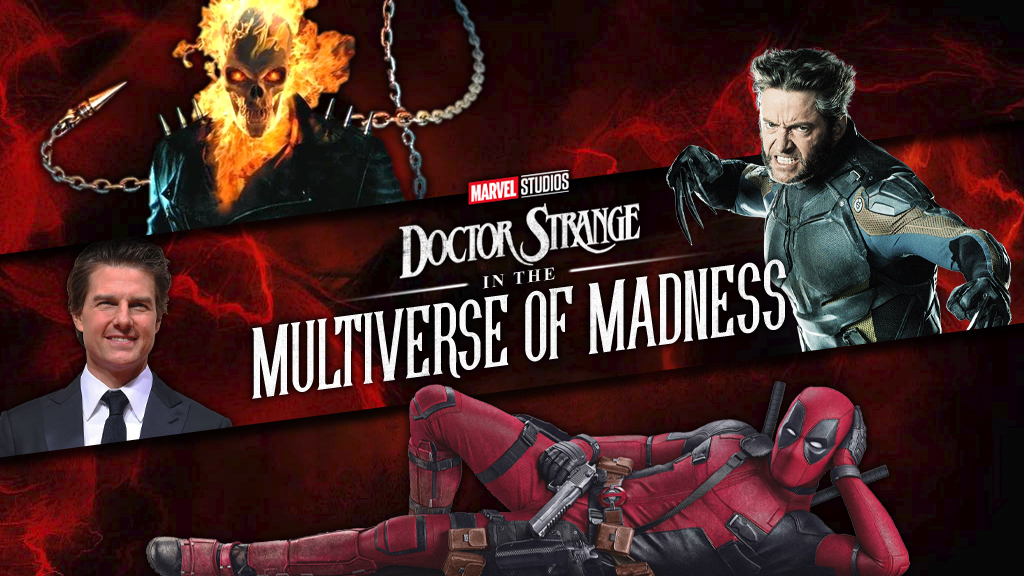
    Nicholas Cage returning as Ghost Rider? Sure, why not. But Multiverse of Madness was not the “Look we have rights to all these characters we did not before!” moment many were expecting it to be.

    ‘Ghost Rider: Spirit of Vengeance’
    Tom Cruise

    There were some hints in the trailers that including Ultron bots that led fans to think an Iron Man variant would show up. Tom Cruise ended up being the most talked about rumored casting for that ultimately non-existent variant, but some were thoroughly convinced Cruise would make his MCU debut.

    Daredevil

    While we got Charlie Cox’s Daredevil in No Way Home, another rumor in the same vein as the other speculated Fox characters cameos was that Ben Affleck would reprise his role as the Man Without Fear from his less-than-beloved 2003 film.

    ‘Daredevil’ (2003)
    Agatha Harkness

    Expectations that Kathryn Hahn’s Agatha Harkness could make some sort of appearance were pretty fair. The end of WandaVision and comics suggest that the older witch will still have a role to play in Wanda’s life. Still, Wanda ambiguously exited the events of Multiverse of Madness without ever seeking out Harkness or Harkness working her way out of where we left her in Westview.

    Kang the Conquerer

    After Jonathan Majors’ unexpected appearance at the end of Loki, fans are certainly on edge to see where he may pop up before his villainous role as Kang the Conqueror in Ant-Man and the Wasp: Quantumania. The character’s connection to the multiverse, as described in the Loki finale, could have in theory made a cameo from Kang make sense. But alas, he was not there.

    Marvel Studios’ ‘Loki’
    HYDRA Captain America

    A famous comics rendition of Captain America is the more recent HYDRA Cap. If it was not obvious, this was a version of Captain America aligned with HYDRA. After Chris Evans’ nod to it in Endgame, it honestly could have been a fun appearance. While Evans seems game to pop up in cameos everywhere in the entertainment industry, this is one where he was absent.

    Zombies (Mostly)

    Based on some of the trailers and other rumors, more zombies were expected by some. Whether the What If… Zombies!? episode was to be a direct tie in or it was an unrelated zombie universe, it seemed like a strong bet. We did not get zombies, but Doctor Strange inhabiting the body of the dead Defender Strange did provide some zombie vibes.

    White Vision

    Considering how important Vision is to Wanda’s story combined with the fact that White Vision—introduced in WandaVision—is very much still out there, the idea of a Paul Bettany Vision cameo was not out of left field. The actor even dropped some teases that he might be in Multiverse of Madness. He was not.

    Marvel Studios’ ‘WandaVision’

    Overall, had many of these cameos actually happened, Doctor Strange in the Multiverse of Madness could have been a much different film. Because of the extent of these rumors, some fans expected a movie where Doctor Strange bounced around countless universes and encountered major character cameos in each. Instead, we got a story focused more tightly on Doctor Strange with the Scarlet Witch as his strong adversary. In other words, the film ended up being a great story not weighed down by empty fan service. Even the Illuminati members that did make an appearance were more than just glorified cameos and significantly contributed to the story as well.

    All of these non-cameos, or some version of them, may likely show up in the MCU eventually. They just were not in this movie. Doctor Strange in the Multiverse of Madness is now playing in theaters.

  • 5 ‘What If…?’ Episodes Set Up in ‘Doctor Strange in the Multiverse of Madness’

    5 ‘What If…?’ Episodes Set Up in ‘Doctor Strange in the Multiverse of Madness’

    Doctor Strange in the Multiverse of Madness is exactly what it sounds like. Marvel’s Master of the Mystic Arts finds himself flung through a multitude of alternate worlds, encountering a constant stream of potential “what if?” scenarios in every one. Unfortunately, a movie can only tell so much story, and as a result, audiences only get quick glimpses into the divergent timelines presented throughout Sam Raimi’s latest superhero epic. With all the funky new concepts and character variants introduced in the film, fans may even leave the theater wishing Marvel Studios had some sort of animated Disney+ series dedicated to exploring their multiversal offshoots. Well, fear not True Believers. This seems like a good time to remind everyone that Marvel’s What If…? does in fact exist, and another season is still on the way!

    When the second batch of episodes finally hits the small screen, it’s sure to feature at least a couple of episodes based on events from the Multiverse of Madness. When it comes to what those episodes might be, there are a lot of options on the table. Luckily, we here at Murphy’s Multiverse have narrowed it all down to only a handful of the most intriguing choices. Follow along as we dive into the prism of endless possibility, and guide you through the vast new realities that could become episodes in the upcoming second season of What If…?.

    What If…Scarlet Witch Annihilated the Multiverse?

    This is the easy one, but it’s also maybe one of the most interesting. As those who have seen Multiverse of Madness know, Elizabeth Olsen‘s Wanda Maximoff takes a surprisingly dark turn as the film’s main antagonist. The former Avenger embraces the Darkhold and her title as “Scarlet Witch”, going on a killing spree in search of a universe where she is allowed to exist peacefully with her children. It was a goal she attempted once before in WandaVision, with slightly less violent methods. She’s eventually stopped by Doctor Strange and the young America Chavez, but she comes pretty close to achieving her goal.

    Earlier in the film, Benedict Wong‘s Sorcerer Supreme mentions that the Scarlet Witch is prophesized to either rule the multiverse or annihilate it. Thankfully, the latter never comes to pass, but what if fans were able to peek into a world where Strange and Chavez failed? What if, in another universe, the Scarlet Witch succeeded? The movie talks a lot about “Incursions”, when two universes collide and destroy each other due to excess multiversal fiddling. It’s likely that with no one powerful enough to prevent her from tearing through the multiverse, she would eventually cause it’s destruction in the form of countless incursions. This would be a catastrophic threat on the same level as the first season’s Infinity Ultron, and would be a good reason for The Watcher to intervene a second time.

    What If…Maria Rambeau Was Captain Marvel?

    One of the more exciting reveals of the Doctor Strange sequel comes in the form of the Illuminati. The team is comprised of Marvel heroes from across the multiverse, assembled to protect it and their world from any threat they deem too great to exist. One member of the group, Hayley Atwell‘s Captain Carter, already made her debut on What If…?, but her associates are a whole different deal. While major cameos like John Krasinski‘s Mr. Fantastic or Patrick Stewart‘s Professor X are incredibly cool, their lack of MCU history doesn’t exactly lend itself well to the premise of the aforementioned animated series. Luckily, the group isn’t a total What If…? scratch.

    Lashana Lynch makes a surprise return to the role of Maria Rambeau, only this time, she’s the one wielding unprecedented cosmic power. Chiwetel Ejiofor‘s Karl Mordo variant introduces the character as “Captain Marvel”, indicating this Rambeau comes from a universe where she was the one who took that fateful flight with Dr. Wendy Lawson and ended up in the hands of the Kree. Almost nothing about her origin or life are revealed in her few brief scenes, but her existence just begs to be further explored. If Maria was abducted from Earth, what happened to her daughter Monica? Was she raised by Carol Danvers? Was S.W.O.R.D. ever founded? What kind of galactic hero would Maria turn out to be? Also, that awesome Photon-inspired suit deserves a little more screen time than it actually got.

    What If…Vision Lived?

    For a decent chunk of Multiverse of Madness, the Sacred Timeline’s version of Scarlet Witch inhabits the body of another universe’s Wanda Maximoff and uses her to do all the dirty work. While this process, called “dream walking”, is pretty darn neat, it’s not the aspect of this scenario that’s most fascinating. The Wanda who falls under the Witch’s control is shown to be a loving mother of her two sons, living a relatively normal life despite still having her superhuman abilities. This suggests that the Maximoff of this world may not have suffered all of the same traumas as the mainstream Wanda fans have come to know. WandaVision taught audiences that the hero’s ideal life includes her husband, Paul Bettany‘s Vision, yet he’s nowhere to be seen during the film.

    Perhaps he simply wasn’t home when 616 Scarlet Witch broke in and began manipulating his wife, or perhaps he wasn’t able to survive in this universe either. Whatever the case may be, it sets up an interesting question that What If…? could answer. What if Vision lived? Would Wanda’s life look more like the domestic one we see in the film, or would the couple still be out saving the world with the Avengers? It’s likely the Scarlet Witch persona would not have been embraced in the same way viewers have seen in the MCU’s Phase 4, but if it had, how would Vision’s presence have impacted it’s effect on the world? Hopefully Kevin Feige and the team at Marvel Studios give us answers sooner than later.

    What If…The Illuminati Won?

    The Illuminati were an insane, unthinkable live-action superhero dream team…which lasted for all of a few minutes before they all died. Forced to confront the full power of the Scarlet Witch, each member of the group fell violently, one-by-one. Though, what if they hadn’t? What if the Illuminati had been able to put down Wanda Maximoff and keep both Stephen Strange and America Chavez in their grasp? The squad had just finished telling Strange that he was a bigger threat than the Scarlet Witch when the latter wiped the floor with them, and the implications of their big speech seemed pretty depressing.

    In the comics, the downfall of the Illuminati is their willingness to cross the line of ethics and do whatever they feel is necessary to protect the world. With the entire multiverse at risk, they might have offed the Sacred Timeline’s Strange in an effort to contain his supposedly terrifying power. What would have happened to his home universe had he never returned? As for America, it was only a matter of time before they discovered just how incredible her abilities really were. What would they have done with her once they knew? In the wrong hands, she could be a weapon used to “maintain peace” across all of space and time.

    What If…Doctor Strange Was Earth’s Mightiest Hero?

    When Stephen Strange fist arrives on Bruce Campbell‘s pizza planet, he’s greeted by an old friend-turned-enemy who’s become that world’s Sorcerer Supreme. Mordo explains to Strange that his variant died saving the Earth from Thanos, and had publicly become known as his Earth’s most popular hero. There’s even a statue bearing the inscription outside the Sanctum Sanctorum, and a whole museum dedicated to Strange’s life story. While later revelations from the Illuminati reveal this tale wasn’t entirely true, it does make one wonder where Tony Stark was while all of this was going down. His absence, and the lack of an Iron Man on the Illuminati roster, could be a subtle reveal that the universe in question never produced an armored Avenger of it’s own.

    If this is the case, What If…? could capitalize with an episode centered around a world where Stephen Strange is the face of the Avengers and everyone’s favorite good guy. A variant of Strange from a completely different universe, dubbed “Defender Strange” by marketing, is seen at the beginning of the movie sporting a sweet pony tail and black-and-red threads. What if this variant is from a world where Strange formed The Defenders as Earth’s Mightiest Heroes instead of Stark and Nick Fury leading the charge with The Avengers? It’s a longshot, but it seems like a story worth diving into.

  • Murphy’s Team-Up, Volume XX: Favorite MCU Second Films

    Murphy’s Team-Up, Volume XX: Favorite MCU Second Films

    Nathan Miller

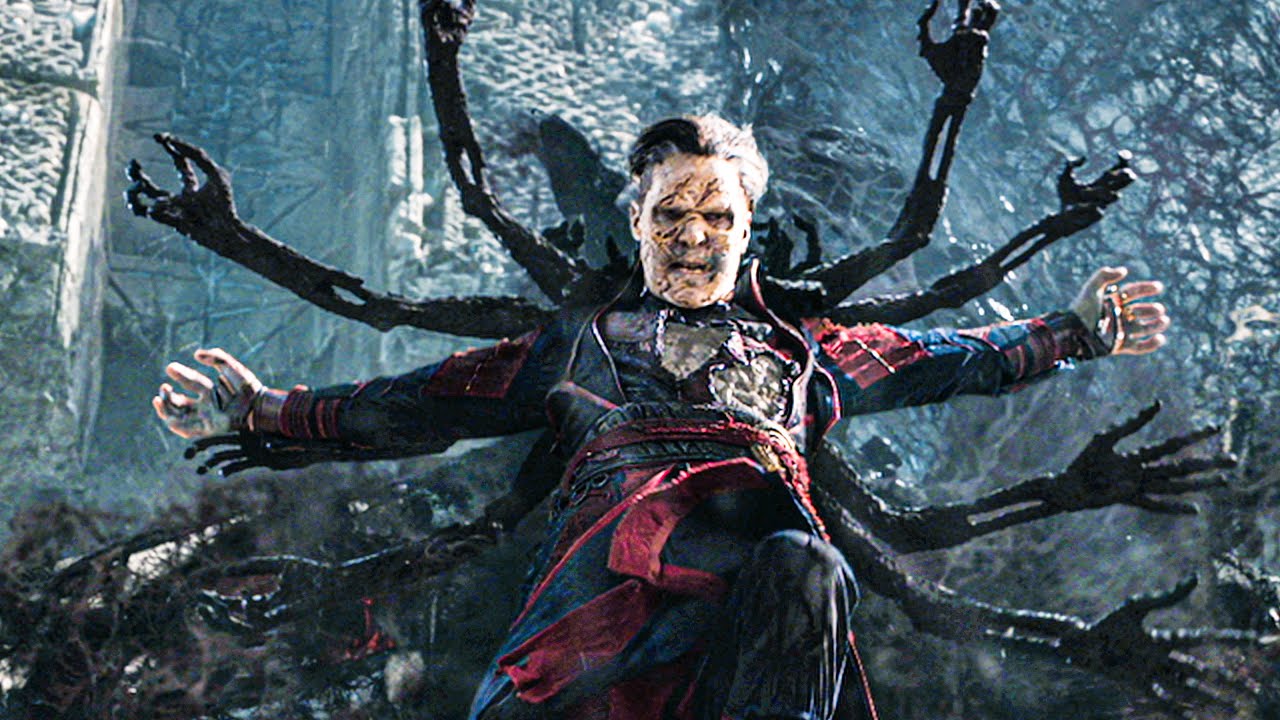
    Doctor Strange In The Multiverse of Madness is my favourite 2nd MCU film. I loved what a big swing they took for a second film. From the expansiveness of the worldbuilding to the tightness of the themes in driving the characters forward. While the plot is reasonably simple, the concepts it draws from are far-reaching. At the same time, motifs are repeated like the happiness and heroism of Strange and Wanda, which help the themes land successfully, despite the plot’s fast pace. All of that is without talking about the mind-bending VFX, and the brilliant guest appearances, both of which really hit hard about how infinite the multiverse is. While I wasn’t the biggest fan of the score, Sinister Strange fighting 616 Strange using musical notations was fantastic. With this continued inventiveness I look forward to more favourite 2nd Marvel Studios films from Eternals and ShangChi too. 

    Torbjorn Frazier

    While I definitely won’t go as far as saying that is objectively the “best” sequel in the Marvel Cinematic Universe, I’d be remiss to not take the opportunity to discuss my personal soft spot for 2018’s Ant-Man and The Wasp. The film does a strong job continuing and evolving the themes of its protagonists set up in the original film. Paul Rudd’s Scott Lang is on the continuing quest to be the hero his daughter deserves (both in superheroics and as a father). Meanwhile, Evangeline Lilly’s Hope van Dyne really comes into her own being introduced as Wasp while continuing to build trust and relationships with those close to her after the tragic events of her upbringing. As well, I maintain that Hannah John-Kamen’s portrayal as main antagonist Ava Starr remains arguably the most underrated villain in the MCU through this point in time. As the cinematic franchise continues to venture towards larger scopes in storytelling, Peyton Reed’s sequel has strong rewatchability both on its own merits and as a low stakes palate cleanser in relation to films like Avengers: Infinity War that came before it. Even still, some seeds were planted for the future between marking the true origin for Cassie Lang’s journey to becoming a hero much like her father and leaving the option for John-Kamen’s Ghost to return down the road. Ultimately, Ant-Man and The Wasp could be described as Marvel Studios’ take on the quintessential “family film.” And in relation to the rest of the MCU, I continue to find the sequel as such a positive experience and an underrated continuation to Marvel’s smallest franchise.

    Mary Maerz

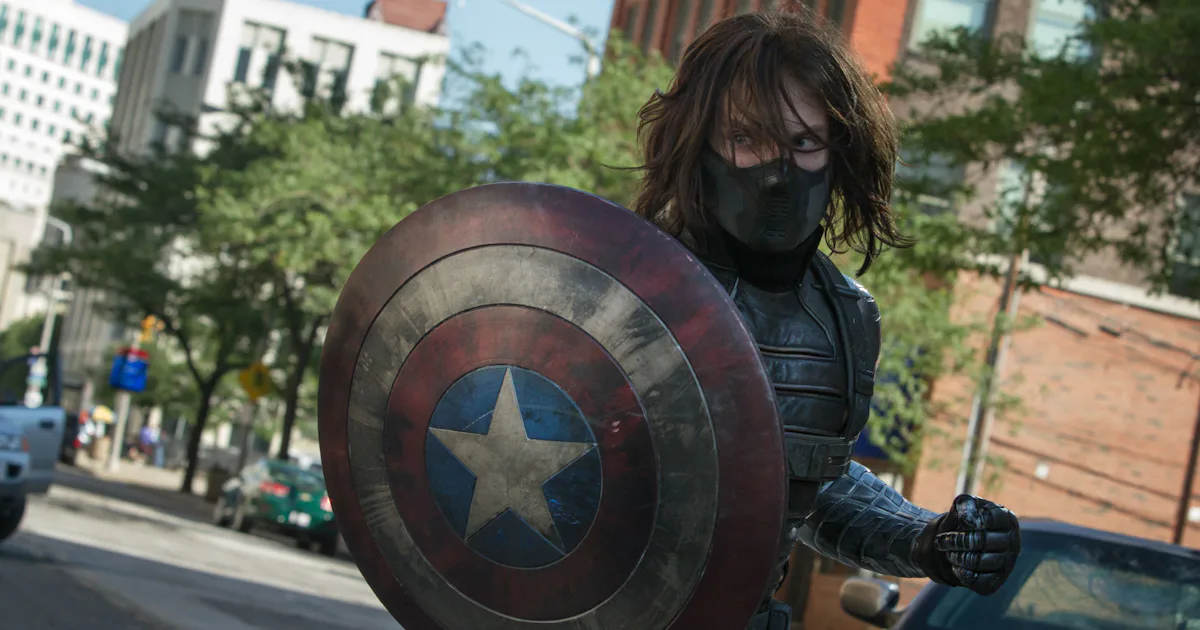
    Sebastian Stan Debuts Winter Soldier Shield, Teasing Fans

    Captain America: The Winter Soldier by technicality. I’ve seen it 333 times in the past 8 years, so it’s proven itself to be (by MCU standards) timeless. MoM is much more exciting, and it has all the potential to end up at #1 for me, but I’ve only seen it twice in less than a week. It’s much more ambitious and it is perfect in how it took one of the least realistic or grounded characters and ran with it. It’s wild, it’s fun, it has so much more personality. But TWS has that smooth, airtight, all-around quality to it that MoM as a concept probably never could. So for me it comes down to how well MoM ages, but they’re neck and neck as two extremely different movies.

    Joseph Aberl

    To this day, I still adore what Captain America: The Winter Soldier did for the MCU, especially as a sequel. While the first explored a war story with some superhero flair, it was its sequel that truly cemented Steve Rogers’ character and still manage to cohesively build upon the first even if he’s lost in a different era altogether. It may also be the first instance where the film truly embraced the roots of a different genre, which would become a cornerstone for future entries and set up the team that would define superhero cinema.

    Hunter Radesi

    A major part of the reason the original Guardians of the Galaxy hit so well with moviegoers was it’s emotional core. Director James Gunn found ways to reimagine the protagonists that made them feel real. Their stories were relatable and their goals understandable, with every brilliant character beat tucked neatly into a beautiful, hilarious, thrilling cosmic adventure. Vol. 2, despite catching flack from some critics, manages to be my favorite Marvel Studios sequel by maintaining every inch of this spirit and expanding upon the exciting universe established in the first entry.

    A deep dive into complicated family dynamics, exploring what it means to be human, and the admittance of redemption into an otherwise painfully difficult life. Maybe I just happened to see it at the right time in my life, but Rocket’s subplot alone will always hold a special place in my heart. I cry every single time. Also, the adventure itself is a lot more fun than it gets credit for. Creative action sequences, dazzling colors, and plenty of organic set up for galactic tales to come. If it’s been a while since your last watch, maybe give it another shot. You might be pleasantly surprised.

    Dalbin Osorio

    Doctor Strange in the Multiverse of Madness Ending Explained | Den of Geek

    If I was writing this before seeing Doctor Strange In The Multiverse of Madness, I’d have gone with Captain America: The Winter Soldier. However, having had the last 12ish hours to sit with the newest Doc Strange, I can safely say that this is as much a game changer as the 2nd entry in the Cap trilogy was and for many reasons. What worked for Winter Soldier was that it was still very much a Cap story, despite needing to set the stage for both Age of Ultron and Civil War. Doc Strange 2, in that vein, has the unenviable job of setting up the multiverse in spades (it’s no longer a concept, but a very real thing in the MCU), while also setting up Doctor Strange 3 in a very real way AND Secret Wars in a tangible fashion. We end with a corrupted Doc Strange, a bunch of dead sorcerers, and some much-needed growth for the good Doctor. We get Clea in the mid-credits scene, and that plants a seed for both the conclusion of the trilogy and the overarching story, but the shadow of Kang hovers above these proceedings when we realize that it was Sylvie’s decision to stab He Who Remains that has now caused these Incursions to happen in earnest. That one decision, in the void, has now set these different universes on a crash course for each other. Doc Strange 2 could’ve been forgiven if it focused solely on that, but this movie is as much Stephen’s story as Wanda’s in the sense that they are both chasing the thing they want the most only to find out their current iterations don’t deserve it. Whereas No Way Home needed the variants to move Peter forward away from the Avengers, the Variants in Doc Strange 2 serve to reinforce decisions that he made in order to save that team (and the universe). Michael Waldron deserves credit for how he wrote Wanda here, too, and I think it’s that well-earned heel turn that cements this as my favorite Marvel sequel. Wanda is a bad ass, who delivers some of the best lines (her telling Reed that it’s good that Sue is still alive because then their kids will have someone left to raise them was incredible), and is not to be trifled with. My favorite sequel from Marvel, for sure.

    Anthony Canton III

    Doctor Strange in the Multiverse of Madness made this question really tough. From Sam Raimi’s direction to the themes of the movie really challenged this spot. However when thinking of MCU sequels Captain America: The Winter Soldier remains the superior movie.

    Cap 2 is a technical marvel no pun intended. The introduction of Anthony Mackie’s Falcon, the incredible action scenes, and the tilt of Steve Rogers character tips the scales. Robert Redford as the shadowy leader of Hydra in a Marvel movie is wild to think about. The fight in the streets of DC between Bucky and Steve is top 5 in the MCU. This movie wasn’t just a marvel movie, it was an spy thriller.

    The movie asks and answers questions as to why S.H.I.E.L.D. should or shouldn’t exist. The deception of Nick Fury and Natasha Romanoff force Steve to think about being a hero differently. It informs Captain America’s decisions for the rest of his time in the MCU, good or bad. Everything from the beginning to the end with the introduction of Wanda Maximoff makes this the easy choice for the best MCU sequel.

  • How ‘Doctor Strange 2’ Proves the Disney+ Series Aren’t a Must-Watch to Keep Up

    How ‘Doctor Strange 2’ Proves the Disney+ Series Aren’t a Must-Watch to Keep Up

    There’s been a lot of discourse over the “homework” necessary to enjoy the latest Marvel Studios film, Doctor Strange in the Multiverse of Madness. Various articles are making their way online stating that one should watch Loki, What If…?, WandaVision, Spider-Man: No Way Home, and many more films to fully understand what is going on in Multiverse of Madness. Yet, even as someone who actively watches every new entry, wants to tell those that worry it might become too convoluted, there’s nothing to worry about. You don’t have to watch any of those projects to enjoy the latest films.

    We’ve generally noticed a trend that many Marvel Studios sequels don’t necessarily pick up where the first film left us off. As many might remember, Spider-Man: Far From Home is more a sequel to Avengers: Endgame than it is Homecoming. While it does build upon those story threads, the main arc builds around the death of Tony Stark. At the time of its release, there were some concerns that this might negatively affect the viewing experience but the film had a rather simple approach to solving that very issue. The film quickly catches us up in the beginning with a montage of those events, while also easing viewers into the narrative core of the story.

    Multiverse of Madness does the very same, as we get a very simple setup that helps us understand the motivations of the characters. We get a short line of dialogue on Strange’s choice of passing on the time stone in Infinity War, as well as the events that followed. So, we’re quickly caught up with where we last left off with his character development. At a later point, we even get a brief mention of Spider-Man that not only highlights how the end of No Way Home negates any necessity for this one, but it mainly helps those that wondered how the spell affected people’s perception of Peter Parker.

    Now, the big elephant in the room is the way the show handles the Disney+ series. They are the biggest additional and this is the first film that directly follows up on the events of one. You read that right, it follows up the events of one. While some articles claim to watch Loki and What If…? helps with the multiverse concept, there is no moment that Multiverse of Madness directly references the events of those Disney+ series. What If…? merely gets an indirect reference in the form of Captain Carter, who very likely is a different version altogether, while the God of Mischief’s storyline has no direct influence on the series.

    Some might argue that the inclusion of Kang and unleashing the multiverse would play a role in the story, but that’s not necessarily true. Loki, to this day, is more about his journey with the consequence of Sylvie’s actions being that the flat circle of time that represented the Sacred Timeline has been unleashed into the multiverse. Her actions indirectly would cause the fact that America Chavez even would come into existence and travel throughout the multiverse is possible. Yet, no one in the story is aware of that fact and neither would the viewer. Even if Michael Waldron wrote both projects, he’s mainly used it to set the ground rules for the multiverse, that’s all.

    In the same vein, that would mean you’re required to have watched all of Inhumans to understand why a guy named Blackagar Boltagon is sitting among the Illuminati and is played by Anson Mount. Or, you’d have to be aware of the fact that John Krasinski has been the most popular fan-cast to play Mr. Fantastic in the Marvel Cinematic Universe to fully understand why he’s in the film. Their inclusion has a meta-narrative included that doesn’t require everyone to fully understand it but creates the curiosity for those that know and don’t know who they are.

    Technically, the only Disney+ series that would be “required” is WandaVision due to how the film directly sets up the storyline from that series. Yet, the film swiftly goes through what a viewer needs to know. We see her wake up from a dream, which we find out is an alternative reality, where she lives with Billy and Tommy. While the characters were introduced in the Disney+ series, one could easily take away that these dreams are haunting her and creating this obsession with wanting her children back. She’s very vocal about it and Strange even mentions the events of Westview before we get a natural conversation on those events.

    Yes, you’ll get a full picture of why she wants her children but her story arc in this film and even the introduction of the Darkhold don’t fully require you to have watched the series. We swiftly get an introduction and viewers can easily fill in the blanks on why she has it in her possession. No one is required to fully understand how she got it, just that it is quite dangerous to own. What some might consider “required viewing” is the additional context for those that stuck around with the franchise.

    The “homework” narrative is something that we’ve created ourselves due to the interconnectivity of this franchise. Many feared that it could follow in the footsteps of the comics, which had multiple tie-in comic storylines, event stories, and additional ongoing series to keep up with for a full picture. Yet, one could argue that Marvel Studios found a good balance in how they use their Disney+ series and character cameos. To be fair, they’ve already been handling this balance across multiple franchises in the past.

    To give a comparison, the Iron Man trilogy explored Tony’s place in the world but he also had an additional arc explored in all Avengers films that worked in tandem with each other. Ultron was fallout from his own personal trilogy, but the concept of self-sacrifice was one specific to the Avengers films, which lead to Endgame’s final sacrifice. His story in Captain America: Civil War also helped bridge going into Infinity War, where we learned about those events with a quick joke about them breaking up “like a band” and everyone is swiftly caught up. Even Tony and Peter Parker’s relationship was more continued from Civil War and didn’t harp too much on their journey in Homecoming. Everything you need to know for that specific film was provided, the rest is just additional context.

    Marvel has learned to use dialogue and humor to swiftly catch people up without having to have seen every entry in their franchise. Even character introductions are set up in a way that you quickly know what they are all about, such as when Thor: Ragnarok showcases Strange’s abilities and has Thor mock the magician to help viewers know what he’s all about. Disney+ is simply a new format that adds some additional stories to the mix but doesn’t force anyone that isn’t interested to watch it just like you didn’t need to have watched Doctor Strange to enjoy his role in Ragnarok.

    They also are able to avoid the issue comic readers face for one specific reason: scheduling. Disney+ projects and their films are mapped out in advance. So, we only have a limited amount of projects released in-between films. When the pandemic hit, they’ve adapted story elements to fit their new timeline, which highlights how they use the format to keep the franchise from bloating with too many projects airing at the same time, something the Arrowverse suffered with 22+ episodes for multiple shows each season.

    Marvel Studios also seemingly gives specific types of films a different purpose. Solo films are there to explore new character arcs. It is why Multiverse of Madness is still Doctor Strange’s film as his arc is the main focus throughout, similar to how Civil War handled it. Wanda has her own storyline weaved throughout, but she functions as a force that also pushes Strange forward. While he had an important role in the MCU before, it never further pushed him as a character like it did now but only used what we know from the 2016 version as a base.

    The film still acts as a sequel to Scott Derrickson’s introduction of the character by making specific callbacks, such as the watch, adding context to a joke from the first film, highlighting Strange’s love for old rock, and so much more. It still manages to build upon the arc from his original film, by focusing on his worst character trait and tendency to be the one to fix everything, which highlights that after all his time in the MCU, he still has something to learn.

    What Marvel Studios can truly embrace with their model is that sequels aren’t shackled by linear storytelling from one entry to the next. If they followed older formats, the next film would’ve set up a new villain that may have a connection to Kamar-Taj or need an entire origin arc, and may wait a while before it explores something as out there as the multiverse. Plus, we’d have to ease viewers into the many spells that he’s learned throughout. Yet, we’re at a point where the spells aren’t the thing that needs to be explored in their complexity, context clues are spread throughout the MCU, and the focus remains on the multiverse.

    There is the drawback of tie-ins and set-ups muddling some plot elements, but Multiverse of Madness is, at its core, very much a Doctor Strange story, no matter if it hit as well as intended or not. In a way, it doesn’t even fully require you to watch the original 2016, as all-important context clues and story elements are eased in through context clues and dialogue. While watching previous entries certainly helps viewers get the full context, the films still worked as standalone pieces that help guide those in by highlighting what they need to know early on.

    So, there’s no need to panic if a new “viewer’s guide” tells you what you should or have to watch beforehand. If you’re interested to learn more, take it as supplemental material, but there’s no worry that every new project release is necessary to fully enjoy a new entry into the MCU. Just because some franchises dabble in similar concepts, it doesn’t make it a necessity to watch, and sometimes even trailers include all the information you need going in.

  • Three Ways ‘The Avengers’ Changed the Cinematic Landscape

    Three Ways ‘The Avengers’ Changed the Cinematic Landscape

    May 4, 2022 is a landmark day in the history of Marvel Studios as the 10 year anniversary of the release of The Avengers. While the true start of the Marvel Cinematic Universe was with 2008’s Iron Man, it wasn’t until the first true crossover that it became fully actualized and proven as a serious force in the movie industry. As the MCU has progressed into new territories since then, let’s stop down and recollect on five ways this film has changed the way major studio films have been made since.

    #1: The Rise of the “Cinematic Universe”

    The most obvious impact The Avengers has had on the larger film industry is major studios’ insistence on trying to follow suit of Marvel and create their own universes with characters from various connected films. Before, the concept of crossovers within major films were few and far between, and mainly predicated on passing references that’d never be followed up on. A fully interconnected cinematic universe was a concept many were skeptical of before the release of the 2012 summer blockbuster. Doubts were held over whether or not audiences would buy into the concept that a billionaire in an iron suit, a World War II hero, and a god from Norse mythology would fit in together in the same film. However in earning over $1.5 billion in the box office, Marvel Studios proved this idea to be a great success. Following this, general audiences were inundated with various attempts to copy Marvel’s formula to various levels of success. These have ranged between Warner Bros’ modestly successful MonsterVerse and Universal Pictures’ laughably ill-fated attempt with the Dark Universe. However, none have truly matched the level of success found in the Marvel Cinematic Universe and The Avengers.

    #2: Relatability in Characters

    While the rise in cinematic universe could be considered the most noticeable impact of The Avengers on major studio releases, the largest impact the film had was ushering in a change of the way audiences wanted to perceive their characters. In a vast majority of marquee films before 2012 (especially in relation to superhero films), central protagonists were treated as absolute godly figures. To use the then most recent popular superhero franchise as an example, Christopher Nolan’s Dark Knight trilogy presents Batman as someone with the strongest moral character once he has accepted the responsibilities of his powers and begins fighting crime. He’s not a character with much nuance to him and his struggles are presented to be more based on external threats around him than any meaningful internal pathos. Meanwhile, audiences were leaving The Avengers generally talking more about the moments of character development than the big action set pieces. Viewers made great connections to seeing the protagonists have to struggle with their internal identities to be able to work as a team. Ultimately, The Avengers made us realize we wanted our cinematic pillars to be more human and relatable.

    #3: The Anticipation of Post-Credit Scenes

    While focusing on essentially a solitary minute of The Avengers 143 minute runtime feels at least partially ridiculous, it can’t be denied that the end of this film changed the way major feature films optimized the coda of their projects. The ominous closing shot of Thanos looking towards the camera set the stage for the long-term destination of the Marvel Cinematic Universe. And with it, this generated large quantities of fan excitement at the thought of the road ahead and how these future films would connect. This indeed ended up becoming a strategically brilliant decision for Marvel Studios and Walt Disney Pictures both creatively and from a business stand-point at the time. Moving forward, large expectations have been made for essentially every blockbuster-type film to close with some hint of the future or how what audiences just saw connects to a bigger picture. Arguments can certainly be made for if this has now grown into more of a net-negative for the film industry and the creative process, but it’s certainly present and can be traced to Marvel Studios first major crossover project.

    Reflecting on the ten years since the release of 2012’s The Avengers paints the picture of how the film not only changed the course of Marvel Studios, but the entirety of the Hollywood film industry. And it will be compelling to look further into how this landmark film maintains its impact in the decade to come and beyond.