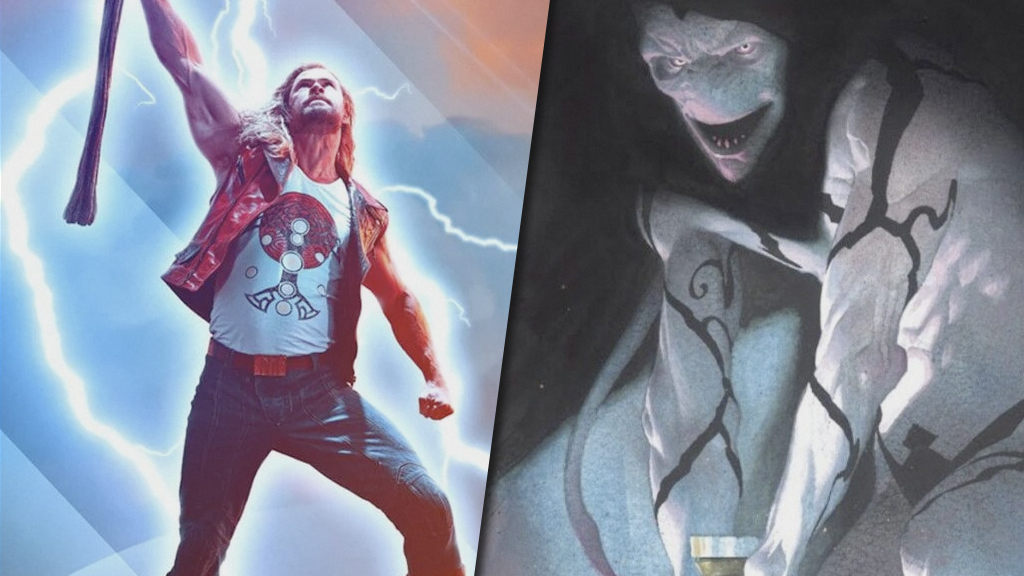
After much anticipation from fans, the first trailer for Thor: Love and Thunder finally arrived, bringing us our very first look at Taika Waititi’s next adventure with Chris Hemsworth’s Thor. The film will see Thor up against one of his most dangerous foes: Gorr the God Butcher, an alien that wields a powerful Necrosword and travels the universe killing gods. There’s still some uncertainty as to how the Marvel Cinematic Universe will adapt the character due to some legal issues regarding some aspects, but some merchandise may hint at some accurate origins.
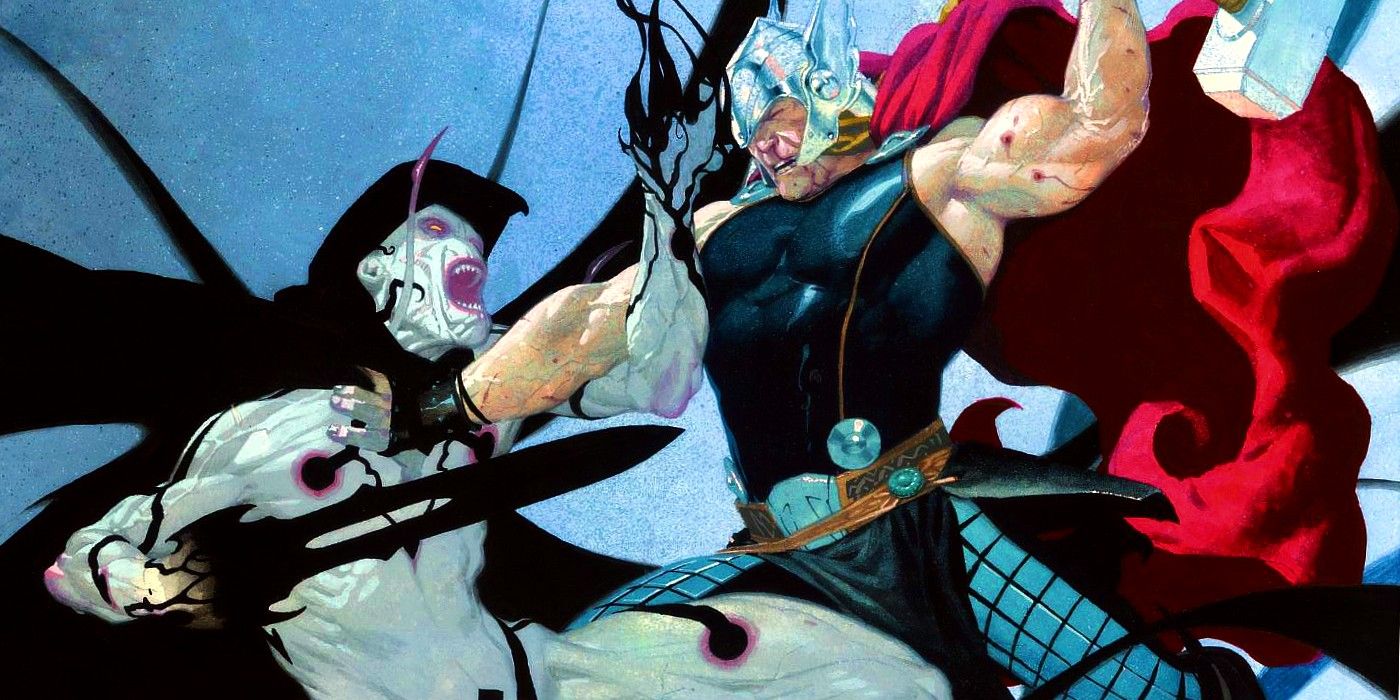
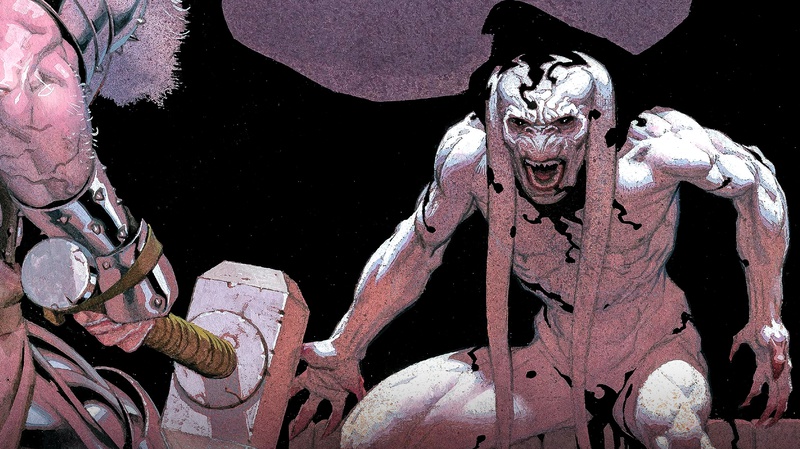
Gorr lived a tragic life, having lost everyone he loved most in his life and came to believe that there were no gods. Gorr was proven wrong when he stumbled upon a battle between the elder god Knull and other god who begged Gorr for helped. Gorr, who was enraged that gods did exist and had let his family perish, bonded with Knull’s Necrosword known as All-Black and slayed the other god. All-Black was the first symbiote, created by Knull and used to behead a celestial whose head ultimately became Knowhere.
All-Black left Knull and bonded with Gorr, allowing him to travel the universe slaying gods with the symbiote blade. This is where those pesky legal issues come in because as we all know, the film rights to the symbiotes and everything else pertaining to Spider-Man belong to Sony, making it very difficult to continue that connection between Gorr and Knull. Marvel Studios has run into these issues before. For Guardians of The Galaxy Vol 2, the studio made a deal with Fox that allowed them to use Ego.
Some new merchandise may hint that Gorr could still be wielding All-Black and that there could indeed still be symbiotes somewhere in the MCU. A new Funko POP! for the upcoming Thor: Love and Thunder wave of figures shows Gorr wielding a sword and levitating via some sort of black liquid substance which looks very similar to how symbiotes are traditionally depicted.
It still remains unknown just what exactly Gorr is wielding, but it must have some connection to what’s beneath the figure. The only details we have on his weapon are from the back of Marvel Legends figure for the character only describing it as “A strange and terrifying weapon.” It’s entirely possible that Marvel and Sony have worked out a deal to allow for the story of the symbiotes, continuing on their multiversal story begun in Venom: Let There Be Carnage and Spider-Man: No Way Home, which saw a piece of a symbiote left in the MCU. Could Gorr be working with something similar? We may not have answers until Thor: Loveand Thunder hits theaters on July 8th!
The first trailer has finally dropped for Thor: Love and Thunder. It has included quite a few teases of what we can expect in the next film, which will be the first time a franchise has gotten a fourth entry. While everyone is probably talking about our first look at Mighty Thor, what stood out, even more, is that we got the confirmation that the film includes the Olympians. The gold-loving gods stand out quite a bit in the trailer and considering we got a few leaked designs for Thor’s armor, there’s a potential connection between that design and these newly introduced gods.
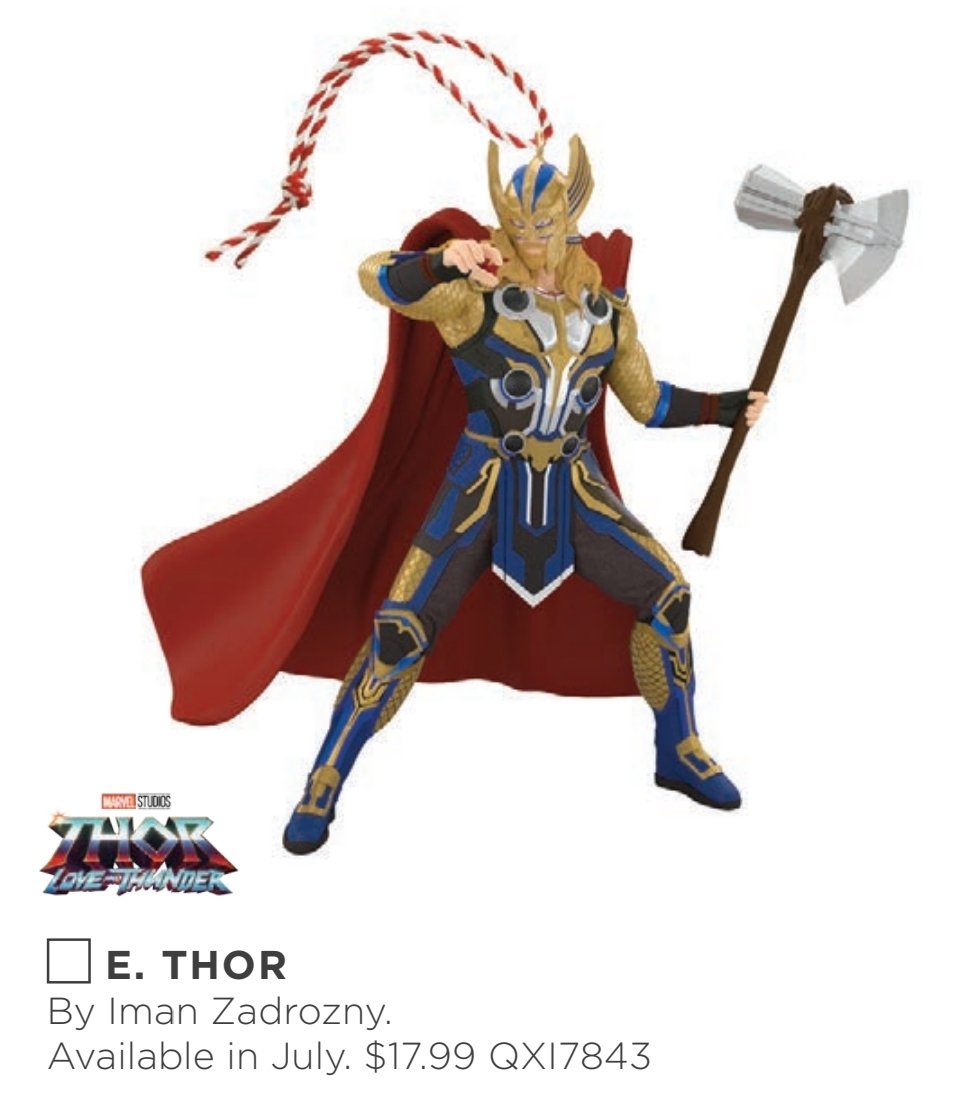
In the trailer, we have a brief shot of Thor already wearing a golden-blue armor. It appears early on, but there is actually a second one that was leaked with some of the Hallmark merchandise. In it, we can clearly see Thor wielding even more gold on his armor and even a new helmet. So, it raises the question of how he gets what may be his final armor before facing off against the main threat of the film, Gorr the God Butcher. Especially as there was no sight of it in the trailer.
What also stands out is that Russell Crowe’s Zeus is seemingly wielding lightning made of pure gold. It seems like it is his main weapon of choice and perhaps works similar to Thor’s weapons, as they are used to channel his thunder-based abilities. He is even wearing golden armor as he addresses his people in the trailer and has a statue made of the same material standing proudly at his entrance. So, it’s safe to say that these gods love their gold.
Gorr’s arrival seems imminent and he’ll turn the entire planet into a Greek tragedy. We do briefly see what looks like Korg, Thor, and maybe even Valkyrie visiting to warn them about the threat. After they leave, it may be too late and the gods are butchered. Our heroes quickly return only to see the remnants of the great kingdom they saw before. Some of the survivors may take the weapon of their leader and strengthen Thor’s armor as a way for him to carry on and battle Gorr united by the gods they’ve befriended in their travels.
So, it seems likely that his final armor may be strengthened by Zeus’ weapons that aid him in channeling his abilities even more. Stormbreaker remains his main weapon, but could also get an upgrade. Still, if he is going to face off against someone as powerful as Gorr, he might need to use as much power as he can to take him down. A plate armor strengthened by a fellow god’s golden lightning bolts could be exactly what he needs to even the playing field to take down the biggest threat to deities across the galaxy.
Following the introduction of both Konshu and Ammit in the first couple of Moon Knight episodes, Marvel Studios took yet another step into the rich Egyptian mythology that’s being built into the MCU by giving us a glimpse of its take on a few more characters based on Egypt’s ancient deities. This isn’t the first foray into the realm of gods for Marvel Studios, but it could certainly prove to be yet another substantial stepping stone toward the MCU’s near future.
Marvel Studios’ Thor (2011)
In episode three of Marvel Studios’ Moon Knight, Marc Spector, as Khonshu’s avatar, gets summoned to a meeting-of-the-avatars of sorts set within the Great Pyramid of Giza (perhaps serving as the MCU’s Overvoid). There, we meet the avatars of five members of the Ennead, a “super group of Egyptian gods” as described by Steven Grant in episode one. Its name comes from the Greek Enneás, which means “the Nine”, meaning that Steve was indeed right in correcting the mistake made by the National Gallery in its own exhibit’s promotional material. Of the nine gods with a place at the gathering, only five took to their seats at the chamber: Horus, Isis, Tefnut, Osiris, and Hathor. Shu (mentioned by name in episode one) and Geb (featured in the exhibit’s poster) were notably absent. As for the remaining two seats, it seems fair to think that those would belong to both Khonshu and Ammit, making the MCU’s version of the Ennead complete.
Marvel Studios’ Moon Knight
As for what these gods represent, little is set in stone in terms of who they are and what their main focus is within the MCU. Even the historically accepted constitution of the Ennead differs from the one we got in Moon Knight, leaving just enough room for Marvel Studios to slightly adapt each of the gods’ characters to fit whichever storyline might suit them best down the line. It’s not unheard of to have a god have multiple fields of expertise (let us put it that way), as it is actually extremely normal for that to happen. This means that it’s all up to Marvel’s writing teams to figure out where to focus on when, and if, these characters are called upon once again.
The Heliopolitans
And this brings us to the future of not only Egyptian gods in the MCU but, considering how Pandora’s box has indeed been cracked open, the future of many other pantheons of deities of specific spiritual practices and geographical locations. And the appearance of some might be more surprising than others.
Thor: Love and Thunder is an obvious choice. But this project will not only bring back Asgardian gods into the fold, as it is apparently set to introduce at least one character from the Olympians as back in April 2021 Russel Crowe seemingly confirmed that he would be playing Zeus in the Thor sequel. This might open the door for several other representatives of the Greek pantheon such as Ares, Poseidon, Apollo, or perhaps even Hercules. By making Gorr, the God Butcher, the main antagonist of the fourth installment of the Thor franchise, it would be a shame if many new gods aren’t introduced in order to, you know, be butchered.
The Olympians
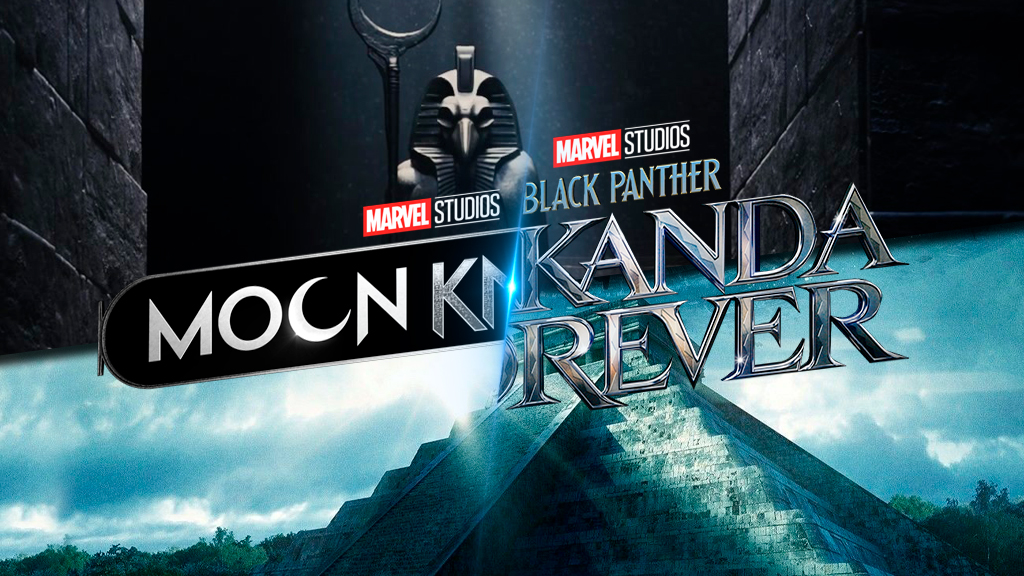
But another upcoming, and perhaps less obvious, MCU movie that might also hugely benefit from Marvel Studios embracing its mythology is none other than Black Panther: Wakanda Forever. As we already speculated last September, following the release of Shang-Chi and The Legend of the Ten Rings, the Black Panther sequel might very well decide to focus on the Aztec Empire making it serve as the grounded real-world connection to the mythical undersea kingdom of Atlantis. Going this route, and doubling down on the mythological unveiling within yet another culture depicted in the MCU, would mean opening the door to another, less recognizable, group of deities: The Tēteoh, a race of supernatural beings worshiped as gods by the Aztecs of ancient Central America, much like the Heliopolitans in Egypt or the Olympians in Greece.
The Tēteoh
Following the introduction of the titular characters in Eternals, continuing to explore the storyline possibilities set by the several Marvel pantheons, by characters beyond the realm of man, unconstrained and with a whole new set of motivations would certainly prove an interesting one. Especially because there are numerous groups left to explore: The Ahau (Mayan), The Akua (Polynesian). The Apu (Inca), The Daevas (Hindu), The Inua (Inuit), The Manidoog (Native American), and many more, including The Tuatha de Danaan and the Fomorians (both Celtic) who operate out of Otherworld, a place that is bound to make its MCU debut following the introduction of Dane Whitman, The Black Knight, in the aforementioned Eternals.
Marvel Studios’ Shang-Chi and the Legend of The Ten Rings
An interesting and easy way to justify how these characters have been on Earth all along even if we haven’t seen them or even acknowledge them before is to do what Shang-Chi and The Legend of The Ten Rings did with Ta Lo. In the comics, Ta Lo was a small “pocket” dimension adjacent to Earth, and it appears to be something quite similar in the MCU. It is described as a mystical dimension, inhabited by Chinese mythological creatures, that have managed to stay hidden not only by being difficult to access but especially by making it unclear to the outside world if it’s even a real place or not. And this is where Moon Knight‘s Heliopolis, as well as the Aztec Tlālōcān, the Greek Olympus, Otherworld, and many more otherwordly sites where gods roam, come to mind. They all share the common characteristic of being located on extradimensional realms, much like Ta Lo, with easy access to Earth through portals in the vicinity of where its inhabitants are worshipped by humans – places like Egypt, the Yucatán Peninsula, Mount Olympus in Greece, Stonehenge, and so on – making Earth the nexus of it all. A perfect answer as to how to bring the MCU to a new level of storytelling. Into The Age of Gods.
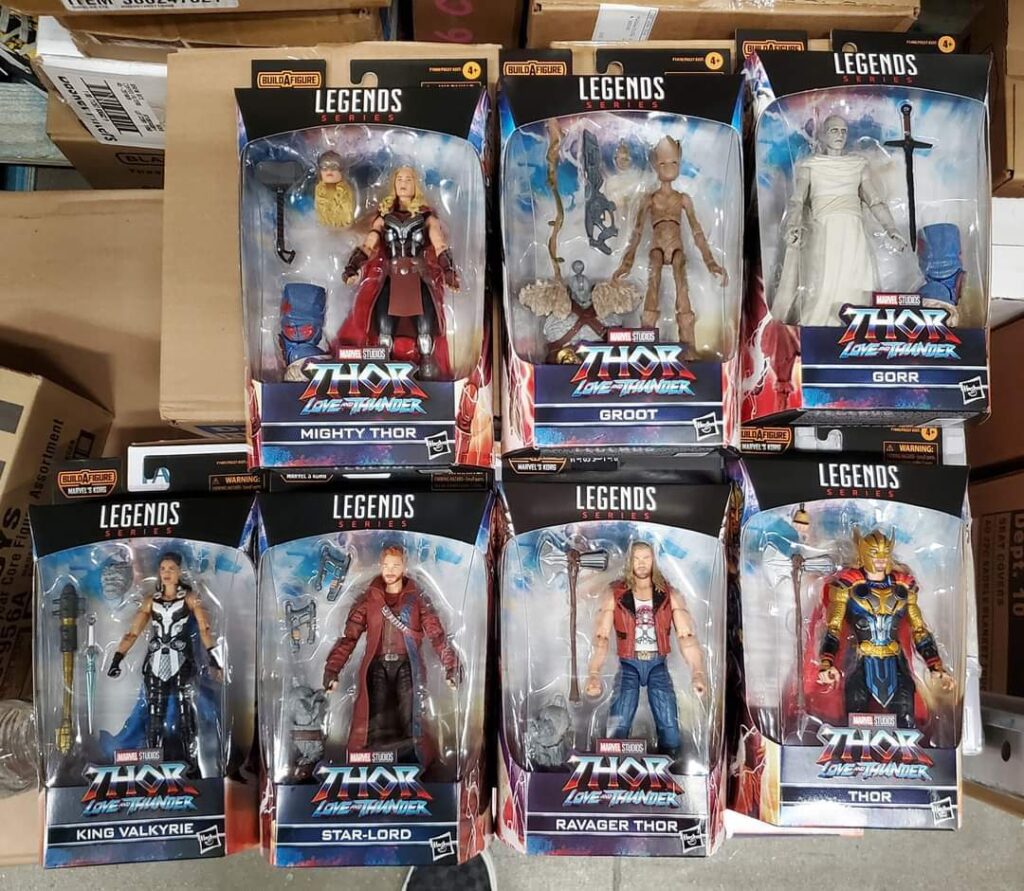
Once again Marvel Studios has allowed the first good look of a character from an upcoming project to leak through collectibles. This time, fans get their first look at Gorr the God Butcher, who will be played by Christian Bale in this Summer’s Thor: Love and Thunder.
The wave, which features 7 MCU-based characters and a Korg build-a-figure, gives fans their first detailed look at the villain as well as noting that Thor’s “Thunderstrike” costume will be referred to as “Ravager Thor.” It also features “King Valkyrie”, Star-Lord, Groot, Jane Foster’s Mighty Thor and the new Thor armor that has been present in much of the marketing for the film to date.
From the wave, it seems that Bale’s Gorr will not be an exact adaptation of the character from the comics; in fact, the character seems to resemble the humanoid aliens from 2012′ Prometheus more so than his comic counterpart. Of course, it’s reasonable to assume that Gorr, like many MCU characters, could take on many forms over the course of the film, so this may not be his final look.
Thor: Love and Thunder is set to strike theaters on July 8, 2022.
Bruce Willis is stepping away from acting and, in doing so, leaving a genre-defining career behind him. A recent statement from his family revealed the actor is suffering from aphasia, a cognitive disorder that affects a person’s ability to communicate properly with others. As a result, the icon will end his decades-long stint of performing and begin a new phase of his life. This is sad for a multitude of reasons, not the least of which is the way it will undoubtedly complicate things for himself and his loved ones. However, for the rest of us, we’ll be losing out on the possibility of a late-stage Willis renaissance, in the same vein as Robert Forster or the more-popular-than-ever Michael Keaton. Instead, the actor’s acclaimed time in the spotlight will have petered out with a long string of low-budget, direct-to-video features.
Despite having a sometimes tumultuous public image, Willis’ impact on Hollywood and American culture cannot be understated. Although he started as the face of a hit rom-com series, an impressive string of roles in films like Pulp Fiction, 12 Monkeys, The Fifth Element, and Armageddon established him as the epitome of “cool guy action star” mixed with a bit of “grumpy old dad.” A niche market to corner in the global eye, for sure, but one no celebrity may ever hold the same way again. Of course, none of this would have been possible for the actor if it weren’t for the late-80s phenomenon that was Die Hard. Still regarded as one of the greatest action pictures of all time, the movie’s success flung Willis into stardom and exemplified what every film of the genre would try to achieve after it. The initial flick spawned four sequels, made over twenty-five years and ranging in quality from a worthy follow-up to “why did they make this?”
As his career began to wane, it often felt like Willis was reaching back to his glory days in hollow imitation pieces. While Red was admittedly enjoyable, it failed to live up to the height of it’s star’s highest peaks, and 2013’s A Good Day to Die Hard ran through a series of predetermined motions without any of the edge that made the franchise so great. The series’ protagonist, John McClane, never even said his famous R-rated catchphrase, which was instead replaced by the more tongue-in-cheek “yippee-ki-yay, Mother Russia”. Once it became clear that Willis may be in the final stretch of his profession, a push was seemingly made to capitalize on the actor’s increasingly reclusive nature. M. Night Shyamalan brought Willis’ famous David Dunn character back for a send-off in 2019’s Glass, and Edward Norton gave him his last big-budget appearance with a supporting role in the noir drama Motherless Brooklyn, a sub-genre Willis had enjoyed dabbling in.
Yet, as recently as a couple of years ago, there was still an idea in the air to bring the personality’s biggest role out of retirement for one last go-around. Following the dismal premiere of A Good Day, Fox Studios was trying to find a way to revive the once-adored franchise with some sort of unique twist. There was an idea for a crossover film with Kiefer Sutherland‘s televised 24 series, tentatively titled Die Hard 24/7, that never materialized after certain contract negotiations stalled and the plot was retooled as a simple 24 sequel series instead. Inspired by this, there was then a plan to continue the Die Hard legacy with a 12-episode prequel mini-series called Die Hard: Year One, based on the graphic novel of the same name and starring a new actor as a young John McClane with Bruce Willisnarrating events as his future self. However, Willis despised the script and refused to contribute to or endorse its creation. As such, the project fell through and the franchise reset once more.
This brings things to 2018, when producer and writer Lorenzo di Bonaventura handed in a treatment for a sixth, and potentially final, Die Hard film simply titled McClane. The concept was similar to Year One, with a story that would venture away from the usual tropes of Die Hard to focus on the actual life of John McClane and reveal the origins of the character. Bonaventura described the movie as being a lot like The Godfather Part II, bouncing back and forth between McClane in both his sixties and twenties, with Willis returning as the older version of the one-time beat cop. Intentions were good, with the creative team aiming for a more thoughtful character study that would invest fans in McClane “more than ever before.” Unfortunately, despite support from big names like producer Tobey Maguire and probable returning actress Mary Elizabeth-Winstead, scheduling issues with Willis, who had recently committed to making his string of direct-to-video appearances, started to make it look like the film may never enter production.
Now, it’s becoming more clear that the scheduling issues were in large part due to the actor’s declining health. It’s been rumored that Willis focused on taking easier work when his symptoms began, so that he could continue acting without the demands of a high-profile film. While this has not been confirmed, the timeline does add up, and it would make sense if Fox was hesitant to invest big money into a movie they weren’t sure Willis could finish. Ultimately, the acquisition of Fox by Disney in 2019 resulted in any plans for McClane being scrapped, with more unconfirmable rumors abound that the mega studio would eventually just reboot the series under their own power. At the very least, we now know that Bruce Willis will not be involved if Die Hard ever reemerges.
In many respects, it sounds like the McClane would have been the aging actor’s grand finale, literally and metaphorically ending his time in the spotlight and passing the torch to a new generation of action stars. A genre-bending franchise departure to blend his best acting roles with his most iconic fictional character, giving up the role with the grace of Hugh Jackman‘s Logan. Perhaps it’s overly wistful to assume the movie would have been at all worth watching. It’s just more heartening to pretend McClane is a lost masterpiece than it is to accept that Willis, and his character by extension, went out with barely an explosion.
Sony’s latest entry in its Universe of Marvel Characters, Morbius, is finally set to hit theaters on April 1st. The film, which follows in the weirdly popular footsteps of Venom, will feature the origin story of its leading character, a pseudo-vampiric antihero by the name of Dr. Michael Morbius. With the casting of Jared Leto in the title role, and constant studio hints at some sort of coming crossover event, it’s likely the movie will set Morbius up as a major recurring player in the future of superhero cinema (or at least, Sony’s future of superhero cinema). Yet, despite the many years it spent in development hell, a solo Morbius flick was not always the plan for the character’s first live-action appearance. In fact, his cinematic roots date back over two decades to a franchise that helped start it all.
Blade, a 1998 Wesley Snipes vehicle based on the iconic Marvel character, is still a cult favorite with fans. Not only did it permanently redefine its titular vampire hunter, but it also ushered in a new generation of comic book adaptations that would eventually transform into the cultural powerhouse that it is today. It told the story of Blade, a vampire-human hybrid known as the “Daywalker,” who funneled his supernatural abilities and born hatred for the bloodsuckers into a lifelong war aimed at their extinction. Its success would lead to two sequels, Blade II and Blade: Trinity, before the franchise petered out and entered an extended hiatus. The trilogy’s chief creative, David S. Goyer, would eventually go on record to say that it was always his intention to craft a three-film saga, and a little-known deleted scene from the end of the first film might just prove it.
After defeating the villainous vampire lord Deacon Frost and getting his love interest, Dr. Karen Jenson, to safety, Blade is offered the chance to cure his vampirism and live a normal life. As the finished product goes, Blade rejects the offer and travels to Russia to continue his eternal war against the damned. However, an alternate version of the ending was filmed in which, after hearing Blade’s rejection, Karen looks across the rooftops to see a shadowy figure watching them from afar. Though the mystery man is not wearing any identifying clothing, he was meant to be none other than Dr. Michael Morbius – in the flesh.
The scene was available on YouTube for quite some time in low-quality, though it seems to have been recently removed. Obviously, the stinger would have laid the foundations for a sequel with Morbius as the big bad, long before the Marvel Cinematic Universe popularized this method of promoting films that haven’t been made yet. Unfortunately, the ending was cut in favor of the Moscow action bit, which Norrington later revealed to be the studio’s choice. While no real reason has ever been given for this, it’s likely that New Line simply wanted a safer epilogue in case the project flopped and the story was never continued.
Speaking on the cut scene after Blade‘s release, Goyer confirmed that Morbius was always his plan for the second installment. Though some have speculated that the change in directors between films resulted in a creative overhaul of Blade II that kicked Morbius to the curb, that doesn’t seem to be the case. When filmmaker Stephen Norrington, who actually played Morbius in his brief cameo, backed out of his involvement with the sequel, the idea was still for maestro Guillermo del Toro to use a version of the character in his movie. Plans only changed when Marvel told del Toro and New Line outright that they would not allow the use of Morbius in a Blade film, as they wanted to reserve the villain for another franchise. Ultimately, del Toro and Goyer would rewrite their script to replace Michael Morbius with an original villain named Jared Nomak, a genetically enhanced vampire who gives Blade quite a lot of trouble.
Though not revealed specifically, it would make the most sense if the “other franchise” Marvel referred to was its then-upcoming Spider-Man series with Sony. As the new films will probably spell out, Morbius is truly more web-head adjacent than he is connected to Blade, despite the evident vampire relation. Known as “The Living Vampire,” Michael Morbius made his debut in a Spider-Man comic as a scientist with a rare blood disease. A series of unfortunate events would lead to Morbius becoming less of a true mystical vampire and more of a failed biology experiment, but dangerous nonetheless. He’s spent the majority of his history both fighting and partnering with the wall-crawler on numerous occasions but has had a few notable encounters with Blade as a member of the Midnight Sons. In the comics, he’s even the one responsible for biting Blade and turning him into a “Daywalker,” an ability the character was shown to birth within the movies.
Whatever the case, the Spider-Man franchise would go through two reboots and multiple versions of the same villains without ever once using Morbius like they claimed might happen in 1998. Now, all these years later, Sony has retained the rights to the character and is giving him his own picture, with a big screen meeting between Living Vampire and Human Spider a fairly certain deal down the line. Meanwhile, Marvel Studios has given an official Blade reboot the go-ahead with Academy Award winner Mahershala Ali now wearing the famous leather ensemble. With the way the Marvel multiverse is going, it seems any character interaction is on the table, so perhaps fans may one day get to see Blade and Morbius duke it out in cinemas after all. Funny how that works out.
The future slate of Marvel Studios is more fluid now than it’s ever been. With the industry STILL being impacted by COVID to some degree, a backlog of projects that could be shuffled in and out of any date at any time, and the interesting lack of a 2022 press preview kit from Disney, fans are left frivolously hypothesize, predict and speculate when to expect their most anticipated MCU projects. And we’re here to help you with your favorite addiction. This isn’t our first attempt to pin down 2023’s projects; you can check out V1 here and V2 here to compare notes.
As much as everybody wants to see the Samuel L. Jackson/Nicky Fury-led Secret Invasion, the 2022 schedule seems to be complete without it. While we still don’t know very much about the plot of either Secret Invasion or The Marvels, it does seem like the two could share some sort of narrative bridge that would be well-served by them debuting relatively close to one another.
By the time The Marvels hits theaters, it will have been in the can for nearly a year and a half. That’s part of the backlog of projects created by the pandemic, which really changed the well-established production paradigm that Marvel Studios had followed for well over a decade. That means a lot of time to breathe for the characters in between appearances which creates a lot of anticipation…and you know Marvel Studios likes that.
After a little bit of a delay to the start of its production, Echo looks like it’ll be up and running in Georgia in April of 2022 and permits have been filed around Atlanta for the month of May. Given the “grounded” nature of Maya and the types of characters being cast in supporting roles, it doesn’t sound like this one is going to be a VFX showcase, so it should be ready to stream on Disney Plus in March of 2023. Of course, the question on fans’ minds is how much will Daredevil and Kingpin be involved and how might this series dovetail into the Daredevil solo project in development at Marvel Studios. Here’s to hoping Maya remains the focus of this series as there’s plenty of room for Daredevil to explore on his own.
At some point in the first half of 2023, Ahsoka, a highly-anticipated, live-action Star Wars streaming series, will hit Disney Plus. We now know that Disney Plus is not opposed to streaming live-action Star Wars and Marvel Studios’ projects simultaneously, but if Ahsoka rolls out sometime in early May, X-Men ’97, which is on track for a 2023 release, could stream concurrently with that and fill the Marvel Studios streaming void until June, leaving some live-action stuff for later in the year.
James Gunn’sthird Guardians’ film might well be his last Marvel Studios’ project. By the time this comes out, it’ll have been over a decade since Gunn started work on Guardians of the Galaxy and as we’ve seen through his recent work on The Suicide Squad and Peacemaker, he’s really on top of his game. This one sounds like it’ll be something really special and emotional, with Gunn saying goodbye not only to Marvel but to some characters he’s really grown to love.
With the production of Season 2 of Loki on track to begin in June of 2022, it should be ready to roll out in June of 2023. While it isn’t clear whether or not Secret Invasion provides a direct runway to the events of The Marvels, it seems VERY clear that Loki Season 2 and Ant-Manand The Wasp: Quantumania share a narrative canvas and that the former can easily hand off a storyline to the latter.
2023 could end up being the Summer of Kang. Jonathan Majors thrilled audiences with a tease of what to expect when the character returns, and it looks like when he does it’ll be a much heavier dose. Ant-Man and the Wasp: Quantumania will feature some version(s) of the character fresh off of what’s expected to be a major role in Season 2 of Loki. Of course, Kang’s not the only villain fans can look forward to, as M.O.D.O.K. is also reportedly making his live-action debut, played by Corey Stoll. Should the schedule fall this way, it would represent a great example of the type of synergy Marvel Studios can pull off thanks to a parent company that has its own streaming service and total control over the release schedule.
While a lot of fans are expecting this to be tied into Armor Wars, all the early evidence suggests it is essentially a follow-up to Riri Williams adventures in Black Panther: WakandaForever. That’s not to say that Riri might not show up in Armor Wars or that the events of Ironheart might not lead into the Don Cheadle-led streamer, in fact it would make a lot of sense if she did, but Riri will be busy enough on her own following her huge role in Wakanda Forever.
When V2 of the 2023 Hypothetical Calendar was published, Agatha: House of Harknesshad only just been revealed by the trades a few days before and the official Disney Plus Day announcement was about a week away. Now, it really does look like it could make the 2023 release slate given the tentative October 2022 start of production. It seems like the perfect Spooky Season release for Marvel Studios, so slotting it here seems a no-brainer.
After a couple of production delays, Bladeis looking at a Fall 2022 start of principal photography, which makes it the best candidate for the currently unfilled November 3, 2023 release date, especially with production on Captain America 4 officially delayed until 2023. It doesn’t hurt, of course, that it’ll come out right around Halloween and feature a vampire hunter, and it wouldn’t be entirely surprising to see this date slide back a week earlier where nothing major is currently scheduled for any studio.
Armor Wars, like Agatha: House of Harkness, is on track for a late-2022 start of production. While a 2023 debut is by no means set in stone for Armor Wars, there is a nice end-of-the-year window for it, should it be completed and ready to stream. We know very little about the project, but Kevin Feige seems to enjoy playing with the idea of having some streaming series thematically tied to the seasons in which they are released, so maybe, like Hawkeye, Armor Wars could be set during the holidays. After all, is there any better present than Stilt-Man?
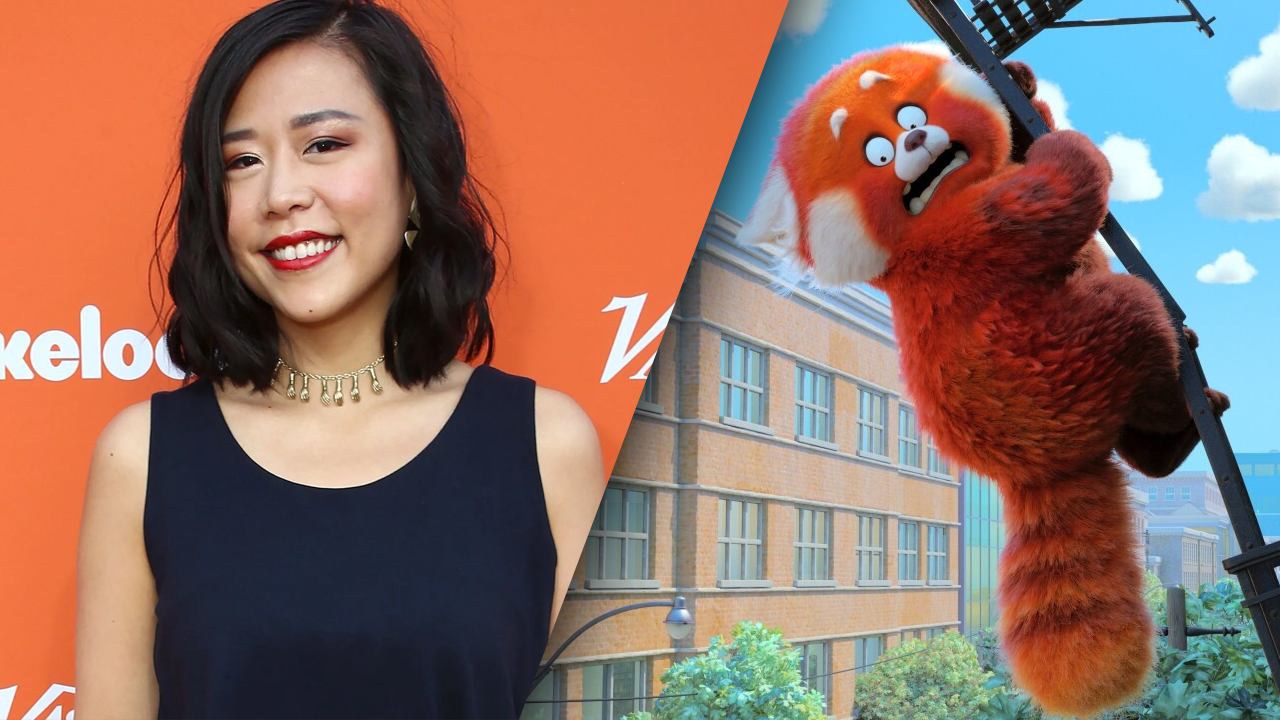
More than any other Pixar film, it’s Turning Red that taps into the sensibilities of preteens the most. A film about a preteen going through puberty, the film tackles themes and topics that otherwise wouldn’t be covered by a Disney film. Topics like those inevitably come with a sense of humor apt for its age range, which is what allows Turning Red to be funny in a way audience haven’t seen in a Pixar movie.
Jokes about strippers, crushes, and bodily changes are some of the things Turning Red doesn’t shy from. I spoke with director Domee Shi and producer Lindsey Collins and asked how they got the green light to do such suggestive jokes. Collins admitted that she was surprised when the executives didn’t bat an eye.
There are certainly a couple of moments in there that I was surprised we didn’t get pushed back for. I was kind of half-expecting it. But they didn’t. For the most part, they knew the film they were getting. They knew the filmmaker they had. We were also unapologetic from the very first screening. They had the opportunity to say “Uh oh” but they didn’t.
Shi was confident about their choices, saying that a lot of the jokes were rooted in important character work and thematics.
We also could defend those decisions too. All of the humor was connected to themes of the movie which were girl adolescence, puberty, and generational perspectives.
Early in the movie, Turning Red shows a dream sequence that is utterly bizarre and borderline unsettling by Disney standards. In line with the earlier question, I asked Shi what prompted them to create a scene inspired by filmmaker David Lynch and how it tied into the film’s themes.
I’m so glad you mentioned David Lynch. He was an inspiration for that part. There was an even scarier version that we cut. The version you guys saw was a scaled-back version. I like it because it’s kind of weird and it elicited a lot of laughter from the audience. My intention behind the sequence was that it’s the night that puberty arrives. So what does puberty look like as a dream? It is very Lynchian and nightmarish and weird and funny.
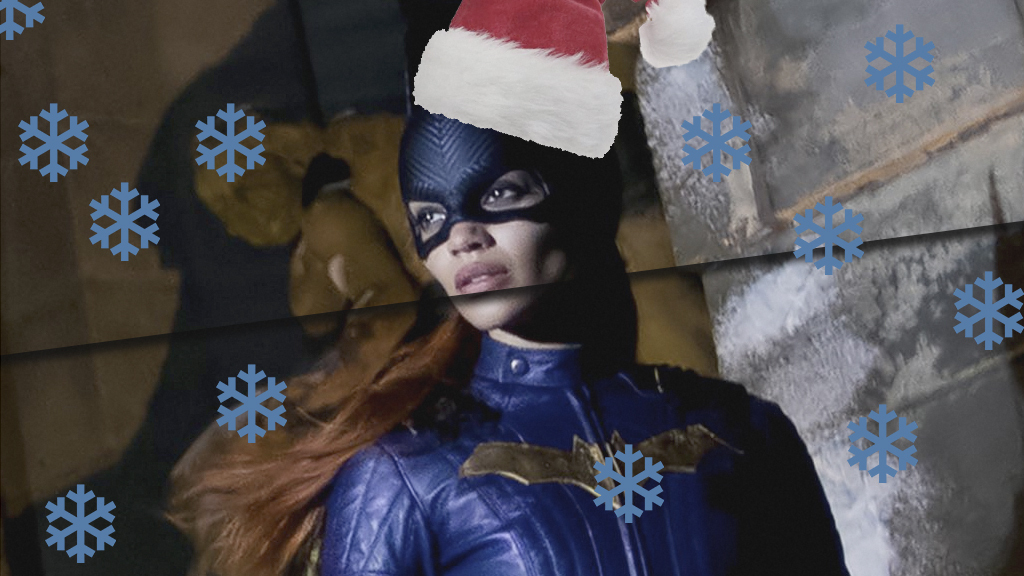
In addition to producing live-action streaming series that are a part of the DCEU, Warner Bros has begun development on a few DC films that will be exclusive to the streaming service as well. Batgirl, which will introduce Barbara Gordon to the DCEU, is currently the first of what is presumed to be many HBO Max exclusive DC films, but recent shifts in the DC film release slate may have given it a window of opportunity for a theatrical release.
Substantial changes to many upcoming DC film release dates were part of a cascade begun by Black Adam being pushed back from its July release date to October 21st, 2022. Shazam: Fury of the Gods jumped forward on the calendar, taking the December 16th, 2022 slot previously held down by Aquaman and the Lost Kingdom, knocking the sequel into March of next year. Also moving into 2023 is The Flash, streaking to June 23rd, 2023, 7 months later than previously scheduled. Following the release of Blue Beetle on August 18th, 2023 there is nothing set moving forward, meaning Batgirl would have a perfect window to release in late 2023.
The Flash being delayed means Batgirl’s reported 2022 release is highly unlikely as the events of that film directly lead into the The Flash, reintroducing Keaton as the main Batman of the DC Extended universe. So what should Warner Brothers do with this new opportunity? Move Batgirl to a late 2023 release date and give the film the opportunity for a theatrical release instead of only putting it on HBO Max.
We’ve seen quite a bit from the set of Batgirl and we know the film is set during the holiday season with the set in Glasgow being covered with a ton of Christmas decorations. Instead of creating another Shazam! situation, where a film centered around one season is released in the opposite, the film could thrive with a a theatrical release during the 2023 holiday season.
Blue Beetle was originally set to be an HBO Max exclusive film but was moved to a theatrical release, so its possible for Batgirl to get the same treatment. Batgirl is an instantly recognizable character for many people and has had prominent roles in many DC projects. This move seems like a no-brainer for Warner Brothers, who could bring in more money with a more strategic release. It would also give the film additional time during production, as it always seemed a bit risky to shoot and release a film in the same year.
Batgirl’s release date is still unknown as production on the film continues in Glasgow. The film will be directed by Adil El Arbi and Bilall Fallah with Leslie Grace in the titular role. Alongside Grace will star J.K. Simmons, Michael Keaton, Brendan Fraser, Ivory Aquino, Jacob Scipio, and Rebecca Front.
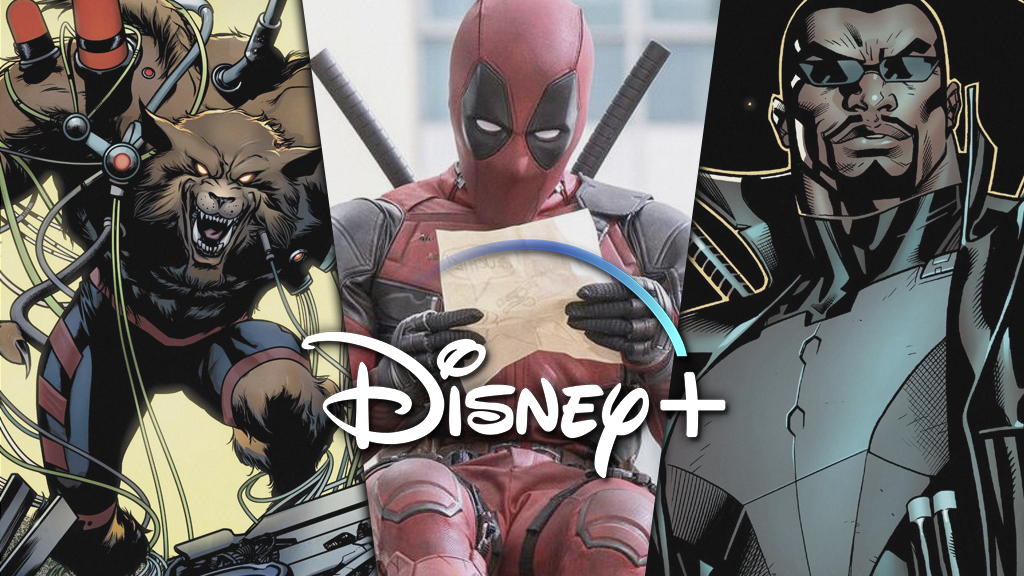
It’s been long-rumored now since the Marvel Netflix series like Daredevil, Jessica Jones, and more are making their way to Disney+. After many back-and-forths online, the confirmation has finally arrived, as they dropped a sudden teaser that they are joining the series on March 16th. The big takeaway is that the streaming service is embracing more mature content without restricting it to other services, especially as they went out of their way to offer bundles with Hulu. Yet, this addition might have bigger implications for Marvel Studios’ future ventures.
The timing for these additions is perfect with a darker-toned Moon Knight just on the horizon. Not just that, but it also means that older R-rated projects like Blade, Deadpool, Logan, or more can get added soon. Not just that, we know that Deadpool 3 is going to be an R-rated project and now we don’t have to worry about it potentially landing on Hulu. It’ll be part of the Marvel Cinematic Universe, and it would’ve been a shame if it wasn’t going to be part of the showcase in Disney+.
The streamer was showcased as an “archive” for classic projects from Marvel, Pixar, and any other Disney brand. So, its family-friendly focus is not only restrictive from an archival standpoint but also creatively. They lost a lot of projects early on due to this restriction, such as the Lizzie McGuire revival and pushing the Love Simon spinoff, Love Victor, to Hulu. While it seems unlikely we’ll get an R-rated Pixar film any time soon, Marvel and Star Wars are very different stories. This move might be an implication that Disney+ Original projects will no longer fully adhere to the streaming’s initial set-up.
Marvel may be able to fully embrace the darker and more mature tones that upcoming projects may have. Moon Knight is a big implication of Disney+ maturing, which we’ve talked bout here, but it also means R-rated projects are a possibility. The long-rumored Werewolf by Night project can embrace the darker aspects of having a werewolf-centric story. Their Blade remake might also start moving towards an R-rating, as there are no longer concerns about streaming availability being restricted to specific services.
There’s also the continuation to keep in mind, as we know Charlie Cox and Vincent D’Onofrio returned in the roles they made famous. Rumors are hinting at a new Daredevil revival, which now can embrace the darker story arcs introduced through the Netflix incarnations. There are more mature storylines possible now that the glass ceiling has been broken. It may be a small step for now, but once Deadpool or Logan get added with the parent control sometime in the future, we might be able to see the first steps for a new MCU.
Cookie Consent
We use cookies to improve your experience on our site. By using our site, you consent to cookies.
This website uses cookies
Websites store cookies to enhance functionality and personalise your experience. You can manage your preferences, but blocking some cookies may impact site performance and services.
Essential cookies enable basic functions and are necessary for the proper function of the website.
Name
Description
Duration
Cookie Preferences
This cookie is used to store the user's cookie consent preferences.
30 days
These cookies are needed for adding comments on this website.
Name
Description
Duration
comment_author_email
Used to track the user across multiple sessions.
Session
comment_author_url
Used to track the user across multiple sessions.
Session
comment_author
Used to track the user across multiple sessions.
Session
Statistics cookies collect information anonymously. This information helps us understand how visitors use our website.
Google Analytics is a powerful tool that tracks and analyzes website traffic for informed marketing decisions.
Contains information related to marketing campaigns of the user. These are shared with Google AdWords / Google Ads when the Google Ads and Google Analytics accounts are linked together.
90 days
__utma
ID used to identify users and sessions
2 years after last activity
__utmt
Used to monitor number of Google Analytics server requests
10 minutes
__utmb
Used to distinguish new sessions and visits. This cookie is set when the GA.js javascript library is loaded and there is no existing __utmb cookie. The cookie is updated every time data is sent to the Google Analytics server.
30 minutes after last activity
__utmc
Used only with old Urchin versions of Google Analytics and not with GA.js. Was used to distinguish between new sessions and visits at the end of a session.
End of session (browser)
__utmz
Contains information about the traffic source or campaign that directed user to the website. The cookie is set when the GA.js javascript is loaded and updated when data is sent to the Google Anaytics server
6 months after last activity
__utmv
Contains custom information set by the web developer via the _setCustomVar method in Google Analytics. This cookie is updated every time new data is sent to the Google Analytics server.
2 years after last activity
__utmx
Used to determine whether a user is included in an A / B or Multivariate test.
18 months
_ga
ID used to identify users
2 years
_gali
Used by Google Analytics to determine which links on a page are being clicked
30 seconds
_ga_
ID used to identify users
2 years
_gid
ID used to identify users for 24 hours after last activity
24 hours
_gat
Used to monitor number of Google Analytics server requests when using Google Tag Manager
1 minute
Marketing cookies are used to follow visitors to websites. The intention is to show ads that are relevant and engaging to the individual user.
Pinterest Tag is a web analytics service that tracks and reports website traffic.