We just ran the news that Alaqua Cox has shared that Echo’s production is seemingly going to start tomorrow. She announced it via an Instagram story featuring flowers. What stands out though is that she got the flowers from fellow actress Devery Jacobs, who many might remember for her role in FX’s Reservation Dogs. Well, if we take a closer look at the letter that she sent, it would hint that the actress may also have joined Echo in an unknown role. So, let’s connect the dots here.
In her letter, she states that “I wish I could be there to kick it off.” That alone wouldn’t really give it away, as she simply could be sharing that she wished she could join her on the series to support her, but also hints that she would join just not that early in production. But, what does definitely hint at her potentially having a role in the series is the addition of “see you soon” which highlights that she may join production at a later date.
Jacobs would also match a casting of a character known as Julie. Echo was looking to cast a Native American actress between the age of 27 to 33 in the role, who is the responsible type with a strong will of her own. A casting that would match the actress perfectly, as it’s not too dissimilar to her character Elora Danan Postoak from Reservation Dogs.
What also helps is that director Sydney Freeland is involved with the series, something she confirmed back in March. It’s not uncommon that directors would bring along talent that they are interested in working with again. There’s no official confirmation so far, but Devery Jacobs‘ letter would certainly hint at her potentially having some kind of role in the series. Perhaps we’ll get an official casting announcement soon, as production starts tomorrow or before she joins the project at a later date.
The search for Marc Spector’s third classic comics personality Jake Lockley continues through Moon Knight‘swild fourth episode. Clues and evidence in Episode 1, Episode 2, and Episode 3 honestly feel like enough of a confirmation that a third personality is coming. But we still have yet to be formally introduced. There may be fewer clues in Episode 4, but one in particular almost cannot be interpreted in any other way than… that’s Jake. While everyone knows that nothing is confirmed until it is confirmed, let’s take a look at perhaps the most unambiguous and in-your-face clue of the entire series.
The Extra Sarcophagus
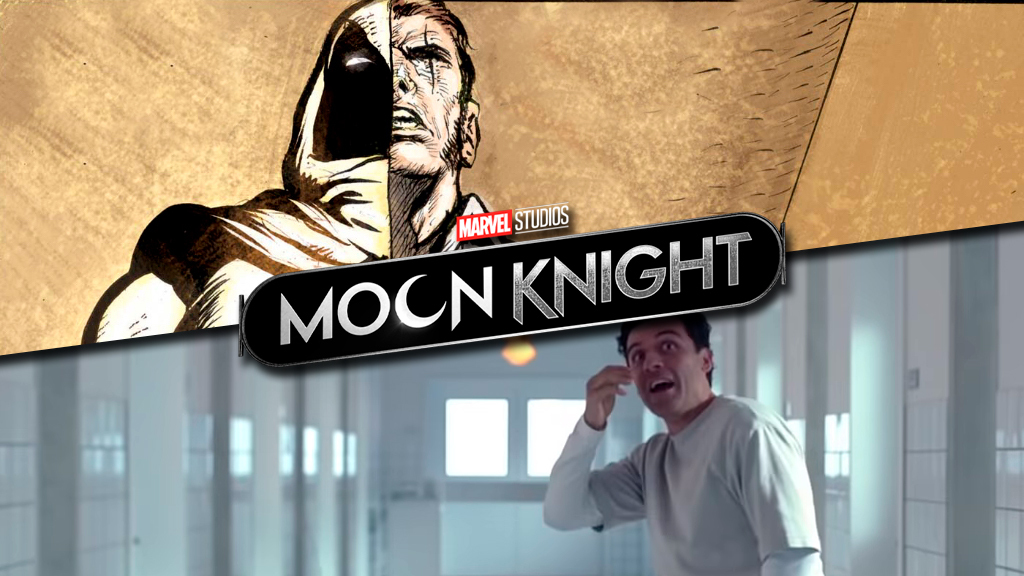
When Marc wakes up in some sort of mental institution or psych ward-looking place, he eventually escapes the room where the now Dr. Arthur Harrow appeared to be his psychologist. On his run through the halls of the institution, he comes upon a room with a lone sarcophagus. Someone inside was screaming for help and shaking it, trying to get out. Turns out Steven was trapped in there, and he and Marc hug when they reunite–it’s very sweet.
Flash forward about one minute, and they pass a room that has a very similar sarcophagus. They do not seem to notice it, but it is also moving as if someone was trapped inside. Considering Marc and Steven now both have bodies, it is easy to say that whatever place this institution is, it is not “real.” So, if Marc’s other personality Steven sort of manifested as being trapped in a sarcophagus in a room here, what other conclusion is there to draw from the fact that there was another? It is the least ambiguous hint Moon Knight has provided and the most psychologically symbolic as well that a third personality does in fact exist in this series.
While Moon Knight arguably “confirms” here that Marc and Steven are not the only personalities, it still is yet to be seen whether a third will actually make an appearance in the series. Hopefully Jake has some grand entrance, but it could be the series’ way of acknowledging the comics’ history and being coy with it, while maybe waiting to introduce Jake in another project considering Moon Knight already has many demanding moving parts to balance. Still, there have been so many hints over these four episodes, that it would definitely feel like a letdown if they did not lead to an actual appearance by the end of the series.
Only time will tell. But the first four episodes of Moon Knight are not streaming on Disney+.
The final few minutes of Moon Knight’s episode four gave audiences something to think about and figure out ahead of the final two episodes of the series. At first glance, it seems like the old “it was all a dream” sort of twist, where the character, in this case, Marc Spector, kept bringing real-life characters and details into a self-fabricated world. This would obviously deprive the events experienced until now of most of their meaning due to a lack of actual real-world impact, something that feels extremely dated. But in fact, Marvel should instead be using that classic trope to lead fans astray as what Marc wakes up to should actually be the dream itself.
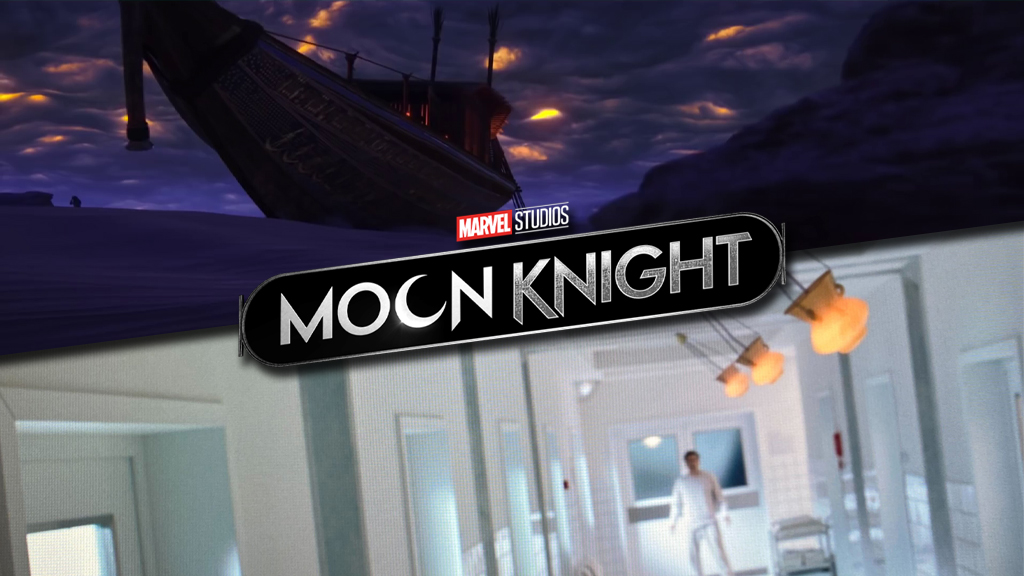
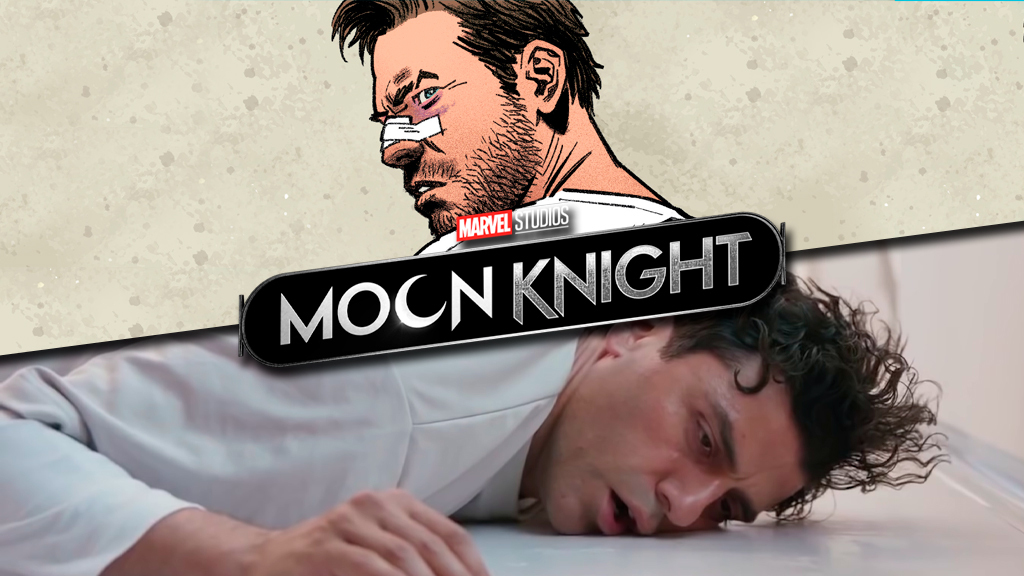
Following Harrow shooting Marc at Alexander the Great’s tomb, he wakes up in an institution, very similar to the one we see in the Lemire-Smallwood comic run. There, while trying to escape Harrow’s office, he comes to a long corridor that seems to tilt like it was on a moving vehicle, with the lamps and the medical carts moving accordingly. This should be enough to make us doubt the veracity of the reality presented to us. But it’s not until going back to some promotional footage that, not only does it become clear why the halls seem unstable but we also understand where Marc really is.
Marvel Studios’ Moon Knight
This shot in one of the promotional videos seemingly shows us a large funerary boat traveling through the desert. And this is where we will likely find Marc, even if all he sees around him, maybe as a coping mechanism, is a mental institution filled with details from his life. This fits the Egyptian mythology the show has been exploring as boats played a big role in ancient Egyptian funerary practices. Funerary boats were often used to deliver the deceased to the afterlife, with Anubis, the god of death, the afterlife, cemeteries, tombs, and the Underworld, having his own ship that traveled between the world of the living and that of the dead. It was while doing so that it would weigh the hearts of the deceased on Maat’s scales of truth and justice, hence judging the individual’s actions in life. If the heart was found to be heavy it was fed to Ammit, with the soul cast into darkness. On the other hand, if the scales were balanced, the deceased would be taken before Osiris who would welcome them into the afterlife.
Marvel Studios’ Moon Knight
All of this, besides feeling terribly consistent with what the show has shown us so far, might clearly hint at all past events being what is real, with the dreamlike state being what we see as the mental institution at the end of episode four. Marc and Steven (and Jake?) will eventually be judged in order for their spirit to move on, either to damnation or the afterlife. With Khonshu out of the picture, it seems unlikely that they will manage to come back from the dead, again. Or does it?
The first four episodes of Marvel Studios’ Moon Knight are now streaming only on Disney+.
If you happened to see reactions from critics and members of the press who were able to see the first four episodes of Moon Knight, you undoubtedly saw a lot of people praising and hyping up the fourth episode. Now that you’ve watched it, you now know why. Here, we break down what happened and look into clues from the source material as to what this might all mean for the series.
We will spoiler details from the fourth episode. So, if you haven’t watched it yet only continue at your own risk.
Recap
After Moon Knight spends the vast majority of four episodes building up a now-relatively grounded story involving adventuring through Ancient Egyptian lore, artifacts, pyramids, tombs, and whatever else the franchise can get its hands on. Of course, Arthur Harrow appeared the be the main villain in his quest to serve/free Ammit to judge souls based on future wrongdoing. At the same time, our protagnosists are attempting to save the world from Harrow as the avatar of Ancient Egyptian lunar god Khonshu, which allowed them to summon divinely-granted suits—they still have not actually been named yet, but we know them as Moon Knight and Mr. Knight.
Most importantly, perhaps, is that our original protagonist, Steven Grant, learned he had another identity/personality named Marc Spector. The Marc reveal brought Steven into this fast-paced and dangerous plot as Marc was the one in contact with Khonshu and served as his Fist of Vengeance. The psychological implications of Steven and Marc’s dissociative identity disorder have been a loud-and-clear focus of Moon Knight so far. And it looks like it may very well increase the focus after Episode 4.
In this episode, Steven and Layla find the tomb of Alexander the Great. With it, they also have finally uncovered Ammit’s stone statue, which is similar to that we saw Khonshu get imprisoned in. Harrow swiftly catches up, and ultimately shoots Marc (who took control at this point) and seemingly kills him. We watch Marc float down through dark waters almost endlessly.
Suddenly, we cut to what looks like a direct-to-VHS movie where a young boy and an impressive adventurer and archaeologst by the name of Dr. Steven Grant are looking for atrifacts related to an Aztec lunar god. Marc then wakes up in what looks like a psych ward or mental institution with many callbacks and familiar faces. For example, random objects from early episodes (like cupcakes and a goldfish) appear in this place. Characters like Layla, Crawley, and Donna are also patients in the institution. And, of course, Dr. Arthur Harrow is Marc’s psychologist. There are numerous other Easter eggs involved, but the point is clear: did Marc simply imagine the “reality” we previously saw?
What Just Happened?
If you’re fresh off of Moon Knight Episode 4, the title question might be stuck in your mind. You are supposed to be confused, excited, and anxious to find out what comes next. If you enjoy the surprise and the mystery, this is good news for you, and you might want to avoid reading this whole article if you want to stay as unspoiled as possible. If you hate feeling confused, there is also good news for you if you keep reading this article.
Marvel Studios’ ‘Moon Knight’
So, let’s get into it. This is the point of Moon Knight where the viewer is now supposed to question absolutely everything. Obviously, the fact that Marc wakes up in a psych ward does much of that work, but how the last ten minutes or so of Episode 4 progress makes it even more complicated. It is clear from the later scenes after Marc wakes up that he is not simply in a typical psych ward having completely made everything up. Plenty of things are not quite right, but of course, he encounters Steven trapped in a sarcophagus, and the two personalities exist in separate bodies in the same place. If that isn’t enough to debunk much of the psych ward “reality”, the two come across goddess Taweret, a hippo-appearing being, who we saw as a stuffed animal in Episode 1’s gift shop.
Marvel Studios’ ‘Moon Knight’
Just in case it was not clear before—yes, you should be confused. Moon Knight has now gone out of its way to essentially discredit every “reality” it has presented audiences with. The “main reality” where we first met Steven—was everything one giant delusion of a mentally ill man based on some of his surroundings in the psych ward? If it was not entirely in Marc’s imagination, was some of it, such as Khonshu, real? We are now suddenly introduced to this “psych ward reality”—is it real? Probably not, but are the images of Steven and Taweret, for example, more delusions?
If you are dying for answers or at least some guidance, the solution may lie in the Moon Knight comics run you may have already heard a lot about. While looking at the source material for Moon Knight is certainly not “spoilers”, if the series adopts more of the comics’ plot lines, that could potentially ruin some surprises for the last two Moon Knight episodes. With that word of caution of the way, let’s look at what possibilities the Jeff Lemire and Greg Smallwood run coult hint at for the home stretch of the live-action series.
Lemire-Smallwood’s Inspirational Run
Moon Knight (2016) is one of the most popular comic runs of the Fist of Khonshu, but it also clearly inspired the creators of the Disney+ series plenty. After more than three decades of Moon Knight stories, Marc Spector wakes up in an insane asylum and gives evidence that he had been there since he was twelve. As such, all aspects of his Moon Knight life had been in his head. The comic run by Lemire and Smallwood jumps from perceived reality to perceived reality. We see versions of Marc Spector, Steven Grant, and Jake Lockley living their own lives, but the story jumps around in a way where each one questions their memories and realities. Like where Moon Knight seems to be going, the comics are entirely founded on the concept that Marc Spector’s mind (inlcuding his other identities) is complex, confusing, and potentially a rabbit hole of reality-beding.
This article is not the place to try and summarize the entire run or give every possible detail that connects the live-action series to that run, but it’s worth noting what Moon Knight has already clearly borrowed from. In both, Marc Spector wakes up and realizes he is in an all-white psych ward with some of his friends as other patients. His psychologist in the comics is Dr. Emmet, whereas in live-action it is Dr. Arthur Harrow. Still, Dr. Emmet is “revealed” to be a manifestation of Ammit, who we know Arthur Harrow is a follower of. Even the pair of orderlies, Bobby and Billy, made their way into Moon Knight. The appearance of Taweret at the end of Episode 4 also looks a lot like some of the Ancient Egyptian imagery that the Moon Knight comics highlight. Even more, Marc and his personalities were able to co-exist in different bodies in the comics.
Speaking of Ancient Egyptian lore connecting to the mental institution, much of the run presents Marc with a situation where the psych ward reality morphs into a version of New York City that appeared to be taken over by the Egyptian god Seth. So, Dr. Emmet would often take the form of Ammit, the orderlies as jackals, Marc makes deals with Anubis, he travels to the Overvoid, and more. At the same time, he would find himself back in the psych ward “reality” and being given electroconvulsive therapy or chastized by Dr. Emmet.
Moon Knight (2016)
The ultimate adversary in the comcis run is actually Khonshu, not Seth. Turns out, much of the mental dismay and reality confusion is Khonshu’s doing, and the moon god is trying to completely break Marc’s mind so that Khonshu can essentially just use his body as his own. So, the run beautifully explores the dimensions of Marc/Steven/Jake’s minds and memories as they try to persevere through Khonshu’s cruel games and defeat the god they have been attached to for so long. The run ends with Marc taking control of his personality and defeating Khonshu, telling the deity that they do not need him to be Moon Knight. While Marc ends in a place where he stil cannot be sure if he is in true reality, he notes it is good enough for him, Steven, and Jake.
Moon Knight (2016)
Where is Moon Knight Going?
Since Moon Knight is clearly taking a lot of inspiration from at least the very beginning of the Lemire-Smallwood run, there is always a chance the series will adapt even more from it. At the same time, Moon Knight has not otherwise been following a story that is clearly inspired by any particular run. That could mean that whilethe previously mentionedone may have some influence, the live-action series will ultimately remain a hybrid of decades of comics and new material. Considering that both the series and the comics want you to question virtually every aspect of reality, it would be naive to assume that Episodes 5 and 6 of Moon Knight will be predictable.
The first four episodes of Moon Knight are now streaming on Disney+.
Episode 3, “The Friendly Type”, really moved things along in the overall plot, including Arthur using the scarab to lead him to the site of Ammut’s tomb. At the behest of Khonshu, Marc tries to get the Ennead, a group of major Egyptian gods, to intervene with what Arthur is trying to do, but Arthur lies to them, leading the Ennead to warn Khonshu not to interfere further. To find the coordinates of the tomb, Khonshu turns back the sky to the night they locked Ammut away, angering the Ennead. As the episode ends, Khonshu is imprisoned, leaving Marc/Steven without his power.
Marc and Steven get way more comfortable with each other over the course of this episode, even willingly letting each other take over the body when it seems to serve them best. The episode also presents the clearest evidence that there might be a third personality within Marc’s mind. While interrogating a group of men, Marc is knocked out when Steven interferes with the questioning. When he wakes up, he’s in the middle of stabbing one of the men while another lies dead behind him. When Marc asks Steven what he’s done, he claims not to have done it either. In the comics there is another, more violent, personality named Jake. This could totally be his doing!
Arlyn’s Assumptions
In this next episode, I believe that they will end up finding Ammut’s tomb too late. I feel like Arthur will have already found it and dug it up. The other Egyptian gods have locked Khonshu away, which will obviously have a big impact on Marc and Steven seeing that Marc was just a corpse when Khonshu found him. I’m not sure how Marc survives. I have a bad feeling about this…
As with any MCU adaptation, Moon Knight has not been a perfect match with the comics. This is, of course, not automatically a bad thing. When bringing the complicated subject matter to life, it’s often necessary to simplify a few elements for the sake of flow and time. One such example of this would be Moon Knight’s many alters. Typically, the character has at least three personalities living in his body at any given moment. Marc Spector and Steven Grant, who is currently learning to co-exist in the series, are usually accompanied by a third alter named Jake Lockley.
Though he hasn’t made his debut on Disney+ just yet, there have been plenty of hints that he could be on the way. If, or when, Lockley finally pops up on the screen, there will be quite a few lingering questions for him to answer. Viewers will likely wonder where he’s been all this time, what sort of life he leads, and whether or not he’s the one who mysteriously killed all those guys in Egypt. Most importantly, however, is a quandary that many may not even think to ponder. Assuming Lockley is able to summon the power of Khonshu in the same vein as Grant and Spector, what might his version of the iconic suit look like?
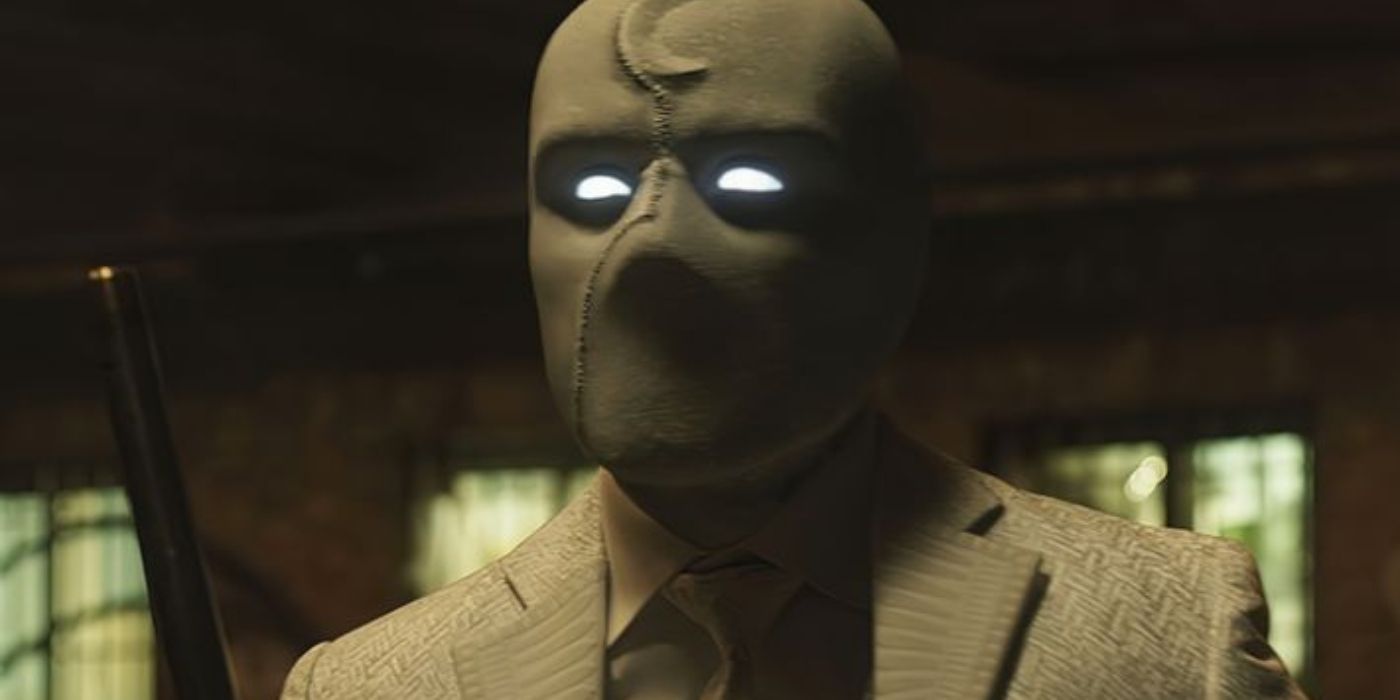
Moon Knight surprised longtime fans of the comics when its early marketing revealed that Mr. Knight would play a role in the show. The character is a newer alter in the books, having made his first appearance in 2014 as a variation of the Moon Knight identity who is a little less brutish and a little more sociable. Marvel Studios’ take on the character differs from this, instead of presenting the ‘Mr. Knight” appearance is a version of Khonshu’s Moon Knight armor tailored to fit Steven Grant’s personality. The white, three-piece suit has most of the same abilities as the classic outfit worn by Marc Spector, albeit with different weapons, and its presence is simply used to signify when Steven is the one in control.
So, the standard being set is that each one of the alters would ostensibly have its own Moon Knight design. Marc wears the classic, hooded vigilante suit and Steven dons the formal “Mr. Knight” attire. The outfits match their personalities, which might actually help in deducing what Jake’s official anti-hero look could be when the time comes. Moon Knight has been featured wearing a shockingly diverse set of threads over the course of his existence, so there are quite a bit of pre-existing designs the show has the ability to pull from. Yet, the first of the options presented in this article has never actually been drawn in the comics at all. Let’s dig in.
Jacke Lockley, Private Eye
It’s possible Jake Lockley has been under our noses the whole time. Early in the advertising process for Moon Knight, Marvel fans were shown three character posters featuring star Oscar Isaac. At first glance, they appeared to give the first glimpse of Marc Spector and his two superhero suits all in one place. However, now that audiences know Mr. Knight is actually Steven Grant and Moon Knight is Spector, the trio of images takes on a whole new meaning. What if Marvel actually gave the world its first look at all three avatars of Khonshu, and everyone simply failed to notice?
Jake Lockley has always been portrayed as the “man on the street” in the dynamic between alters. Where Spector is the skilled fighter and mercenary, while Grant is the intelligent one, Lockley is the private eye with his nose to the ground and street smarts up the wazoo. The series seems to be embracing the idea that Lockley is a violent, no-nonsense alter, emerging primarily when his specific skill set is needed and nothing much more. A flashy suit wouldn’t exactly help in extracting information with a low profile, so it tracks that Lockley’s preferred outfit would be something a little more unassuming and “street-level”, like the white hoodie and jacket in the poster above. Recent episodes of Moon Knight have had Marc and Steven wearing a remarkably similar outfits. So, this theory could already be shot. Though maybe the clothes were something picked by Jake off-screen, and he’s somewhere inside that psyche ready to pop the hood and get to work.
The Fist of Khonshu
This next theory is essentially the exact opposite of the last one. If Jake does in fact choose to wear some actual armor, there is one other iconic Moon Knight look that still needs to be covered in live-action. The character is famous for wearing all-white, but many of his suits throughout history have actually been predominantly black with white highlights. Even Moon Knight’s first-ever appearance had him wearing a darker color scheme than fans are accustomed to seeing, and it’s a look that’s made several notable comebacks in the decades since he was introduced. If the costumes worn by the alters in the show are meant to reflect their personalities, then what better way to display the darker nature of Jake Lockley than a suit that’s more black than white?
A version of the black suit was also used heavily in Jeff Lemire and Greg Smallwood‘s famous run on the character, which the show draws from heavily. It would be fairly cool to see all three looks from that stretch of the character’s history used in the same adaptation. Also, if Lockley plans on utilizing Khonshu’s armor when brutalizing his foes, his more “down-to-Earth” persona might come up with a suit that’s more tech-based in design than the supernatural wrappings of Marc Spector or the pretentious leisure-wear of Steven Grant.
Earth X
Now that The Punisher is on Disney+, maybe Marvel will stun us all and turn Jake Lockley’s Moon Knight into their next most efficient killer. A good way to do this would be to use a variation of the Earth X universe attire, which already resembles the MCU’s base suit for the character. The main thing separating this design from the original Marc Spector persona is a pair of semi-automatic Uzi pistols that this universe’s Moon Knight prefers to use over traditional Egyptian weaponry. Outfitting Lockley’s Khonshu avatar with heavy firepower may potentially feel out of place, but it would be in line with the alters trademark violence and do wonders to set him apart from Spector and Grant.
Ultimate
This one might be a long shot, but it’s still fun speculation. The Ultimate Moon Knight design has a little bit of everything, including the aforementioned concept of mixing black with white. It sort of comes off as a fun cross between Marc’s Moon Knight and Steven’s Mr. Knight, although it may be a bit too extravagant for the Jake Lockley alter to double down on. It’s mostly included here for two reasons: Marvel Studios has a long history of using the Ultimate comics as inspiration, and the Ultimate version of Moon Knight has an alarmingly aggressive personality that feels right at home with everything analyzed thus far. For example, he once threatened to cut Spider-Man’s throat out and really meant it. Yikes.
In the end, it’s important to remember this is all just fun speculation. Though his arrival feels imminent, Jake Lockley has yet to be confirmed by anyone involved with Moon Knight and may not end up being part of the project at all. Fortunately, that doesn’t mean fans can’t have a little fun playing guessing games with the future. If he does indeed make the cut, one can only hope he looks as good as his two bodily brothers.
Following the introduction of both Konshu and Ammit in the first couple of Moon Knight episodes, Marvel Studios took yet another step into the rich Egyptian mythology that’s being built into the MCU by giving us a glimpse of its take on a few more characters based on Egypt’s ancient deities. This isn’t the first foray into the realm of gods for Marvel Studios, but it could certainly prove to be yet another substantial stepping stone toward the MCU’s near future.
Marvel Studios’ Thor (2011)
In episode three of Marvel Studios’ Moon Knight, Marc Spector, as Khonshu’s avatar, gets summoned to a meeting-of-the-avatars of sorts set within the Great Pyramid of Giza (perhaps serving as the MCU’s Overvoid). There, we meet the avatars of five members of the Ennead, a “super group of Egyptian gods” as described by Steven Grant in episode one. Its name comes from the Greek Enneás, which means “the Nine”, meaning that Steve was indeed right in correcting the mistake made by the National Gallery in its own exhibit’s promotional material. Of the nine gods with a place at the gathering, only five took to their seats at the chamber: Horus, Isis, Tefnut, Osiris, and Hathor. Shu (mentioned by name in episode one) and Geb (featured in the exhibit’s poster) were notably absent. As for the remaining two seats, it seems fair to think that those would belong to both Khonshu and Ammit, making the MCU’s version of the Ennead complete.
Marvel Studios’ Moon Knight
As for what these gods represent, little is set in stone in terms of who they are and what their main focus is within the MCU. Even the historically accepted constitution of the Ennead differs from the one we got in Moon Knight, leaving just enough room for Marvel Studios to slightly adapt each of the gods’ characters to fit whichever storyline might suit them best down the line. It’s not unheard of to have a god have multiple fields of expertise (let us put it that way), as it is actually extremely normal for that to happen. This means that it’s all up to Marvel’s writing teams to figure out where to focus on when, and if, these characters are called upon once again.
The Heliopolitans
And this brings us to the future of not only Egyptian gods in the MCU but, considering how Pandora’s box has indeed been cracked open, the future of many other pantheons of deities of specific spiritual practices and geographical locations. And the appearance of some might be more surprising than others.
Thor: Love and Thunder is an obvious choice. But this project will not only bring back Asgardian gods into the fold, as it is apparently set to introduce at least one character from the Olympians as back in April 2021 Russel Crowe seemingly confirmed that he would be playing Zeus in the Thor sequel. This might open the door for several other representatives of the Greek pantheon such as Ares, Poseidon, Apollo, or perhaps even Hercules. By making Gorr, the God Butcher, the main antagonist of the fourth installment of the Thor franchise, it would be a shame if many new gods aren’t introduced in order to, you know, be butchered.
The Olympians
But another upcoming, and perhaps less obvious, MCU movie that might also hugely benefit from Marvel Studios embracing its mythology is none other than Black Panther: Wakanda Forever. As we already speculated last September, following the release of Shang-Chi and The Legend of the Ten Rings, the Black Panther sequel might very well decide to focus on the Aztec Empire making it serve as the grounded real-world connection to the mythical undersea kingdom of Atlantis. Going this route, and doubling down on the mythological unveiling within yet another culture depicted in the MCU, would mean opening the door to another, less recognizable, group of deities: The Tēteoh, a race of supernatural beings worshiped as gods by the Aztecs of ancient Central America, much like the Heliopolitans in Egypt or the Olympians in Greece.
The Tēteoh
Following the introduction of the titular characters in Eternals, continuing to explore the storyline possibilities set by the several Marvel pantheons, by characters beyond the realm of man, unconstrained and with a whole new set of motivations would certainly prove an interesting one. Especially because there are numerous groups left to explore: The Ahau (Mayan), The Akua (Polynesian). The Apu (Inca), The Daevas (Hindu), The Inua (Inuit), The Manidoog (Native American), and many more, including The Tuatha de Danaan and the Fomorians (both Celtic) who operate out of Otherworld, a place that is bound to make its MCU debut following the introduction of Dane Whitman, The Black Knight, in the aforementioned Eternals.
Marvel Studios’ Shang-Chi and the Legend of The Ten Rings
An interesting and easy way to justify how these characters have been on Earth all along even if we haven’t seen them or even acknowledge them before is to do what Shang-Chi and The Legend of The Ten Rings did with Ta Lo. In the comics, Ta Lo was a small “pocket” dimension adjacent to Earth, and it appears to be something quite similar in the MCU. It is described as a mystical dimension, inhabited by Chinese mythological creatures, that have managed to stay hidden not only by being difficult to access but especially by making it unclear to the outside world if it’s even a real place or not. And this is where Moon Knight‘s Heliopolis, as well as the Aztec Tlālōcān, the Greek Olympus, Otherworld, and many more otherwordly sites where gods roam, come to mind. They all share the common characteristic of being located on extradimensional realms, much like Ta Lo, with easy access to Earth through portals in the vicinity of where its inhabitants are worshipped by humans – places like Egypt, the Yucatán Peninsula, Mount Olympus in Greece, Stonehenge, and so on – making Earth the nexus of it all. A perfect answer as to how to bring the MCU to a new level of storytelling. Into The Age of Gods.
Episode 2 really helped us get a better understanding of who Steven and Marc are. We learn that Marc is a mercenary who was killed and resurrected by Khonshu. As Steven learned more about Marc and how they are sharing a body, the two began to work together a little better. The episode also provides an opportunity to get to know more about what Arthur wanted. Arthur tells Marc that he used to be Khonshu’s avatar, but now he’s chosen to work for Ammut and dish out her brand of preemptive justice rather than Khonshu’s more traditional punishments. And so much of this episode dives deep down into Arthur’s plan of freeing Ammut, which involves the scarab that is a compass to her tomb.
Steven had a problem with the idea of punishing people before they commit their crimes which causes a huge fight leading up to a pretty cool reveal: Steven and Marc can each summon their own, different suits. Steven wears the “Mr. Knight” suit while Marc wears the traditional Moon Knight “armor” suit. We also learned way more about Layla, who used to be married to Marc and knows about the suit, but doesn’t know about Steven. When she first meets up with Steven, she thinks that it is just a cover for Marc.
Arlyn’s Assumptions
At the end of episode 2, Marc ended up in Egypt. Marc’s goal is to find the tomb of Ammut before Harrow has the chance. This is obviously going to cause an issue and they will most likely end up fighting. I feel like there will be more issues because Steven is not okay with being the man in the mirror, meaning they will most likely be fighting for control the whole time. There will also be a conflict between Marc and Layla, seeing that Marc just up and left her and never reached out.
The second episode of Moon Knight continued to explore and emphasize the relationship between personalities Steven Grant and Marc Spector. With the confirmation that Moon Knight and Mr. Knight are simply the costumed versions of Spector and Grant, rather than separate personalities, the question lingers whether any other alters associated with Spector’s dissociative identity disorder from the comics will make an appearance in the Disney+ series.
It is a strong bet that Spector’s third classic identity in the comics, Jake Lockley, could be revealed at some point. While Moon Knight has been silent on the matter, Episode 1 may have hidden some nods to Lockley’s existence. Episode 2 followed suit, though, and there are fresh hints at Spector’s third personality.
The Reflections
While many are blink-and-you’ll-miss-it moments, there are numerous times Steven or Marc’s reflection in a mirror is split into three or the mirrored identity seems to have an extra with him. That might seem trivial, but considering how Moon Knight uses mirrors and reflections as the nearly exclusive means of navigating the separate identities, the visuals likely carry much more meaning and intention than the average reflections.
Perhaps one of the most interesting potential clues comes with Marc’s and Steven’s argument near the very end of the episode. Things got heated, and Marc ultimately goes into a mini-rage to smash the reflection he is seeing Steven in. Marc so far has certainly been depicted as more serious and violent than Steven but never before has he expressed any heightened anger or animosity towards Steven. It certainly stood out as a somewhat out-of-nowhere expression of hostility, frustration, and brutality. So, while this moment could be a moment where Marc is overwhelmed and simply acts out, we possibly just saw Jake Lockley in action.
In the comics, Jake has more recently become known as the hyper-violent, somewhat more psychopathic identity. He is willing to take the violent or darker action that even Marc, the ex-mercenary, hesitates on–and he does so without a guilty conscience. If Moon Knight does bring Jake to screen, there is a good chance this is the interpretation of him viewers will see. This moment in Episode 2 may be a tease at Jake’s ability to take control of their body when he sees fit.
Marvel Studios’ ‘Moon Knight’
Side Comments from Layla and Arthur Harrow
Nothing that any character has said would definitively confirm or deny that Marc and Steven are the only two personalities in their bodies. If Moon Knight does want to introduce another identity in some “surprise” reveal, spoiling it now would not make sense. Still, a couple of comments in Episode 2 are curious.
First, and most interesting, when Layla meets ad confronts Steven for the first time, she asks: “Is this Steven the latest fake identity for you?” That would imply that Layla was aware of other times Marc went by another name. Considering he seems to have a shady background, it would not be surprising if he used fake names to stay out of trouble or go places Marc Spector could not go. But Layla could also be referring to a time when Jake was in control of Marc’s body and told her his name was Jake Lockley.
Marvel Studios’ ‘Moon Knight’
Arthur Harrow also makes a comment that is less convincing but perhaps also speaks to how much Harrow knows about the protagonist. He says to Steven: “It must be difficult having all those voices inside one head.” He refers to Marc and Khonshu, but he could be hinting that he knows more about the current Moon Knight than we see. After all, he is Khonshu’s former avatar, plus his cane somehow let him know that there is “chaos” in Steven–maybe it told him much more than that. Still, it is hard to shake the feeling that Harrow knows more about our protagonist than we do, and almost certainly more than Steven.
Marvel Studios’ ‘Moon Knight’
The first two episodes of Moon Knight are streaming on Disney+.
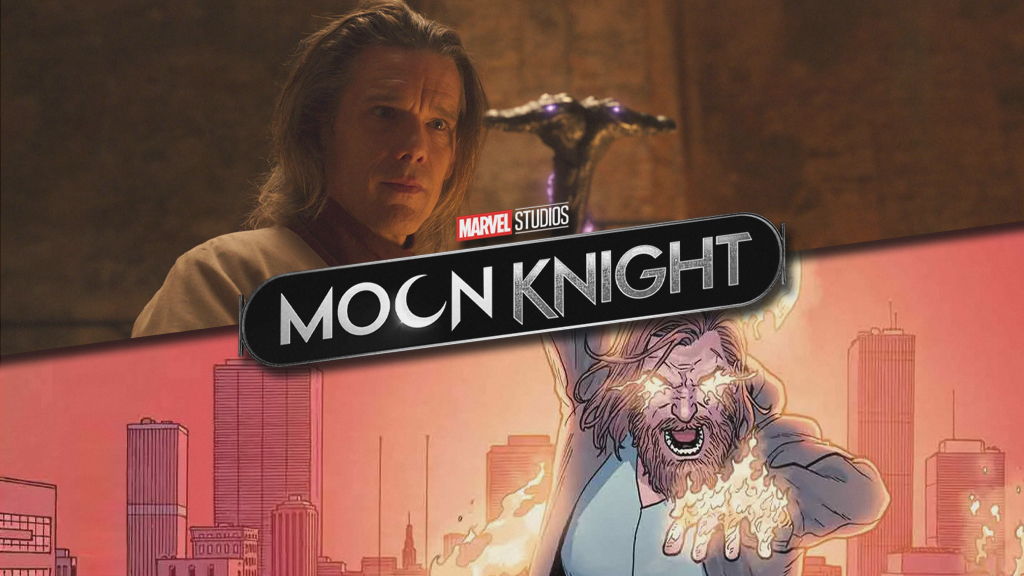
Ethan Hawke’s Arthur Harrow is a mysterious villain in Moon Knight. This is partly due to the fact that the show’s creators stated that they opted to invent an original villain rather than use a classic antagonist from the comics. Still, Hawke’s Harrow undeniably shares strong similarities with several villains seen in more recent Moon Knight comics. While this could simply reveal where the series’ writers got their inspiration for the character, it might also provide clues as to what could be revealed about Harrow as the series progresses.
Sun King
There was plenty of speculation that Hawke would be playing a version of Patient 86, also referred to as the Sun King. While being treated for bipolar disorder at Ravencroft Institute, a doctor introduced him to Egyptian mythology because she recognized similarities between Patient 86 and Marc Spector/Moon Knight, and she thought it might help him. He became obsessed with the Sun King Amon Ra and seemed to gain flame powers while institutionalized. He sought to destroy Moon Knight because of the contentious relationship between the two Egyptian gods they represented. The “Sun King” became a cult leader on a small island with a significant following.
Obviously, we know Hawke’s Harrow is quite the cult leader himself, as he’s seen seemingly leading a community of followers in the name of an Egyptian god. He also revealed he was the previous Fist of Khonshu, so he may have a specific or obsessive grudge against Marc Spector that hasn’t been fully explored. Speaking of, this brings us to the next inspiration from the comics.
Other Fists of Khonshu
There are times throughout Moon Knight’s history that Khonshu choosing other avatars comes into play. So far in Moon Knight, we know that Khonshu is interested in Layla as his next avatar. More importantly, though, we know that Harrow was a past Fist of Khonshu. A couple of somewhat similar situations have arisen recently in Moon Knight comics. Both instances involved the other “fist,” or wannabe’s fist, having a much different idea of Khonshu’s will or vengeance.
First, while it was ultimately a front, a psychologist Marc employed convinced Khonshu to allow her to be his avatar. Her cover story, at least, was that she and her family were victims of a genocidal war, and she sought the assassination of the General who was now leading the country. The main themes associated with this psychologist were that killing the General could prevent future deaths and that Marc Spector was too weak to do the type of preventative “justice” she imagined was required of a Moon Knight.
Hawke’s Harrow is completely set on preventative justice–his dedication to Ammit centers around ending evil before it can be committed. While the psychologist from the comics ultimately ended up being someone else, perhaps Moon Knight’s Harrow has a surprise reveal down the line that demonstrates his true intentions unrelated to Ammut.
‘Moon Knight’
In the current comics run of Moon Knight, another purported Fist of Khonshu emerged. Yet another doctor, went by the name of Hunter’s Moon and claimed to be the second “fist” (after all, people have two hands). Whether he actually was or not, he also called into question whether Spector was adequately carrying out Khonshu’s will. Hawke’s Harrow is slightly different, though, because he believes Khonshu’s approach the justice is simply wrong. But he does question Moon Knight’s values and likely seeks to turn him to his side. Still, Hunter’s Moon is so recent in the comics that it is highly unlikely the series had him in mind when writing Moon Knight.
Dr. Arthur Harrow and His Possible Connection to Another Major Villain
This one is a bit more of a stretch, but it could explain why Moon Knight decided to name its original villain after Dr. Arthur Harrow, a comics character that appeared in a single issue of a Moon Knight comic in 1985. Dr. Harrow was a scientist who used techniques from Auschwitz to research pain theory in horrific, illegal ways. A future Moon Knight villain, Ernst, is a Nazi, torturer, and serial killer that posed as a member of Marc Spector’s childhood Jewish community. Spector’s escape from Ernst is credited as a major event in terms of the development of his dissociative identity disorder. The connection between Dr. Arthur Harrow and Ernst could be their shared affinity for pain. Ernst later led the Société des Sadiques, a group that celebrates sadism and pain. For his part, Hawke’s Harrow does open the series by putting broken glass in his shoes to cause himself pain at all times.
Moon Knight is now streaming on Disney Plus.
Cookie Consent
We use cookies to improve your experience on our site. By using our site, you consent to cookies.
This website uses cookies
Websites store cookies to enhance functionality and personalise your experience. You can manage your preferences, but blocking some cookies may impact site performance and services.
Essential cookies enable basic functions and are necessary for the proper function of the website.
Name
Description
Duration
Cookie Preferences
This cookie is used to store the user's cookie consent preferences.
30 days
These cookies are needed for adding comments on this website.
Name
Description
Duration
comment_author_email
Used to track the user across multiple sessions.
Session
comment_author_url
Used to track the user across multiple sessions.
Session
comment_author
Used to track the user across multiple sessions.
Session
Statistics cookies collect information anonymously. This information helps us understand how visitors use our website.
Google Analytics is a powerful tool that tracks and analyzes website traffic for informed marketing decisions.
Contains information related to marketing campaigns of the user. These are shared with Google AdWords / Google Ads when the Google Ads and Google Analytics accounts are linked together.
90 days
__utma
ID used to identify users and sessions
2 years after last activity
__utmt
Used to monitor number of Google Analytics server requests
10 minutes
__utmb
Used to distinguish new sessions and visits. This cookie is set when the GA.js javascript library is loaded and there is no existing __utmb cookie. The cookie is updated every time data is sent to the Google Analytics server.
30 minutes after last activity
__utmc
Used only with old Urchin versions of Google Analytics and not with GA.js. Was used to distinguish between new sessions and visits at the end of a session.
End of session (browser)
__utmz
Contains information about the traffic source or campaign that directed user to the website. The cookie is set when the GA.js javascript is loaded and updated when data is sent to the Google Anaytics server
6 months after last activity
__utmv
Contains custom information set by the web developer via the _setCustomVar method in Google Analytics. This cookie is updated every time new data is sent to the Google Analytics server.
2 years after last activity
__utmx
Used to determine whether a user is included in an A / B or Multivariate test.
18 months
_ga
ID used to identify users
2 years
_gali
Used by Google Analytics to determine which links on a page are being clicked
30 seconds
_ga_
ID used to identify users
2 years
_gid
ID used to identify users for 24 hours after last activity
24 hours
_gat
Used to monitor number of Google Analytics server requests when using Google Tag Manager
1 minute
Marketing cookies are used to follow visitors to websites. The intention is to show ads that are relevant and engaging to the individual user.
Pinterest Tag is a web analytics service that tracks and reports website traffic.