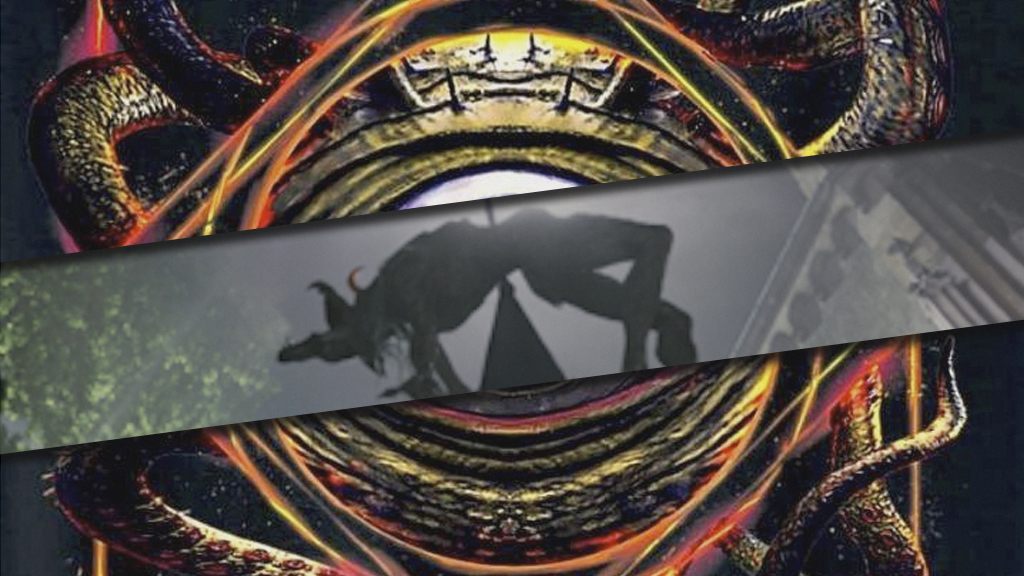
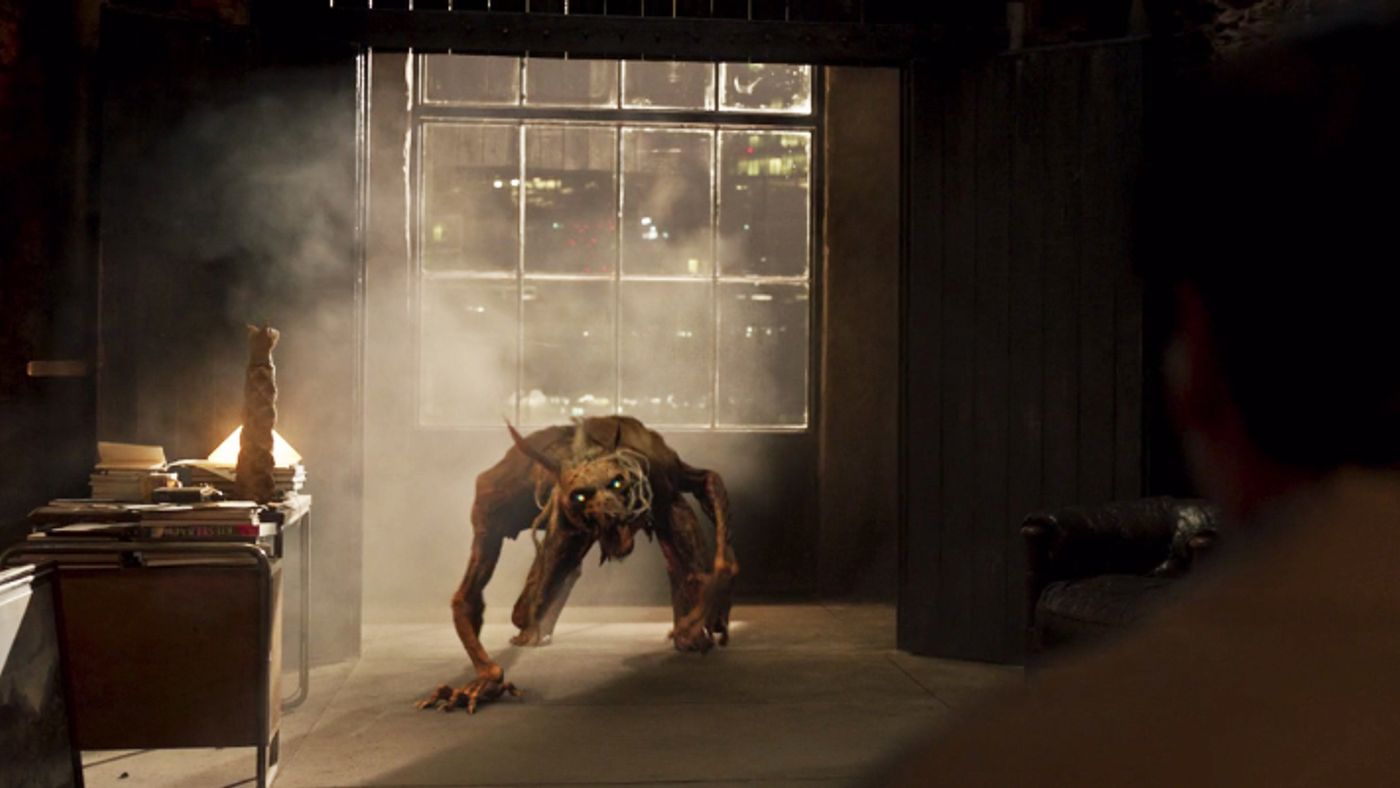
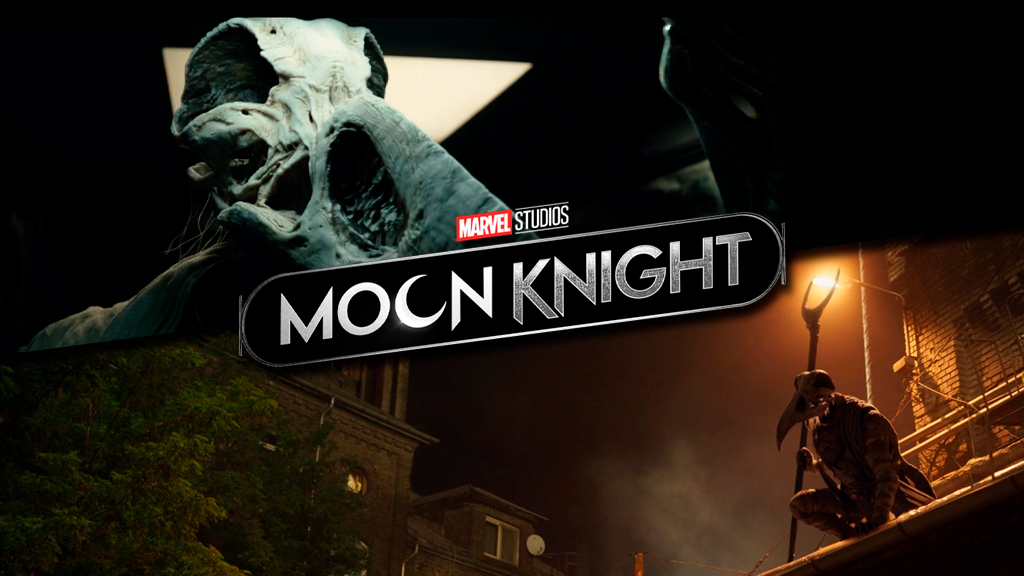
A clip for Doctor Strange in the Multiverse of Madness shows off Doctor Strange’s abilities while he is protecting America Chavez. At first, she is seemingly being attacked by an invisible enemy that Strange unveils to actually be Gargantos, the MCU’s version of Shuma Gorath. While he was heavily promoted with promotional artwork, it seems like we’ll see the character quite early in the film. Yet, the moment we saw the bus being picked up by something invisible, it was quite reminiscent of another recent Marvel Studios project that included otherworldly monsters. It reminded me of when Steven Grant was being chased by invisible jackals in Moon Knight.
It almost seems like there’s a chance that creatures from another world are invisible when they enter our reality. Arthur Harrow uses his staff provided by Ammet to open a portal through which these mysterious jackals come crawling out. While Grant was able to see them, probably due to his connection to Khonshu, Layla had no idea what exactly he was talking about. We would then see the strange creature leave an impact on the world with a car getting crushed and more. So, while it seems like he might be in Grant’s head, he actually has a tangible effect on the world around him. The same rule applies to his God Khonshu, who seemingly can only be seen by him and no one else.
The clip that was shared seems to have a similar effect, where he is invisible to those standing around and it takes Strange’s magic to give us an actual first look at the creature. So, it does open up the possibility that the many mystical creatures in this world actually can’t be seen by normal people. Shang-Chiand the Legend of the Ten Rings also hinted that many mystical creatures stem from alternative realities. Perhaps traveling into another reality somehow makes them invisible and allows them to stay hidden from the public. That might explain why the MCU rarely mentions any supernatural creatures and they still remain legends or stories.
With the Halloween special on the horizon, we might get to explore that aspect even more. Elsa Bloodstone is rumored to appear in the Werewolf by Night project, and someone who specializes in monster hunting seems like the perfect person to finally explain why these creatures are seemingly invisible. The consistency between Multiverse of Madness and Moon Knight adds a little speculation to how these creatures work within our world. Plus, it’s a great consistency if this is, in fact, how they’ll tackle these supernatural creatures moving forward.
Marvel Studios’ Moon Knight hasn’t shied away from introducing audiences to Egyptian mythology. It has in fact made it as central as possible to the overall storyline. But even though the future of the titular character in the MCU isn’t all that clear due to contractual issues, there are several details and other broader concepts that can, and in all likelihood will be used as stepping stones ahead of their return in future feature films of TV shows. Episode 5 was yet another great example of this.
Marvel Studios’ Moon Knight (2022)
Following the episode 4 cliffhanger where Steven and Marc are greeted by Taweret, she is quick to try and calm them down by elucidating where they found themselves. She then clarifies that they are in the Realm of the Duat, the realm of the dead in ancient Egyptian mythology. And that due to the Duat’s true nature being impossible for the human mind to comprehend, they may be perceiving the realm as something more easily recognizable. Hence, the psych ward. But the most interesting thing shared by the goddess of Women and Children, of childbirth and fertility, is that this realm is only one of several of its kind:
“An afterlife, not the afterlife. You’d be surprised how many intersectional planes of untethered consciousness exist. Ah! Like the ancestral plane! Oh! Just gorgeous.
Tawaret
Marvel Studios’ Black Panther (2018)
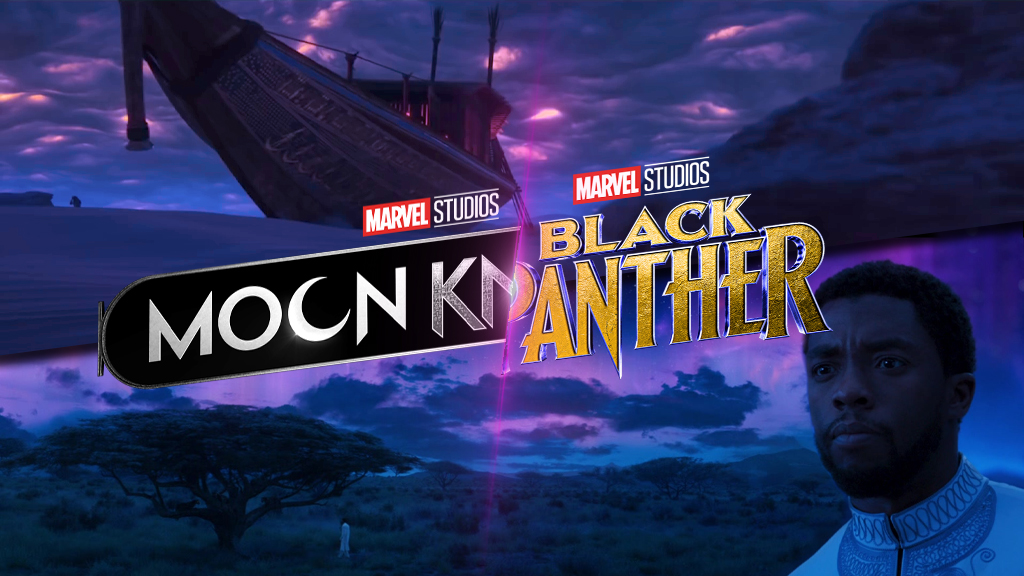
Getting this Black Panther reference right after introducing the Duat, while extremely cool, it’s also very helpful in driving home the idea that these planes, even though they might have common characteristics and a shared purpose, are very much their own thing. This means that the MCU isn’t combining concepts from different mythologies into a single unified vision, allowing for the future introduction of different pantheons from different cultures spread around the world and their unique takes on the Underworld. God plurality seems to be the way forward for the MCU, something we have already delved into in the past, and that continues to pay dividends each time a Marvel Studios project delves into the subject.
Following the depiction of Olympus in Thor: Love and Thunder’s first teaser trailer, and seing that Gorr the God Butcher is that movie’s main antagonist, it wouldn’t now be too big a reach to think that the Greek ferryman Charon and god Hermes might show up as gods themselves could end up having to cross the river that divided the world of the living from the world of the dead in Greek mythology. And when it comes to Black Panther: WakandaForever, which might end up introducing Aztec gods to the MCU due to an association with Namor, Xolotl, the god of fire and lightning could be next on the list as he was a soul-guide for the dead in Aztec mythology, commonly depicted as a dog-headed man.
Marvel Studios’ Thor: Love and Thunder (2022)
So either Gorr the God Butcher ends up being extremely successful in his endeavor to kill all gods or the MCU is definitively moving into a new age where every polytheistic religion will bring us their set of deities that will only help to enrich what is already a packed Marvel Cinematic Universe.
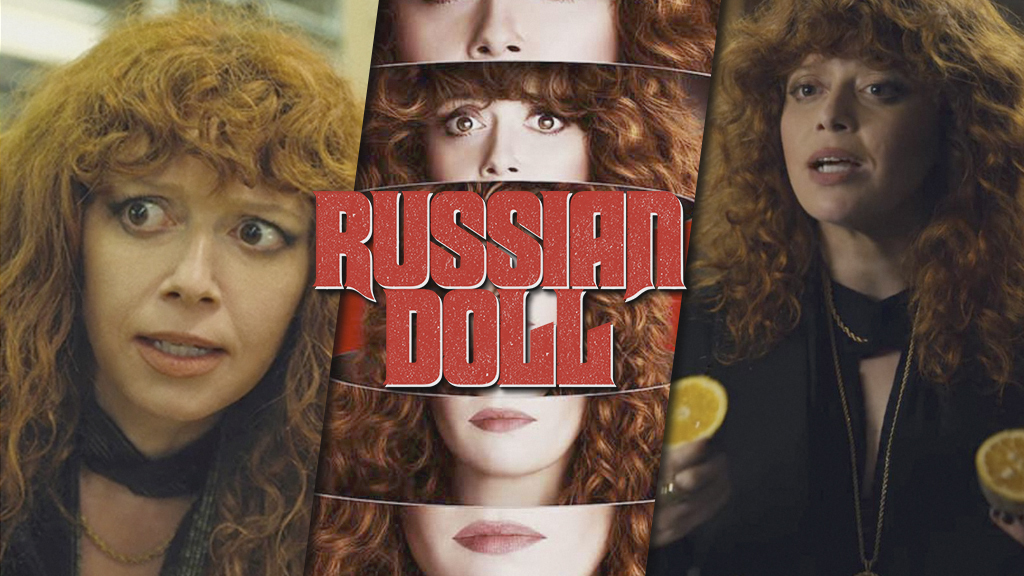
When the first season of Russian Doll hit Netflix in 2019, it quickly took to the top of Netflix’s charts as the Groundhog Day-esque series proved to be incredibly popular. With Natasha Lyonne on board as Nadia, a tough, wisecracking leading woman, the series had a star that could carry its – at times – insane material. So, it wasn’t entirely surprising that a second season was quickly announced with fans more than ready to return to the lives of Nadia and Alan (Charlie Bennet). Unfortunately, though, the wait would be a long one with Season 2 not hitting the streaming service until April 2022.
While Lyonne continues to shine as Nadia in Season 2, it’s hard to deny that it doesn’t quite ever reach the heights of Season 1. Sure, the story of this season is still one worth telling, as Lyonne continues to act her butt off. However, it’s so chaotic and at times hard to follow, that it can become hard to care about what is taking place. Which brings us to the question: Does Russian Doll need a Season 3?
As it stands, Season 2 of Russian Doll is a rather complete story. While the first season focused on Nadia and Alan dying repeatedly, the season ultimately ended with them in parallel universes with a few loose ends. It was a fitting ending and one that could’ve simply ended there. Then again, because of how it ended, there were countless possibilities of what still could happen with a second installment. Enter Season 2.
The latest season of Russian Doll sees the duo back together as though nothing happened. Nadia is still chaotic and messy, while Alan is still her clean-cut counterpart. Their chemistry this season was rather lacking, as was their screen time together, although the choices in their stories eventually do come to make sense by the season’s end. It’s just a lot of murky water getting there and maintaining a cohesive story.
When Season 2 does things right, it does them right. The emotional beats are excellent and if Lyonne doesn’t get an Emmy nomination for her work, it’ll be a crime. The issue, however, is that by the end, it’s hard to imagine the story truly needs a third outing. That isn’t to say a third season wouldn’t be enjoyable. I have faith that it would, but it doesn’t make it necessary. The issue here is that we’ve become so accustomed to wanting to drag out stories longer than necessary and eventually force an ending that will (hopefully) satisfy viewers. But is it the right thing to do? A series can produce a single season with a tight story that ends with things mostly tied up neatly, and yet, it won’t be enough – fans will still demand more. And while that is understandable, to an extent, sometimes more is too much.
The ending of Russian Doll Season 2 ends with our characters in a good place. So, yes, while a third season could take things further, it doesn’t really need to because there is an ending of sorts. Nadia is in a good place – she’s come to terms with Ruth’s passing, as well as her mother’s past crimes. More importantly, she’s come to find a sense of peace, something we’ve never truly seen her have.
As of this writing, a third season has not yet been announced for Russian Doll. However, Lyonne has previously suggested the team is already considering some ideas. In an interview with Variety, the actress/director/writer suggested a third season could see the duo time travel to the future. For some, the idea of seeing Nadia and Alan in the future could prove exciting, but it’s hard to imagine the series will be able to tell nearly as cohesive a story as Season 2 did.
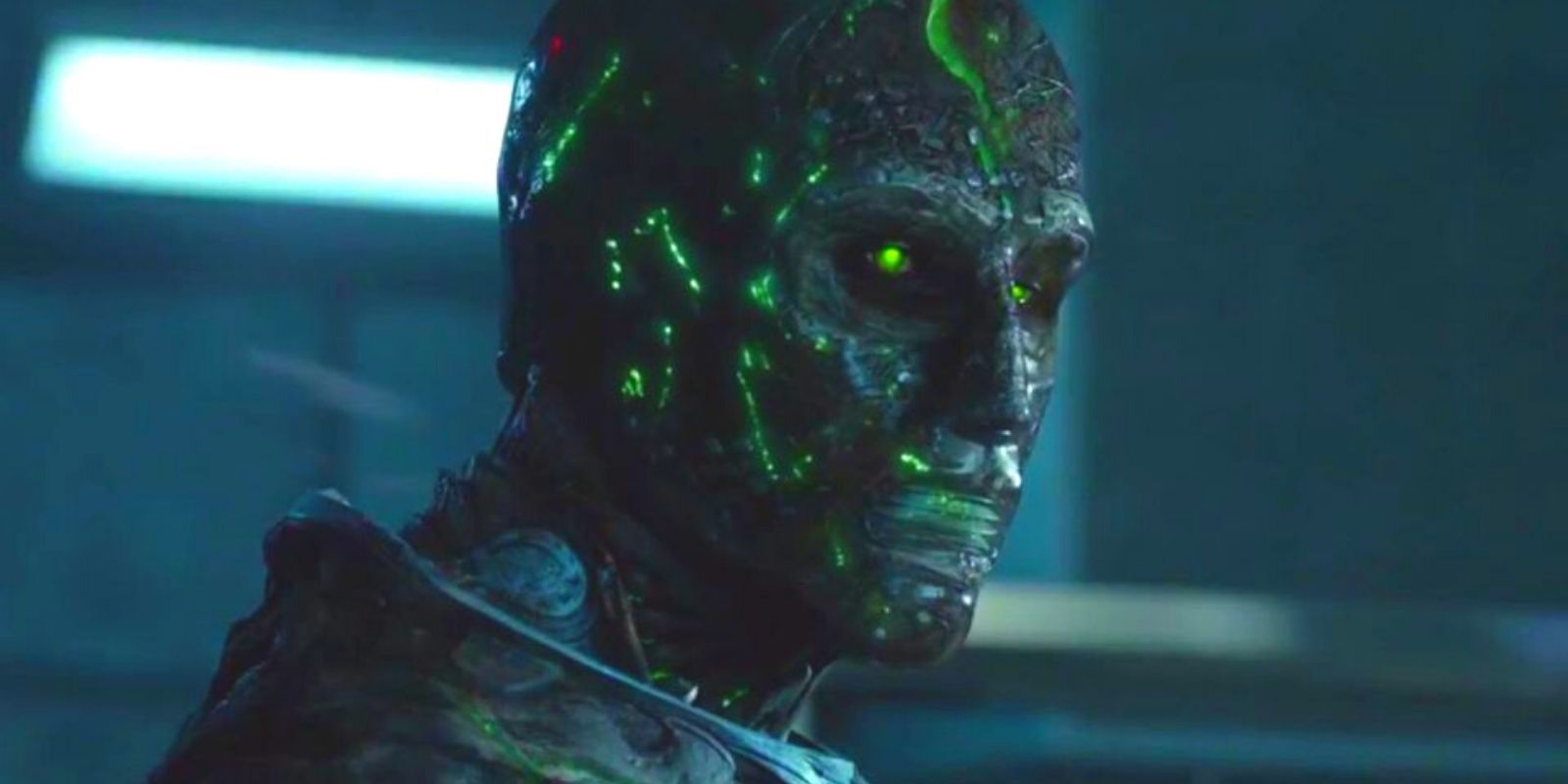
Episode 4 of Moon Knight, “The Tomb”, was illuminating to say the least. We learned so much, Including the fact that Ammut was trapped in Alexander The Great’s tomb, and Alexander once served as his avatar! Arthur really did a number on Marc, first revealing to Layla the Marc knew how her father died and then shooting Marc, which is when things REALLY got nuts. The last part of the episode took place inside a mental hospital where Marc and Steven were patients and Arthur was their…doctor? The big question in this episode is, is the hospital where Marc is taken in the afterlife or is this whole thing in Marc’s head? Like is he dead or did he make up all these scenarios?
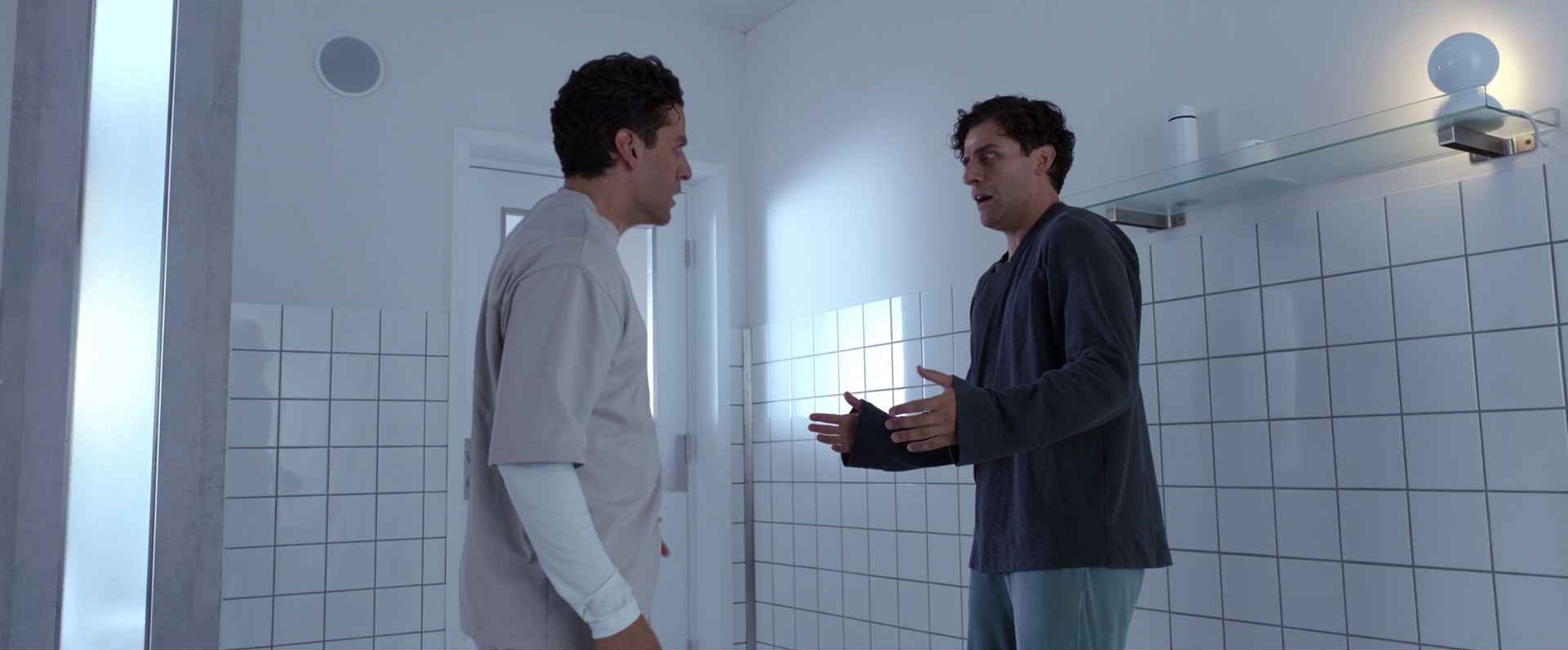
In the hospital, we all the characters from the series return in different roles and more Easter eggs than we could count. There is also more evidence, maybe the best yet, of there being a third personality, when Marc gets Steven out of a tomb and then another tomb is seen, shaking as if someone on the inside is wanting to get out. Finally, the madness ends when Marc and Steven casually bump into a talking hippo. Not only does everything happening in the asylum causes Marc to call into question whether or not the events he’s experienced are real, but they also cause the audience to wonder the same thing.
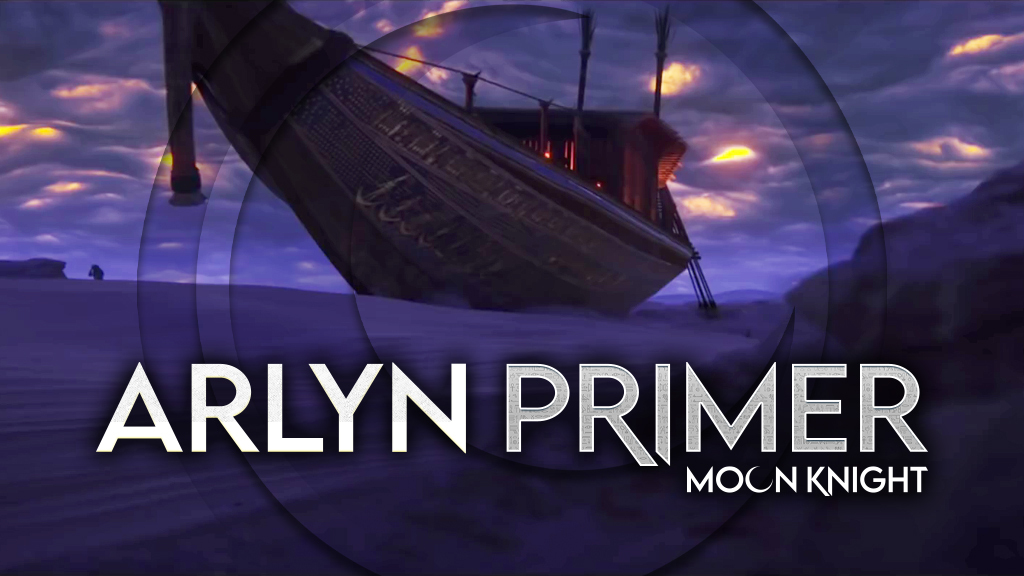
Arlyn’s Assumptions
In the next episode I think that they will dive deeper into the whole hospital situation. There is still two episodes left so Marc can’t be dead…again…just yet! But without the help of Khonshu, how will Marc and Steven escape wherever it is they are? And even if they do, will it be in enough time to stop Harrow from freeing Ammut?
The Marvel Cinematic Universe has consistently looked to the comics for inspiration in its adaptations. We saw it with the Superhero Registration Act being turned into the Sokovia Accords or even recently having Marc Spector waking up in an institution. Some adaptations are straightforward, while others are altered slightly to fit an overarching story. Carol Danvers, to give an example didn’t get her powers from the Space Stone in the comics. With Phase 4 seemingly being all about legacy and the responsibility that God-like beings hold, it shouldn’t be a surprise then to see more connections bringing these themes together. Perhaps they are already planning the seeds with Kamala Khan’s new powers.
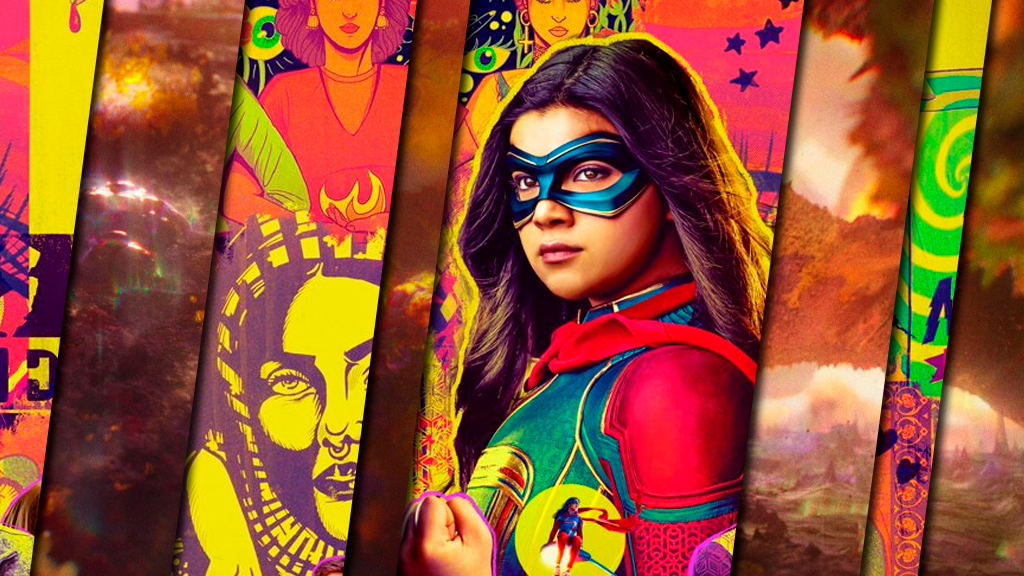
In the first trailer for Ms. Marvel, we got to see how Kamala’s powers are being adapted for Disney+. It revealed that she was going to become a more cosmic-powered superhero similar to the two other “marvels” that now exist within the MCU rather than the traditional Embigenning abilities from the comics. Yet, it opens up the question of where exactly these newfound powers come from. As mentioned previously, Captain Marvel received her powers from the Space Stone. The other member of The Marvels, Monica Rambeau, also was given abilities indirectly through an Infinity Stone. Could we see the same with Kamala?
The trailer may be the key to finding out just how she gains her abilities. We see her put on bracelets of some kind and are surrounded by a mysterious energy. Perhaps there’s a chance that what she is wearing is the MCU’s version of the Quantum Bands? In the comics, the cosmic entity and Eternal known as Eon would acquire these mysterious artifacts from Kronos, the father of Zeus, who was just recently teased in the first Thor: Love and Thunder trailer.
In the comics, Eon was originally trying to find ways to counteract Thanos’ plans. He gave Mar-Vell the knowledge and weapons needed to attempt to stop the Mad Titans. Perhaps something similar happened in the MCU. At the time, we all wondered how Carol Danvers arrived back on Earth at precisely the right time in Avengers: Endgame, and this could easily be how. As we see more and more godly entities within the MCU, it wouldn’t be too out there that Eon also has found his place within the cinematic universe and through Carol Danvers’ travel to earth, she brought them with her.
As their name implies, they pull their energy from the Quantum Zone, which we were introduced to in the Ant-Man franchise as the Quantum Realm. So, there are already enough elements within the MCU to build up the connection of her abilities being based on the Quantum Bands. They might change the origin, as even the Tesseract was originally the Cosmic Cube and had no relation to the Infinity Stones in the comics. So, they could even have a connection to an Infinity Stone similar to keep the connective tissue between Marvel’s abilities. Perhaps upcoming trailers might help solidify that very connection as we near its June release.
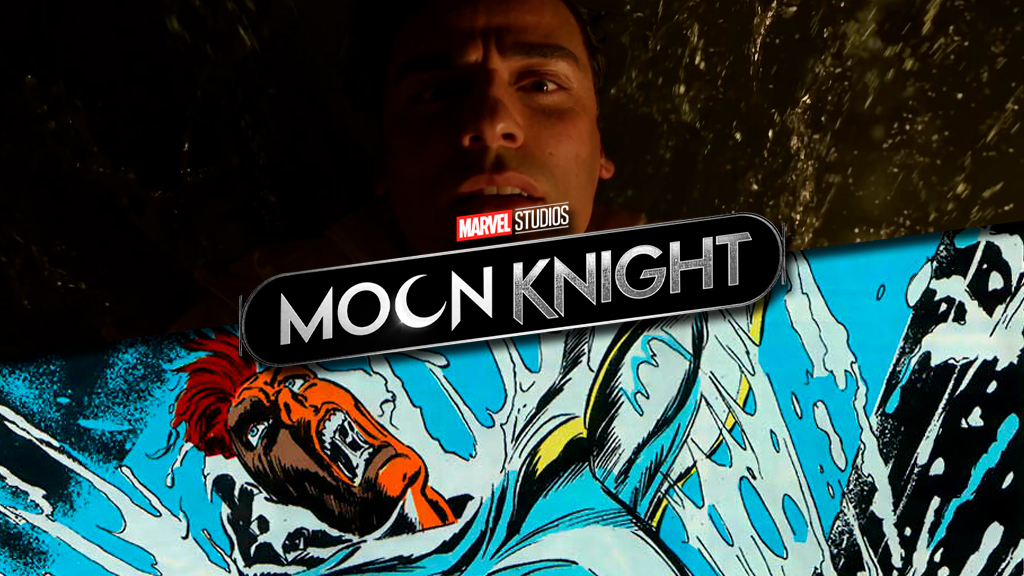
Much of the conversation surrounding Moon Knight Episode 4 is no doubt focused on that twist ending. But the moments before Marc Spector wakes up in what looks like a psych ward may have been inspired by the events of Marc Spector: Moon Knight#27 and #28, which have surprising parallels to Marc’s death by Arthur Harrow in the live-action series. There is a chance Moon Knight could show a resurrection of Marc Spector that involves a new understanding and acceptance of his role as the Fist of Khonshu. In essence, even though we have not witnessed the actual origin of the character in the series, Episode 4 could have just set up Moon Knight’s“true” origin in the MCU.
‘Marc Spector: Moon Knight’
Towards the end of Episode 4, Arthur Harrow shoots and presumably kills Marc Spector, who floats down through water in the tomb for quite some time. Eventually, we see a light ahead of him and he wakes up in the psych ward. While the mental hospital aspect shows a lot of similarities to the Lemire-Smallwood run in the comics, the moments before are suspiciously reminiscent of the Scarlet Redemption arc in Marc Spector: Moon Knight. In it, Moon Knight is fatally stabbed, and he falls into some water. His body spends virtually the entirety of the next issue sinking deeper into the water in a visual that has undeniable comparisons to Episode 4.
In Marc Spector: Moon Knight #28, an explicitly-dead Marc Spector sinks down through waters while passing through memories that seem to haunt him, including his past as a murdering mercenary. That’s not all, as also present are visions of his father. He was a rabbi, and Marc thinks through his relationship to the values of his youth and how he strayed from them. He ultimately realizes that his father’s teaching of goodness, love, and redemption were things he should not have completely turned against.
‘Marc Spector: Moon Knight’
By the end of the issue, Moon Knight comes to “understand” that Khonshu wanted him as his Fist of Vengeance for more than just his violent skills from his life as a mercenary. He believes that he also chose him for the influence his father had on him and what mental lessons he took away from being the son of a rabbi.
It is one of the first major moments in Moon Knight’s comic history that emphasizes and explores Marc Spector’s heritage, as well as his connection to Judaism. Whether Moon Knight goes into this more in the next few episodes is yet to be seen, but Marc Spector’s personal epiphany in this issue of the comics may be absolutely crucial to understanding what comes next in the live-action series.
Marc Spector, of course, was first resurrected by Khonshu in a tomb when Marc was killed by Bushman—his traditional origin story. In Marc Spector: Moon Knight #28, Khonshu resurrects Marc Spector a second time, and Moon Knight is very much reborn. He emerges from the water sure of his newly realized role as more than a fist of vengeance—he is also a beacon of hope.
‘Marc Spector: Moon Knight’
While the psych ward arc in Moon Knight will surely play out in its own unique way, it is very possible it could include a look back on Marc or Steven’s lives before they took on the mantle. It might end up with all personalities embracing, accepting, and redefining the Moon Knight mantle. In that way, the Disney+ series could be seen as a traditional origin story in and of itself. While the first “origin” may have been in the past, the series may have built itself around this second resurrection which could serve—for all intents and purposes—as the origin of the Moon Knight we come to know in the MCU.
The last few days have been rough for Netflix. Not only did they publicly have to acknowledge that they lost subscribers for the first time in over ten years, but they’ll face 2M more jumping ship by the next quarter. Subsequently, investors are furious and fearful as their shares have dropped by a scary amount. Many find themselves wondering what exactly has led to this sudden shift within the market, as streaming was seen as this bottomless potential with billions of subscribers. What seems like they have potentially reached their limit, may showcase a general trend that has been waiting to show its fangs over the years.
One thing is for sure, it’s not a good look for Netflix and there are many discussion points that can be made on what led to this current downward spiral. Netflix will still hold on to its top spot and we’re already seeing it with the decision to add an ad-supported version at a cheaper price. Yet, there’s one aspect that seems worth exploring and that is Netflix’s obsession with quantity. They are investing a lot of money in originals, which leads us to get a diverse selection of projects. Yet, it also led to the new perception of the streamer becoming a safe haven for canceled projects but sadly a new trend has arisen.
Oddly enough, they’ve become obsessed with swiftly canceling projects. While some select projects manage to have some sense of longevity, they manage to drop franchises that have even proven to be quite successful. When Bright was first released in 2017, it was one of their most-watched films. Yet, somehow the sequel was buried at one point without any fanfare, and we got a prequel Anime spinoff that had little to no marketing push. There are projects where we do get some news ahead of its release, but there’s a trend that a lot of it is creator-driven.
The biggest example of Netflix’s modern marketing approach was their live-action Cowboy Bebop series. While production did face quite the delay and an adaptation of such a cult classic was definitely going to face some backlash, it just suddenly arrived. Its release date was announced on August 23rd and would hit the streamer on November 19th. At the time we didn’t get a trailer to build up the excitement and it wasn’t until the 19th of October that we got a mini-episode titled The Lost Session. we wouldn’t get the actual trailer until the 27th with only a few more weeks before it hit Netflix.
By the time we got any actual promotion or the series, people’s opinions have already been made on what to expect and a new audience had barely any time to relate to it. Considering it was released on the 19th of November, it barely even got a few weeks before Netflix just dropped the axe on the series on December 9th. Early reports indicated that the production was going in expecting multiple seasons and it was cut short before it even got started. The issue is also we don’t know what exactly the metric is that they are going for, especially with newly established franchises. They seemingly banked on the addition of the anime which may have hurt the release more than anything else.
It almost creates this belief that existing IPs will always draw in an audience no matter what. Yes, Cowboy Bebop has an extensive following but it’s also quite a bit more niche than some might expect, especially given Netflix’s focus on worldwide viewership. They are currently working on two other projects with Avatar: The Last Airbender and One Piece that have strongly established audiences but would still require a certain amount of marketing to ensure fans that this will be a faithful adaptation while pulling in new audiences.
There’s also a strange inconsistency with how much marketing a project ends up getting. As we were speaking of building upon existing IPs, there is the series Human Resources, the spinoff of the animated series Big Mouth, that got released on March 18th. The series actually got the first teaser back on October 4th. Even if it was short, it had the strict advantage of building upon an already established franchise on the service even if the naming wouldn’t hint at a connection. Its official trailer dropped in January, which gave it multiple months of momentum ahead of its release. The Season 2 renewal wasn’t until a full month before an announcement was made.
Ironically, a project that already has a well-established audience is given more time than a project that only a select few really are aware of. The odd decision to drop many animation projects as a result of the current development creates this odd disconnect of what exactly Netflix’s end goal is. They seemingly are dogpiling project after project that get no more than one or, if they’re lucky, two seasons.
Even those that seem like sure-fire franchises to build upon are killed off before they even get a chance to get going. The life and death of a series, or even an entire franchise, ends faster before it even has a chance to start. With the amount of growing competition, it’ll get more and more difficult for this model to survive by only giving spinoffs time to grow and just wait and see if a new series, even if based on a new IP, will somehow end up becoming successful.
Once a show drops with every episode, there’s hard to no additional marketing at play to keep it alive. They pretty much just bank on the show living on their own without putting in the work to keep it so. Disney+, Amazon Prime, Peacock, and more are slowly leaning towards weekly releases as it keeps these series alive way more than a single release. Yes, viewers are complaining about it but it’s a sign of how these continued marketing attempts build up the momentum as we get more impatient for what lies at the end. Perhaps Cowboy Bebop could’ve had some more attention given to it if it was a weekly release, especially as it moved away from the more disconnected storylines of the original.
Yes, Squid Game technically was one of the most talked-about series for weeks but that was a lightning in-the-bottle moment. If Netflix is hoping to keep that kind of series as their ongoing pillar, they are putting all their eggs into a single basket. Competition is rising, the demand is higher than ever and growth can no longer be the only focus. Some people subscribe to their service for specific series and franchises. If they have the feeling it barely sticks around, they won’t either. Word-of-mouth depends if the series is a game-changer and only rarely do we see that happen.
We’re seeing a new era of television, as Netflix’s original model is potentially reaching its limit. We’re either going to see more hybrid models moving forward, as we slowly step back into elements that made broadcast television work. As legacy companies are getting their hands back on their projects and Netflix is more dependent on its originals to keep people watching, they might require the number of reasons that remain as binge-able as The Office, Friends, and more. As they are losing their usual library and may soon no longer have all the bit IPs they usually had available, investments will only continue to grow moving forward.
People come to watch The Ozark, but they stay to watch their favorite comfort show. At some point, they became so dependent on existing series, that the demand for newer ones has reached some rather questionable highs if they keep canceling shows out of convenience. perhaps shifting to more long-form storytelling with various stories unfolding and growing audiences across multiple seasons will benefit them moving forward. With Netflix’s Geeked Week on the horizon, perhaps we’ll see a new shift in how they tackle their projects moving forward.
When Disney purchased 21st Century Fox in 2019, Marvel Studios gained access to the live-action rights of a treasure trove of Marvel Comics characters. The X-Men. The Fantastic Four. Doctor Doom. Galactus. The Silver Surfer. Annihilus. The list goes on…and it really goes on. However, 3 years after the deal was sealed, we’ve only seen a Variant of Kang the Conqueror and some Skrulls, which were already kinda-sorta useable anyway, while Marvel Studios carefully constructs their plans for the mutants and The First Family.
To date, very little is known about said plans. At SDCC ’19, Kevin Feige announced that a Fantastic Four film was on the way and teased the arrival of the mutants. Since then, however, other than announcing that the new FF film would be helmed Jon Watts, whose recently completed Spider-Man trilogy integrated the Sony-owned Webslinger into the MCU, there has been no official news. Word did come that Marvel Studios was seeking pitches on The Mutants and minor tidbits have surfaced here and there about the Fantastic Four, but nearly 3 years later fans are still in the dark. And that’s ok. It’s ok because, as Feige well knows, Marvel Studios has to proceed carefully with both properties because, simply put, they have to get it right.
As with Spider-Man, the Fantastic Four and X-Men have had previous and relatively recent films. In the case of the FF, the most recent attempt to bring the characters to resulted in one of the most despised superhero films of all times; in the case of The X-Men, Fox’s love affair with Wolverine and inattention to continuity left some of the best characters on the bench, some others poorly adapted and fans feeling fairly frustrated with the end result. As Marvel Studios attempts to reboot these properties, fans are going to carry their experiences with these previous iterations with them into the new projects. In a way, that means Feige and the Parliament are starting in a hole they didn’t dig, but if they don’t get it right out of the gate with these projects, they’ll bury what should be two different properties that could each generate a decade’s worth of stories.
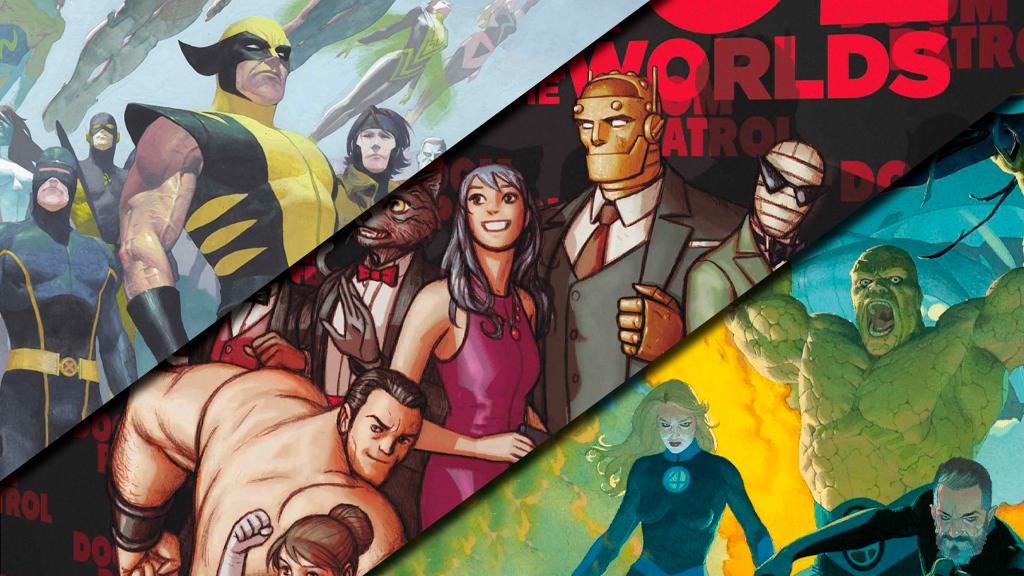
As mentioned previously, fans will be be wary of these MCU reboots as they carry the trauma of the previous versions with them into theaters. If the MCU versions of these properties start to follow familiar arcs or feel similar to what Fox did, fans will find themselves triggered and the aforementioned decade of projects will be DOA. In this case, doing it right almost certainly means they need to do it very differently to separate the MCU versions from the Fox versions as much as possible. That’s no easy task, given that both the Fantastic Four and The X-Men franchises have each been “rebooted” once already, however, Feige and The Parliament could find some inspiration in an already established property that has been incredibly successful: Doom Patrol.
The three properties are a great example divergent evolution in comics, so while their modern day iterations don’t seem to be incredibly similar, Doom Patrol, the X-Men and the Fantastic Four are fairly inexorably entangled and have been for nearly 50 years. The group of metahuman misfits that came to be known as Doom Patrol first appeared as The Legion of the Strange in the pages of 1963’s My Greatest Adventure #80. Just 3 months later, TheX-Men #1 introduced comic readers to the world of mutants whose strange powers kept them from being accepted by society. If the similarities of a team of weirdos being led by a wheelchair-bound doctor/professor hadn’t ever occurred to you, they certainly did to Doom Patrol creator Arnold Drake, who once stated his belief that his plans for the team somehow made their way to X-Men creator Stan Lee, allowing him to launch his book shortly after the Doom Patrol first appeared. While Drake’s stance on “insider trading” softened over time, the reality is that other than some superficial similarities, the books didn’t truly have much in common. The X-Men dealt with themes of social injustice while Doom Patrol found themselves caught up in the incredibly strange types of adventures that fans of the HBO Max streaming series have come to know and love. And in that regard, it’s another group of Marvel heroes that have much more in common with Doom Patrol than the X-Men really ever did.
As Marvel Studios prepares to bring the First Family to the MCU, they could certainly take a few cues from the way that DC has brought Doom Patrol into live-action. Most importantly, Jon Watts and the creatives behind the project should embrace the strangeness that really defined the early days of The Fantastic Four and has made Doom Patrol a streaming hit. The Fantastic Four has been drastically redefined over the years, but their roots grew through stories about Mole Man and Monster Isle, Skrulls being turned into cows, traveling through time and having Ben Grimm be mistaken for Blackbeard, meeting the Impossible Man and many more ludicrous adventures that often take a back seat to Doctor Doom.
In order for Marvel Studios’ Fantastic Four to be successful, it has to be different from its predecessors. Embracing the weirdness of the Puppet Master, The Red Ghost and His Indescribable Super Apes, the Mad Thinker and his Awesome Android ensures that nobody will mistake this iteration for one of Fox’s attempts. Doom Patrol has provided a template for doing so successfully, not just because of the weirdness, but because the series has captured something that is also central to the story of the Fantastic Four: a family.
Sure, Doom Patrol isn’t a family in the same sense that the FF are, but they share a sense of tragedy and loss and loneliness that unites them. Over the course of several seasons, the characters of Doom Patrol have come to know, care for and rely on one another as a result of their crazy adventures and this idea is, at its core, what Marvel Studios could-maybe even should-do with their Fantastic Four. A family of explorers going on the type of weird adventures not previously seen in the MCU, but in the DCEU.
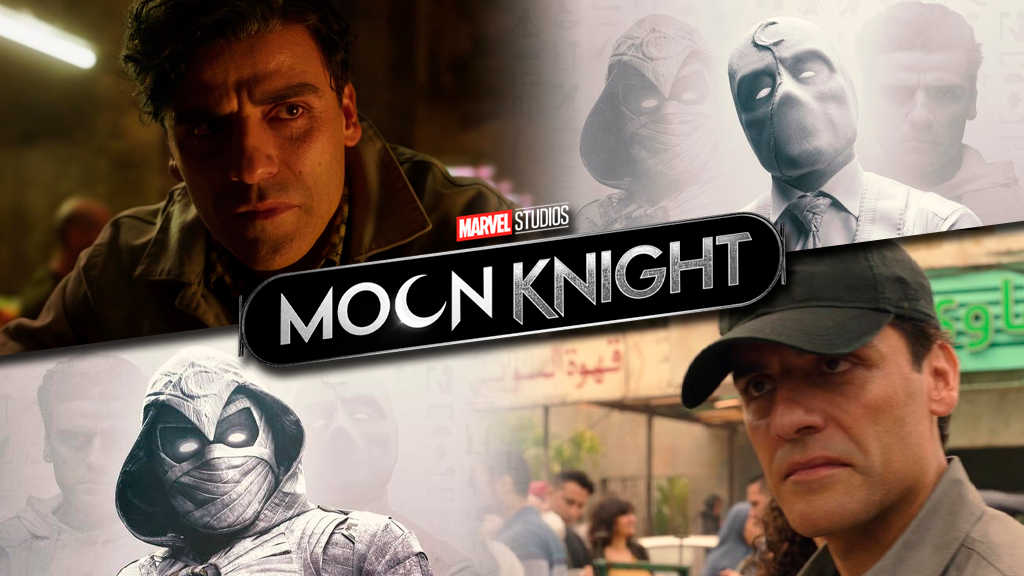
Moon Knight has certainly put the spotlight on Steven Grant and Marc Spector as two different personalities. While Episode 1 opened the series from the perspective of Steven Grant, Marc Spector is the one originally connected to Khonshu and the titular Moon Knight. While Marc is the original personality in the comics, the Disney+ series has been purposefully ambiguous when it comes to suggesting which personality is the original.
While it would be a bold departure from the comics to have anyone other than Marc be the original identity, the series has not been shy to depart from the comics. Below we’ve compiled some of the strongest evidence that Moon Knight has presented that either Steven or Marc is the original.
Steven Grant
Marvel Studios’ ‘Moon Knight’
One of the biggest flags for Steven’s character is that he is supposedly in frequent contact with his mother. While there are plenty of reasons to be skeptical about the postcards he received from her and the fact that we’ve never heard her speak back to him on the phone, if he does have a relationship with his mother that would suggest she knew him as a child and that he was very often in control of the body.
Moon Knight as a show officially adopts Steven as its protagonist. Not only is he who we follow for nearly the entirety of Episode 1, but the actual synopsis for the series only mentions Steven.
Speaking of control, from what we know, Steven has been in primary control for at least several months. Spector seems to be able to take control when Steven falls asleep, but clearly he has had a difficult time manifesting his personality.
When Marc did take control at the end of Episode 2, Steven was extremely uncomfortable being “in the mirror”. Marc had clearly gotten used to it, but Steven acted like he had never been there before and was totally unfamiliar with the feeling.
Steven seems to have a life with a foundation. It is nothing overly intricate, but he does have his own flat and job, and it seems as though the people he works with have known him for some time.
He also has quite a wealth of knowledge on all things Ancient Egypt. That would take some time to acquire, which suggests a significant amount of time in control. Marc does not have any of this knowledge, and the depth of his intelligence suggests it is definitely something Steven must have studied for years.
Marc Spector
Marvel Studios’ ‘Moon Knight’
The easiest and strongest evidence that Marc is the original is that, in the comics, he is. There is nothing stopping Moon Knight from twisting that, but it is a strong bet that the original character would remain the same.
Marc is also the personality that had the connection to Khonshu and Moon Knight. His alter obviously meets Khonshu in the series, but even in suit form he is Mr. Knight, not Moon Knight. It would only make sense that Moon Knight is the original personality in Moon Knight.
There’s also plenty of evidence that Marc had periods of time where he was in consistent control. He is married, and although it might be ending and we don’t know how long it lasted, presumably that relationship took some time. And, as we learned in Episode 3, Layla had no idea that Steven existed.
Marc also told Layla in that same conversation that he “had it under control until recently”. That suggests that Steven’s time in control could be recent and unprecedented.
One thing that raises more questions than answers is that Marc was aware of Steven while Steven was not aware of Marc. This could suggest that Marc knew because Marc was the original, but there are no obvious reasons why Steven would have absolutely no clue about Marc’s existence.
Moon Knight might very well not never resolve the question of who is the original, just to keep the ambiguity and mystery alive. Or, in the next couple of episodes, we learned more about our characters and their pasts. This could be a confirmation of Marc as the original, or a dramatic reveal that it is Steven instead. Or, who knows, another personality altogether could be revealed and take on that role.
With the big twist at the end of Moon Knight Episode 4, the series is telling us to question everything we thought we knew. While Steven and Marc’s mental health certainly will come into play, it’s worth noting that the door is open for certain elements of the show to be drastically different from what we thought up until now. My guess is that the villain Moon Knight has set up so far, Arthur Harrow, is actually a red herring for the Big Bad of the series—Khonshu.
It would be pretty bold to throw a villain twist in after the “what is reality?” twist we just got, but it could be fantastic. For one, it could easily work with what looks like a Lemire-Smallwood comics-run-inspired psych ward twist. But Khonshu as the series’ ultimate villain has a strong foundation in the comics, and it would improve upon the still vague and generic-feeling Arthur Harrow.
Marvel Studios’ ‘Moon Knight’
So first, why would Khonshu be the villain? As you know from Moon Knight, the lunar god isn’t exactly warm and fuzzy. He was banished and is now imprisoned by the other Egyptian gods of the Ennead. While his imprisonment was framed as a situation where Khonshu tried to do the right things while the others just ignored what needed to be done, perhaps there is much more going on. Weirdly, Harrow told the Ennead that Khonshu was actually the one who had him start looking for Ammit. Accusing Khonshu of now working due to jealousy and paranoia towards stopping him.
While Harrow is obviously not looking like a good guy, he is a big advocate of honesty. Either way, the fact that we still know little to nothing about the Khonshu-Harrow relationship is suspicious. There is a very good chance whatever that Ammit-related history between the two is, it could fundamentally change how we look at Harrow’s mission and Khonshu’s interest in stopping him.
So, yes, there are some shady open questions. But Khonshu has been helping Marc and Steven this whole time, right? From what we’ve seen, the god has not acted against either personality, but we know that Khonshu is actively interested in Layla as his next avatar. In that way, he does not seem overly enthused or pleased with Marc. I think that Moon Knight can and will reveal that Khonshu’s motives are similar to the god’s in the Lemire-Smallwood comics run—the same run that clearly inspired the end of Episode 4.
Long story short, Khonshu puts Marc through psychological warfare because he wants to break Marc’s mind completely in order to take complete control of his body so that he would essentially have a direct presence on Earth. Moon Knight actually already teased this idea if we look back at what the series has told us so far.
After Khonshu was banished, Harrow gives a dramatic speech to Khonshu’s stone statue. He specifically says to Khonshu, “if you hadn’t broken me completely, I never would have learned the value of healing.” So, the concept of Khonshu breaking his avatar “completely” has already been introduced. During the “trial” in the Pyramid of Giza, Harrow also suggested that Khonshu is taking advantage of Marc, who is clearly suffering from a dissociative identity disorder. That tracks with the theory that Khonshu, like in the comics, chose Marc because he knew his mind was “weak”, so he knew he had a better chance of breaking or controlling him.
‘Moon Knight’ (2016)
Basically, Khonshu could be revealed as the ultimate or final villain in the next two episodes. It would be another dramatic twist, and it would make a more interesting story than Arthur Harrow. Don’t get me wrong, Ethan Hawke puts in a phenomenal performance, but Harrow and his motivation are unfortunately a bit generic. While that could just be something the rest of the series has to develop, it also would make Harrow a perfect red herring. Considering he has been killing people because a cane told him to, it’s less likely that he will be a surprisingly good guy.
His goals and actions might just take a backseat to whatever Khonshu is up to—as noted above, there is something missing regarding the Ammit plot. We have not seen any version, memory, or depiction of Ammit. Harrow is a devout follower despite not being her avatar and never communicating with her considering she has been imprisoned for thousands of years. Khonshu is apparently the one who set Harrow on his Ammit-obsessed path in the first place. Whatever Khonshu’s interest in Ammit is, he might want control over Marc’s human body to carry out his own plans.
The biggest issue with this theory, in my mind, is that Khonshu is currently imprisoned. It is not exactly clear who would set him free—my guess is Layla—but presumably, the god might be needed to resurrect Marc from the water he died in before the Episode 4 twist. The water resurrection is a whole theory of its own, but it assumes that everything that happened before the psych ward was not simply imagined and that Marc will come back to that “reality” eventually. If Khonshu does resurrect Marc, though, doesn’t that seem like he is friendly? Not necessarily if he still wants to use Marc as a seemingly “weak” mind to break—especially after Marc might go through the psych ward twist.
‘Moon Knight’ (2016)
This theory also matches up with a common theme in Moon Knight comics. Often, Marc is at odds with Khonshu and his influence. He alongside Moon Knight (to the extent they can) leave Khonshu behind. The human and god are so connected that Khonshu always comes back again, but Marc frequently recognizes how toxic his guardian can be and tries to better his life by leaving him behind. In doing so, he continues to be Moon Knight. At a certain point, the hero/fighter/vigilante is in his personality, and he always wants to continue it. He just wants to do it on his own terms. That could be a perfect jumping-off point for MCU Moon Knight—Marc/Moon Knight saying goodbye to Khonshu to become the hero they actually want to be.
‘Moon Knight’ (2016)
The first four episodes of Moon Knight are now streaming on Disney+.
Cookie Consent
We use cookies to improve your experience on our site. By using our site, you consent to cookies.
This website uses cookies
Websites store cookies to enhance functionality and personalise your experience. You can manage your preferences, but blocking some cookies may impact site performance and services.
Essential cookies enable basic functions and are necessary for the proper function of the website.
Name
Description
Duration
Cookie Preferences
This cookie is used to store the user's cookie consent preferences.
30 days
These cookies are needed for adding comments on this website.
Name
Description
Duration
comment_author_email
Used to track the user across multiple sessions.
Session
comment_author_url
Used to track the user across multiple sessions.
Session
comment_author
Used to track the user across multiple sessions.
Session
Statistics cookies collect information anonymously. This information helps us understand how visitors use our website.
Google Analytics is a powerful tool that tracks and analyzes website traffic for informed marketing decisions.
Contains information related to marketing campaigns of the user. These are shared with Google AdWords / Google Ads when the Google Ads and Google Analytics accounts are linked together.
90 days
__utma
ID used to identify users and sessions
2 years after last activity
__utmt
Used to monitor number of Google Analytics server requests
10 minutes
__utmb
Used to distinguish new sessions and visits. This cookie is set when the GA.js javascript library is loaded and there is no existing __utmb cookie. The cookie is updated every time data is sent to the Google Analytics server.
30 minutes after last activity
__utmc
Used only with old Urchin versions of Google Analytics and not with GA.js. Was used to distinguish between new sessions and visits at the end of a session.
End of session (browser)
__utmz
Contains information about the traffic source or campaign that directed user to the website. The cookie is set when the GA.js javascript is loaded and updated when data is sent to the Google Anaytics server
6 months after last activity
__utmv
Contains custom information set by the web developer via the _setCustomVar method in Google Analytics. This cookie is updated every time new data is sent to the Google Analytics server.
2 years after last activity
__utmx
Used to determine whether a user is included in an A / B or Multivariate test.
18 months
_ga
ID used to identify users
2 years
_gali
Used by Google Analytics to determine which links on a page are being clicked
30 seconds
_ga_
ID used to identify users
2 years
_gid
ID used to identify users for 24 hours after last activity
24 hours
_gat
Used to monitor number of Google Analytics server requests when using Google Tag Manager
1 minute
Marketing cookies are used to follow visitors to websites. The intention is to show ads that are relevant and engaging to the individual user.
Pinterest Tag is a web analytics service that tracks and reports website traffic.