Category: Features

  • The Ultimate List of What to Watch Before ‘Ant-Man and the Wasp: Quantumania’

    The Ultimate List of What to Watch Before ‘Ant-Man and the Wasp: Quantumania’

    With Ant-Man and the Wasp: Quantumania set to start Phase 5 in February, the Marvel Cinematic Universe is about to dramatically change course in the midst of the Multiverse Saga. Much like Doctor Strange in the Multiverse of Madness, the official list of what a fan should watch to prepare for the film is not quite as simple as you’d think. Part of this is the mere fact that the MCU now has 30 films, 8 Disney+ series, 2 Disney+ special presentations, and I Am Groot. Still, considering the absolute chaos of the Multiverse, the introduction of the Multiverse Saga’s main villain, a Young Avengers setup, and threequel status make Quantumania a fun one for our latest Ultimate List of Things to Watch Before.

    At the end of the day, 16 projects made this list with varying degrees of relevance. First, the top three tiers are focused on Scott Lang/Ant-Man’s story as well as the Multiverse. After that, it is hard to ignore that Cassie Lang’s role in Quantumania is setting up yet another (likely) future Young Avenger, so the list takes a stroll down memory lane of others we have already seen. As is tradition, the last category really pushes the limit of what makes sense. In any event, somehow every single MCU Disney+ series has made this list, so get started.

    Top Tier

    The top tier, as you would suspect, comprises the most important projects to watch before Quantumania based on what we know about the film.

    1. Ant-Man

    It should go without saying that anyone watching the third film in a solo franchise should start with the original film. In 2015, Ant-Man was the epilogue of Phase 2 and introduced Scott Lang, Hank Pym, and Hope Van Dyne for the first time along with several other key players. From the official Quantumania trailer, we also know that the villain Darren Cross appears to be the face of M.O.D.O.K.

    2. Ant-Man and the Wasp

    While Ant-Man and the Wasp received notoriously mixed reactions, its focus on the Quantum Realm set up so much of the future of the MCU. The film brought the character Janet Van Dyne into reality but also set up the Quantum Realm as a real place to exist—this is where we will find our characters for much of Quantumania. It also highlights Scott’s relationship with his young daughter Cassie, who will be a teenager and seemingly much more important character in the threequel.

    jonathan majors mcu

    3. Loki

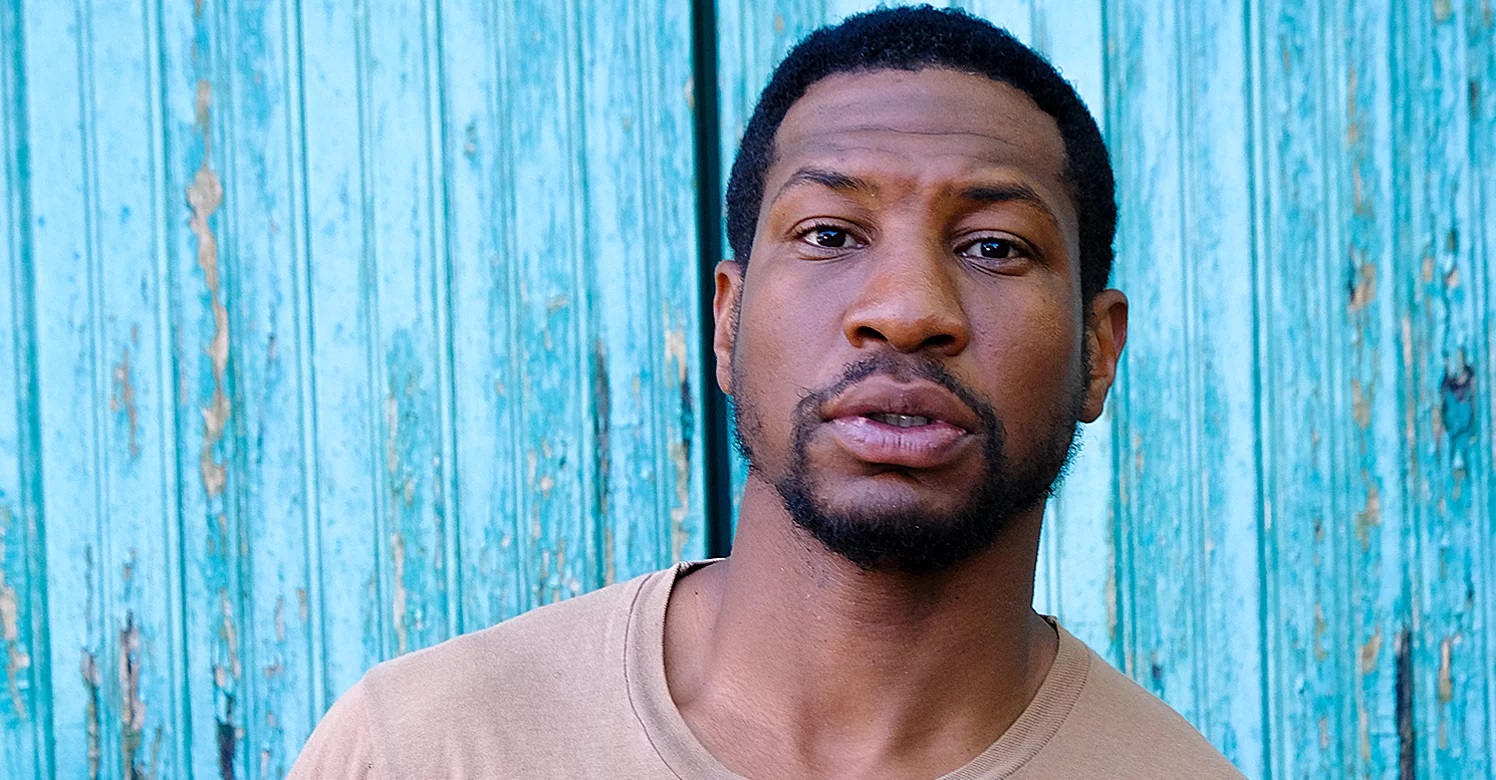
    Other than the Ant-Man franchise, the Disney+ series Loki is probably the most important project to watch before Quantumania. The finale introduced us to the first variant of Kang the Conquerer in Jonathan Majors’ He Who Remains, though “Kang” is set to make his more formal debut in the third Ant-Man film. He Who Remains provided an extremely important monologue about who he was and what would happen if variants of himself were allowed to live on. Now, we’re going to watch the consequences of Loki begin to play out, presumably all coming to an end in Avengers: Secret Wars. Quantumania may have gotten the Multiverse Saga’s most important character as its solo film antagonist, and we will surely see the actual multiverse truly come into play in the wider MCU after this film. 

    Tier Two

    The second tier of “must watches” before Quantumania is short, but it focuses on the remainder of Scott’s on-screen story as well as the Quantum Realm’s connection to the multiverse.

    4. Avengers: Endgame

    Avengers: Endgame very casually dropped the first hints of the Multiverse and the first major consequences of the Quantum Realm and quantum-related technology. Of course, the film shows another appearance of the character, and it is the first time we saw Cassie as a teenager. The father and daughter’s lost time is clearly central to Quantumania, so their reunion early in this film has major significance. A pro tip for the real fans here is that it is always best to watch Avengers: Infinity War along with Endgame, even though there is virtually no Ant-Man significance.

    5. Captain America: Civil War

    The events of Captain America: Civil War will likely not have much relevance to Quantumania’s story, but in the true MCU spirit of preparing oneself for a solo threequel, all appearances of the character should be watched. 

    Tier Three

    The third tier is (mostly) dedicated to the multiverse. While Quantumania is the first film of the second phase of the Multiverse Saga, Kang’s introduction will likely kick the stakes up a notch.

    6. Ms. Marvel

    True, Disney+ series Ms. Marvel is not related to the Multiverse. But the series (or at least the first minute or two of the first episode) is here because it mentions that Scott has become a relatively famous person and Avenger post-Endgame. The beginning of the Quantumania trailer also alludes to this fact, so this moment in Ms. Marvel is a significant connecting piece.

    what if season 2

    7. What If…?

    The entrance of Kang and the beginning of Phase 5 can only mean that the MCU’s Multiverse is actually going to start coming out to play. Whether or not it’s a major factor in the main portion of Quantumania is yet to be seen, but the fallout of the film probably carries a lot of multiversal weight. The best way to get into the multiverse mindset is to watch the only project actually dedicated to it, even if it’s at the bottom of most people’s Phase Four favorites lists. 

    8. Doctor Strange in the Multiverse of Madness

    How can you talk about the Multiverse without the film that has the word in its title? Several potential Young Avengers are present here (discussed more below), but Multiverse of Madness was the first live-action project to genuinely explore the multiverse to a significant extent. While it did not live up to all fans’ expectations, Quantumania will surely build on what we know from the Doctor Strange sequel.

    9. Spider-Man: No Way Home

    The events of Spider-Man: No Way Home are likely well-removed from the world of Quantumania, but the film is a Multiverse classic, and likely the general population’s favorite of all MCU Multiverse-centered projects to date.

    Introducing the Young Avengers

    An ongoing rumor—or, more likely, prediction—is that the Young Avengers are slowly being assembled throughout several projects. Cassie Lang’s status as a teenage superhero in Quantumania means yet another obvious candidate will be introduced. Notably, Multiverse of Madness (which is already listed above) introduced America Chavez and featured young versions of Wiccan and Speed for the second time in the MCU.

    10. Hawkeye

    Kate Bishop’s inclusion in Disney+ series Hawkeye got plenty of Young Avengers hype. Not only is she a classic Young Avenger in the comics, but the character has received by far the most attention of any of the likely future members.

    11. WandaVision

    Wanda’s children, Billy and Tommy, perhaps sparked the first rumors of a future Young Avengers project. The duo’s powers as Wiccan and Speed were also featured in the Disney+ series WandaVision, making it clear that they likely have a superhero future outside of the show.

    12. The Falcon and the Winter Soldier

    Often overlooked, another likely Young Avenger made his debut in The Falcon and the Winter Soldier. Elijah Bradley, who becomes the superhero Patriot in the comics, has a couple of brief appearances alongside the focus on Isaiah Bradley, a lost/covered-up supersoldier Bucky encountered during the Korean War.

    Why Not?

    The title of this section says it all. The following projects do have some connection (maybe) to Quantumania in some way, but those connections are extremely distant from anything particularly important. This category is for the true fans.

    moon knight kang

    13. Moon Knight

    While Disney+ series Moon Knight notably omits references to the broader MCU, one of its few Easter eggs is actually Kang-related. In its third episode, the image on the back of one of the generic goons Marc Spector fights is a reference to Kang the Conquerer’s time as the pharaoh Rama-Tut in the comics (and presumably the MCU as well).

    14. Shang-Chi and the Legend of the Ten Rings

    One of the worst connections thrown your way yet, the post-credits scene of Shang-Chi and the Legend of the Ten Rings shows that the Ten Rings have a beacon—and the Quantumania teaser trailer also featured a beacon that clearly led to the Quantum Realm and likely Kang directly. Are all beacons the same? No. But could the Quantum Realm be relevant to mystical items like the Ten Rings or Ms. Marvel’s bangles? Maybe—you should probably watch this just in case.

    15. She-Hulk: Attorney at Law

    The final two projects in this list are certainly a reach but a connection can still be made. The final Disney+ series so far, She-Hulk: Attorney at Law, teased the criminal organization the Intelligencia. While we do not know if the name is the only thing borrowed from the comics, we do know that M.O.D.O.K., a Quantumania villain, is a member of the supervillain and super-scientist organization in the comics.

    16. Iron Man 3 (AIM)

    Like She-Hulk, Iron Man 3 has a loose connection to Quantumania involving M.O.D.O.K.’s comic book history. M.O.D.O.K. has an extensive history with the criminal organization A.I.M., which was briefly introduced and teased in the final Iron Man film.

    Ant-Man and the Wasp: Quantumania hits theaters on February 17, 2023.
  • Theory Thursday: Victor Timely’s Time Has Come

    Theory Thursday: Victor Timely’s Time Has Come

    New information from insider Daniel RPK seems to have indicated that a Variant of Kang known as Victor Timely is set to make his debut in the MCU in 2023. Via his Patreon, Daniel RPK shared that Loki Season 2 will feature another new Variant of Jonathan Majors‘ Kang who is “an inventor from the past wanting to buy stuff from people to affect the future.” Though RPK added he could not confirm that this Variant will be Victor Timely, speculation about the character has revolved around that identity. This isn’t the first time the character’s name has come up, either, given that the insider teased a mention or appearance of Timely in Ant-Man and The Wasp: Quantumania. Who is Victor Timely and why are so many fans sure this is him? Fascinating questions to which there are probably multiple great answers, to be sure, and while we can’t provide the correct answer we can theorize!

    Who is Victor Timely?

    Interior art from Avengers Annual #21(1992)

    Kang is a complex villain and the convoluted and continuous retconning of the character in the pages of Marvel Comics over the years has made a true understanding of him daunting. In one respect, that’s actually worked in the favor of those penning whatever the latest adventures of the character are because they can be as mysterious and crazy as they want given pretty much nobody knows exactly what went on with Kang to begin with and when time travel is involved, anything is possible…and that is the essence of Victor Timely.

    Victor Timely’s origins come from a retcon to Kang’s story first published in 1992’s Avengers Annual #21. The issue tells the story of what happened following Kang’s first defeat at the hands of the Avengers. Kang retreated to the past, where under the alias of Victor Timely he founded a city and rose to fame as an inventor and industrialist. His work as Timely quietly shaped the century while he built a fantastical and quasi-temporal base of operations, Chronopolis, from where he could access timelines that other versions of himself had conquered. On Earth, Timely worked from a location–complete with a door that transported him to Chronopolis–and his advancements in technology ultimately put his products into every robot, cyborg and computer, allowing him full access to nearly every piece of technology on the Earth.

    Why Does Victor Timely Make Sense for the MCU at This Point in Time?

    The short answer is time. One of the reasons fans debated whether or not Kang would make for an appropriate villain in the MCU is the convoluted nature of the character’s comic book past. Marvel Studios seems to have addressed that fairly well in Season 1 of Loki by indicating that He Who Remains was the victor of a Multiversal War among Kangs who has since spent his time pruning timelines and making sure that the Multiverse doesn’t come back into existence and bring Kang Variants back with it. When Sylvie killed He Who Remains, it set loose a chain reaction of events (the repercussions of which will be explored in Season 2 of Loki) including the emergence of an infinite number of Kangs. It’s all pretty confusing, but by the time Loki Season 2 comes around, the Kang Variant that we are theorizing to be Victor Timely will have already lived a life full of experiences and opportunities we are unlikely to see in full on screen.

    By following the rules of time travel and the Multiverse as they are currently understood, should a Kang Variant travel back in time (as Timely did in the comics), it would create a Nexus Event and a new timeline. The new future for the Variant, which takes place in the past, can’t change what happened on his old timeline, but it certainly can be conquered in the new timeline. So the Avengers may have beaten that Kang, but can they beat this Kang? And what is this Kang up to? The comics–and an Easter egg from Season 1 of Loki–could give some hints.

    While the Variant of Kang set to appear in Ant-Man and The Wasp: Quantumania, Kang the Conqueror, is stuck in the Quantum Realm, he also seems to have lived quite a life already and is well aware of his multiple pasts. It’s possible that this Variant is an older version of Victor Timely. In the comics, Timely traveled time to get a head start on the Avengers by cornering the market on technology while also secretly constructing Chronopolis from where he could access all timelines. The fantastical city within the Quantum Realm that’s been seen in promotional material for Quantumania is almost certainly Chronopolis and Kang almost certainly used it for its intended purposes for a long, long time before being trapped there. It’s possible that the Victor Timely Variant of Kang set to appear in Loki Season 2 is there, in part, to explain to audiences how Chronopolis came to be and to fill in the gaps about who the Conqueror that fans meet in Quantumania is.

    If that half of Timely’s story could be adapted from the comics, the other half could be adapted just as easily. RPK’s information suggests that Timely is an inventor in the past and in a very Back to the Future twist (that’s Kevin Feige‘s favorite movie, by the way) is looking to impact the future. That future, a future in which Timely’s technology, not Tony Stark’s, is what drives the world may have already been glimpsed in the Void in Season 1 of Loki. The fifth episode of Season 1, entitled “Journey into Mystery”, revealed an alternate version of Stark Tower, Qeng Tower, had been cast into the Void following the reset of one timeline. That timeline would have been reset at the behest of He Who Remains, whose main purpose was to keep other Variants of himself from taking control. In the comics, Timely continued on by feigning death and “handing down” the company from Victor Timely to Jr. to III. It wouldn’t take much imagination to change it up in the MCU and have him “sell” the company to a new owner who might rename it Qeng.

    So why is Victor Timely right for the MCU right now? Telling his story in Season 2 of Loki after meeting him in Ant-Man and The Wasp: Quantumania not only tells the past of the Conqueror trapped in Chronopolis but also why he’ll be a threat to the Avengers in the future as the man behind Qeng Enterprises.

    What is Qenq Enterprises?

    Qeng Enterprises appeared in just a couple of comics during Mark Waid‘s 2015 Avengers: Ultron Forever but could be set to play a much larger role in the MCU. In the comics, Qeng Enterprises was the Earth-bound base from which Kang planned to launch his New Qeng Dynasty. In the MCU, it could be the equivalent of the point from which he accessed Chronopolis in the comics and the temporal location that the Avengers choose to target him as he wages his Multiversal War. In Loki, the tower has clearly taken heavy damage and given the crazy time-traveling shenanigans in play now, fans may already have seen the outcome of the Avengers’ war on the Kang Dynasty in a blink-and-you-miss-it Easter egg.

    Why is Kang Stuck in Chronopolis?

    How does a man like Kang, who has conquered so many timelines become trapped in a city of his own design? in the comics, the ability to move discretely between timelines was powered by an object of unfathomable chronal power: the Forever Crystal. More than one theory has discussed the possibility that the Forever Crystal has already been seen in the promotional footage for Quantumania and that it is the McGuffin of that film. If Scott Lang retrieves the Forever Crystal for Kang, he could put into motion the events of The Kang Dynasty.

    Summary

    The Kang Variant known as Victor Timely sets up shop on Earth, shapes a century or two through his own technology while building and then using Chronopolis to conquer other timelines. At some point in his journey, he becomes trapped in the Quantum Realm. Once he escapes, hehas enough power and/or weapons at his disposal to take on the Avengers, who had previously defeated him, he launces his attack from Qenq Tower. Looping in a previous theory, the Avengers have acquired powerful weapons (potentially created by other Kang Variants) and defeat Kang. What impact could an assault on Qeng Tower and or Chronopolis have on the Multiverse? That’s a theory for another day.

  • ‘The Last of Us’ From Game to Screen: Episode 2

    ‘The Last of Us’ From Game to Screen: Episode 2

    We are back with another edition of #GameToScreen, where we review the key differences between a video game and its adaptation. We continue with Episode 2 of The Last Of Us, Infected. You can read our veteran’s review here and our newbie’s review here, and you can yell at Charles if need be. Let’s dive right in!

    The Connection Between The Infected

    We alluded to this in Episode 1’s Game to Screen, but Episode 2 confirms the impact that the subtle change in how people are infected can have on this world. Since people are infected via the vines of other infected, then this means they are all theoretically connected. Now, this is obviously a drastic change from the games in that there is almost a symbiotic relationship between each of the infected. It, also, really gives us more questions than answers. Are they learning from each other? Is there an Infected Prime somewhere who is essentially Patient Zero?

    Tess’s Death

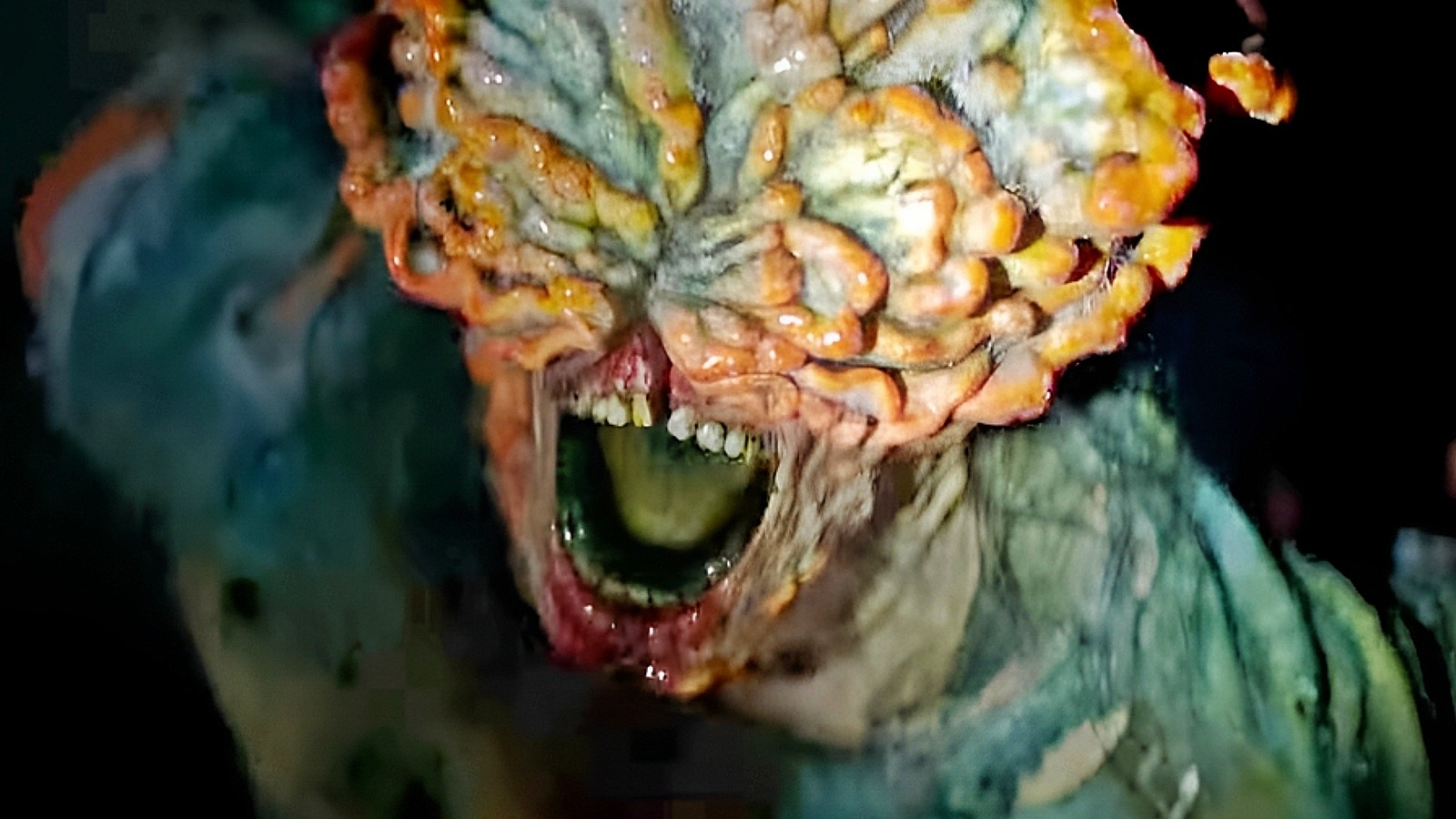
    We, also, alluded to this in last week’s Game to Screen, but changing Tess from Joel’s business partner to his business partner slash lover meant that things that were headed our way would have much different meaning. Tess dies off-camera in the games, choosing to sacrifice herself to ensure that Joel and Ellie live, though she makes sure to take everyone and everything she can with her in a flurry of gunfire. The show keeps the sacrifice, decides to remove the humans she encounters before dying, and instead sends in a mass wave of Clickers. Tess chooses to go down in a literal blaze of glory as she sets fire to herself and all the Clickers that surround her. We are, also, treated to what can only be described as a French kiss between a Clicker and Tess, which makes things very awkward. All jokes aside, having Tess die differently, albeit slightly earlier, really brings up so many questions about the fate of a lot of the characters we are going to meet. What changes to our characters await us down the road?

    Ellie’s Infection

    In the game, Ellie’s valuable in that she is immune from this airborne and by-the-bite virus. That’s right: she cannot become infected no matter how many times she’s bitten or, you know, breathes. In the show, they have already established that the way you are infected is different in the show. However, it is in Tess’s conversation with Ellie where something comes into focus: Ellie is actually infected. Tess tells Ellie, in fact, that even stepping on a vine draws the attention of multiple infected, which is fascinating considering that Ellie is very much infected in the show given that she has been struck with the vines before. Is Ellie not just the key to a cure, but also the key to finding the presumptive leader of the Infected?

    The First Clicker Encounter

    Ellie, Joel, and Tess first encounter the Clicker in the museum in Boston, during a dark night in Beantown. The show sets this encounter a little bit earlier, removes FEDRA’s presence from the encounter, and lets it play out in broad daylight. Considering this is one of the most tense situations in the game, setting it in the daytime would remove all tension, you would think, but not even a little bit: it is still very much unnerving to see Clickers for the first time, and to see them in the location you did not expect. One of the really great things about the Resident Evil remakes being released now is that they circumvent our expectations, and The Last of Us has found a way to do that in nice ways through two episodes. What other subtle changes are in store for us that change our expectations?

    Tess’s Dying Wish

    Tess, gearing up to sacrifice herself, tells Joel to take Ellie to Bill and Frank, and urges him to have them take her to the Fireflies: in the game, this just does not play out like that at all, and Frank is actually dead. Joel finds a corpse in the train station after Tess sacrifices herself, and you later discover that that was Frank who was dead. In the show, Frank is very much alive, and that introduces a new dynamic for the next episode. Tess’s instructions are for them to take Ellie to the Fireflies, while Joel can continue looking for the Ghost Rider Gabriel Luna. We will not get into Bill’s future given how spoilery it would be, but Frank’s future being re-written really has us excited.

  • A Few Oscar Predictions in A Beautifully Crowded Year

    With the start of the new year comes growing anticipation for the Oscars. Most critics groups have sent their votes in and the Oscar shortlist has been widely scrutinized. 2022 was one of the better years for feature films, especially amid the pandemic, as small-budget features and half-million-dollar projects finally made it to the screen. Everything from The Whale to Top Gun: Maverick found an audience, nationally and internationally. Below are a few films to have your eye on, specifically for a nomination and hopefully for a win. Keep in mind, these are just a few favorites among a year of great films. 

    *Denotes a shortlist nomination

    Nope 

    Categories:

    • Best Actor-Daniel Kaluyya
    • Best Actress-Keke Palmer
    • Best Sound
    • Best Original Screenplay

    After a solid debut over the summer, Nope isn’t getting as much attention as it deserves, potentially because of the horror bend and the timing of its release. The film turns the mirror and camera back on society in a fresh way and is a great follow-up to wide releases Us and Get Out. Peele and Carmen Cuba assembled a great cast for a great script. The focus of the film is sharp and nods to monster movies of the past and present. Themes of family and heritage get their focus, as does the idea of story in general and how we define it. Any nomination is deserved, but bringing home a trophy would be splendid as well.

    The Batman 

    Categories:

    • Best Sound* 
    • Best Visual Effects*
    • Best Adapted Screenplay

    The Batman, another solid debut early in the year, takes place in a new DC Universe that’s not connected to iterations before it. Matt Reeves and his team chose to craft the world of Bruce Wayne after he’s been on the job for a few years. The assembled cast doesn’t get as much screen time as one might like, but they’re great nonetheless. And though the film has an amazing score, it didn’t get shortlisted, but it’s still fun to appreciate the development of Batman as a monster, hero, and even his Bruce Wayne “mask.”

    Glass Onion: A Knives Out  Mystery

    Categories:

    • Best Supporting Actress-Janelle Monae
    • Best Adapted Screenplay
    • Best Costume Design

    Glass Onion is another great cast full of characters that work well together. When focused on the core group, the film doesn’t feel overloaded with cameos for the sake of it. More fleshed-out characters would have made the film even stronger, but their shared history, even as it’s slowly revealed, is earned. The film doesn’t blow the audience away with mystery, though the woven narrative is just mysterious enough to stay a bit ahead and entertain.

    The Fabelmans

    Categories:

    • Best Picture
    • Best Director-Stephen Spielberg
    • Best Cinematography-Janusz Kaminski

    Every nomination for Spielberg’s semi-autobiographical film could easily be a win because The Fabelmans hits all the markers: great story, great cast, great cinematography. The only expected snub will be Gabriel LaBelle, who plays Sammy Fabelman. Every actor pulls their weight in the film, even Seth Rogan, as they push the audience to reflect on their own story. The Fabelmans is a great comment on family, comparison, and perspective. 

    Black Panther: Wakanda Forever

    Categories:

    • Best Supporting Actress-Angela Bassett
    • Best Sound
    • Best Makeup and Hairstyling*

    Wakanda Forever works in an entirely different space than every other Oscar contender this year but certainly will receive at least one official nomination. Hopefully, it earns a statue, much like its predecessor. The film balances Chadwick Boseman’s passing, sequel pressure, and everything in between to craft a strong narrative about two societies that find themselves at war even though a larger threat looms in the background. Ryan Coogler, the faithful director and screenwriter, and the team crafted a tangible support system as the film both debuts Namor (Tenoch Huerta) and tastefully continues the Black Panther series.

    Everything Everywhere All At Once

    Categories:

    Best Actress-Michelle Yeoh

    Best Actor-Key Huy Quan 

    Best Supporting Actress-Stephanie Hsu

    EEAAO is the movie that could sweep the Oscars or find itself repeatedly snubbed or welcome multiple first-time award winners. The film, directed by The Daniels (Daniel Kwan and Daniel Scheinert) and starring Michelle Yeoh, Ke Huy Quan, and Stephanie Hsu, focuses on a mother’s relationship with her estranged daughter. It’s an amazing reflection on familial relationships and internal motivation, as well as life choices. The film brilliantly allows Evelyn Wang (Yeoh) to experience multiple lives at the same time instead of living one particular life over again, and of course, lessons ensue.

  • What in the End of the World Is Happening in ‘The Last of Us’?-Infected

    What in the End of the World Is Happening in ‘The Last of Us’?-Infected

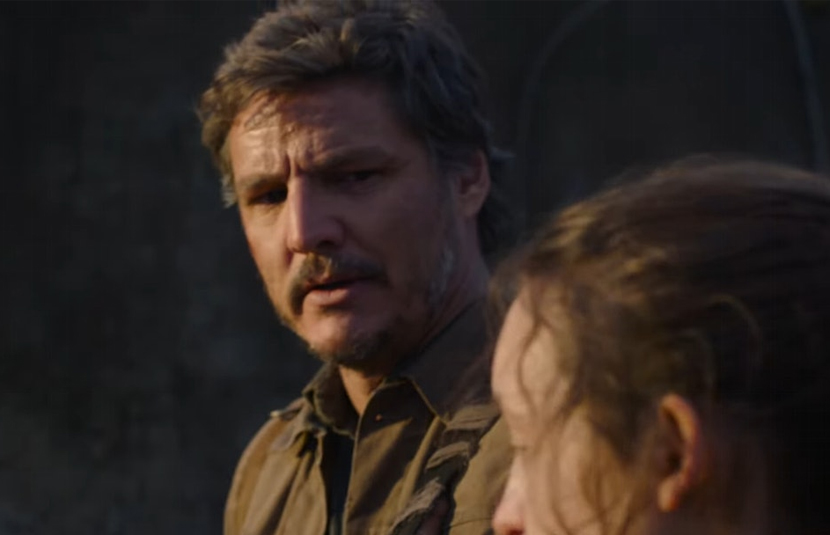
    Fans of the award-winning video game franchise, The Last of Us, have been anticipating the arrival of the HBO Max streaming series since word of the project first circulated in late 2020. Led by Pedro PascalAnna Torv (oops), and Bella Ramsey, the adaptation kicked off with an 80-minute first episode that covered a lot of ground (55 years to be exact), most of which was incredibly familiar to fans of the game and has fans of the game pretty fired up for more. But what about your average outsider? As a certified outsider, I have a lot of questions about just what the hell is happening at the end of the world in The Last of Us.

    More Damn Science

    The Last of Us is two-for-two on cold opening full of science stuff and both have done a fantastic job of foreshadowing the horrors faced by the characters that inhabit the world. The terror on the mycology professor’s face when she learned the impossible had happened and cordyceps fungi had learned to live in humans was nothing compared to the emotions of her realization that the world as she knew it was over. Amazing cold open!

    Boston

    Ellie, the Mycelium Messiah,is a mycological miracle! Once bitten, twice shy I suppose. The distrust on Joel’s part, the unwillingness to let himself believe in hope, is pretty fantastic! And I don’t know that I blame him because until we understand why Cordyceps Christ doesn’t turn into a monster, it’s easy to keep imagining she will! How does this work? The science lady said no medicine and no vaccine!

    Two things stood out to me during the time in Boston and both were very cool. First of all, even as someone who has never played the games nor seen them played, I could feel the video gaminess of the hotel and museum scenes but they were also very well done. Moving through the gross water, the dead body jump scare and crossing the wooden plank to find a new path all seemed like things ripped right from gameplay. Also, I have no idea, but I’m guessing the museum is a pretty major stop in the early part of the game. And I had no idea they were going to kill Andrea like that! Wow! This is starting to feel very, very Game of Thrones-y in that I don’t know if I want to get attached to anyone other than Joel and Ellie.

    In addition to the great job the creatives did in bringing video game stuff to the screen, the description of the fungus as one large organism followed by the demonstration of the way it works was incredible! Is that from the game? Or is that something they made up or expanded on for the series? What an element of danger it brings to everything you do. If they’re all crispy, no big deal…but if you touch even the smallest bit of one that’s still kicking, those crazy Croakers and the fungal fiends come for you. Absolutely terrifying!

    Two episodes in and I’m loving it. This feels like a story worth watching despite knowing everyone is going to die…and they probably should if they leave the safe places! Morons.

  • Rearview Mirror: A Phase 4 Retrospective-The Year with No Marvel

    Rearview Mirror: A Phase 4 Retrospective-The Year with No Marvel

    With Ant-Man and The Wasp: Quantumania set to kick off Marvel Studios Phase 5 in February, what better time to take a comprehensive look back at the ups, downs, ins and outs of Phase 4. First up, the year that wasn’t.

    Long before Avengers: Endgame hit theaters in 2019, Marvel Studios was already well into the planning stages of the Multiverse Saga. Disney Plus was set to play a major role in said saga, which looked set to introduce a slew of new heroes and villains. James Gunn’s Guardians of the Galaxy Vol. 3 was originally expected to kick off the new saga but after that went off the rails for a bit, exactly what to expect and when to expect it was a mystery until October of 2018 when the 2020 film slate was exclusively revealed to consist of only Black Widow and Eternals. When Murphy’s Multiverse went live in November of 2019, Marvel Studios had officially confirmed the news about the two films and also slated the first Disney Plus series, The Falcon and The Winter Soldier for a Fall 2020 release. 2020 wasn’t set to be the big, blockbuster opening year to Phase 4 that fans may have expected but it looked the be the calm before the storm as 2021 was set to feature 3 big films and 4 streaming series including the first animated series made by Marvel Studios…and then, before anyone could process it, Marvel Studio’s very 2020 existence was gone.

    Things started off calmly enough in January 2020 as production on The Falcon and The Winter Soldier resumed following their holiday break. The production shot scenes involving the Flagsmashers at a State Park in Georgia, did some work in the downtown Atlanta location that served as Madripoor and was scheduled to head to Puerto Rico. Then, things started to get weird.

    On January 9th, director Scott Derrickson and Marvel Studios amicably parted way on Doctor Strange in the Multiverse of Madness, which was set to begin principal photography in May. Just a couple of days later, before a second earthquake in Puerto Rico altered the course of the production of The Falcon and The Winter Soldier. By mid-January, production on one of Marvel’s 2021 streaming series, Hawkeye, which was scheduled to begin in July, had been delayed indefinitely.

    Even as all that unfolded, Shang-Chi and The Legend of the Ten Rings began filming in Australia in February and productions in Atlanta for Loki, Ms. Marvel, She-Hulk and the untitled third Spider-Man film were all on track and Thor: Love and Thunder, which Christian Bale had just joined, was set to get underway down under in October.

    By early February, Sam Raimi emerged as the front runner to take the reigns on Doctor Strange in the Multiverse of Madness as the studio remained committed to beginning production in May. Then, Hawkeye got back on schedule, booking a September start of production in Atlanta. With Puerto Rico off limits, The Falcon and The Winter Soldier was headed to Prague. All seemed good in the world…

    On March 3rd, 2020 the following information was shared to supporters of Murphy’s Multiverse Patreon:

    I expect production delays to happen. Things may begin shooting, stop shooting and begin again later. They may get pushed several weeks entirely. I believe it’s possible, even probable, that some projects may see release dates shifted. I believe it’s possible, though I can’t speak to probability here, that some projects may not release at all. I believe Disney may have to consider shutting down their U.S. parks for as little as a few weeks and as long as a couple of months (they’ve already closed parks in Hong Kong, Shanghai and Japan to the tune of a $175 M loss). None of this is good. Not even Disney can afford to keep losing money at this rate.

    By March 10th, rumors or release dates shifting started to pick up steam and by March 13th, word reached Murphy’s Multiverse that The Falcon and The Winter Soldier would not make its intended Fall 2020 release. By March 21st, Marvel Studios shut down all of its productions indefinitely (the linked article was published and available for some time before we were asked to take it down as many of the members of various crews had not been informed of the pauses on productions). The COVID-19 pandemic was in its earliest and most frightening days and like everything else, the world of Marvel Studios stopped in its tracks.

    With nothing but uncertainty staring them in the face, Marvel Studios had no choice but to start making movies. In early April, they made the first in a series of delays to their film slate pushing Black Widow from its intended May release to November and pushing Eternals into 2021. Additionally, with no clear answers about the safety of the production crews, Marvel Studios production stoppage continued with the studio eyeing a September restart.

    In early May, the Czech Republic opened back up to film crews, giving fans hope that The Falcon and The Winter Soldier might just make its 2020 release date after all. By June, things started to slowly heat up again as Hollywood and the rest of the world grew accustomed to working remotely. News of Evan Peters role in WandaVision proved to be the biggest news in months, Marvel Studios continued to search for the perfect Kamala Khan and production on The Falcon and The Winter Soldier resumed.

    As productions got back on track, so too did casting, hiring and planning for the future. Hailee Steinfeld landed the role of Kate Bishop in Hawkeye, director Nia DaCosta landed the Captain Marvel 2 gig and there was finally some movement on Marvel Studios’ Fantastic Four. Then, just as Ant-Man 3 got put on the 2022 slate, Jonthan Majors was cast in it as Kang and fans started to think just maybe they’d see Black Widow in November, the winds shifted once more. In September, as all of Hollywood shifted dates and release platforms, Disney became aware that a November release was not possible for Black Widow and began to search for a new date.

    As confidence in a theatrical release for Black Widow plummeted, hope arose that WandaVision would skip over The Falcon and The Winter Soldier and release in 2020, perhaps as early as Thanksgiving. A trailer for the project was released in late September, marking the first new Marvel marketing material of the year. Just a few days later, however, Marvel Studios officially pulled the plug on the 2020 release of Black Widow, pushing it 6 months further down the road into May 2021.

    Productions resumed and began and, alas, WandaVision didn’t quite make into 2020. By October, production had gotten underway on Spider-Man: No Way Home and in December word of Charlie Coxs role in the film was shared to the disbelief of pretty much everyone. A year that began with so much hope and saw so much struggle ended with the promise of Cox’s return.

    For those that remember it well, 2020 was all about the news and rumors as any little tidbit gave fans something to cling to while we waited to understand what was happening around us. While it was expected to be slow year for Marvel Studios, nobody could have expected it to be the year with no Marvel Studios presence.

  • Legacy Lunacy: Exploring Marvel Studios Past, Present and Future Choices when Passing the Torch

    Legacy Lunacy: Exploring Marvel Studios Past, Present and Future Choices when Passing the Torch

    As the grand experiment that is the Marvel Cinematic Universe shifted from the Infinity Saga to the Multiverse Saga, familiar faces that audiences had grown to love stepped away and heroes, both old and new, stepped up to take their places. Sam Wilson picked up the shield and became Captain America; Kate Bishop met her hero and now shares the mantle of Hawkeye with Clint Barton; Jen Walters became a better Hulk; and Yelena Belova picked up the torch in memory of her fallen sister.

    These new characters seek to continue the legacy of the characters with whom they share a moniker though they don’t always look to keep the course that was set by their predecessors. Most of these heroes look to do better–be better–than the imperfect heroes they followed into the role. Their relationships with the original heroes gave them perspective, allowing them to learn and grow from their successes and failures and ultimately choose their own direction. That’s the beauty of a well-done legacy arc, but what happens when the studio chooses to circumvent the process? Marvel Studios has made two such decisions and had decidedly mixed results. With another project on the horizon in which they may face a similar choice, reflecting on what worked well and what could (maybe should) have gone better might help the Parliament choose a bit more wisely when the time comes to choose the lead for their upcoming Nova project.

    Ant-Man

    After nearly a decade in development, Marvel Studios released Ant-Man in 2015 as the capstone to Phase 2 of the Infinity Saga. Edgar Wright and Joe Cornish began developing the script in 2006 and Wright was scheduled to direct. When Wright left the project due to creative differences just ahead of filming in 2014, Peyton Reed came on board and along with Adam McKay rewrote bits of the script. According to Reed, the “spine” of Ant-Man was still based on Wright’s work which was an adaptation of Marvel Premiere #47’s “To Steal an Ant-Man” story. Published in 1979, “To Steal an Ant-Man” saw Scott Lang steal the Ant-Man suit from original Ant-Man and founding Avenger Hank Pym just like what happened in the movie, sort of.

    Though Hank Pym was introduced in Wright’s script and Reed’s film, its protagonist is Scott Lang. Pym certainly has a history as the Ant-Man in the MCU, but it’s one only glimpsed in a few brief flashbacks and outside of inventing Pym Particles the character arguably only exists in name only. The same can be said for his wife, Janet, who was not only a founding member of the comic book Avengers like Hank but also a team leader at one point. Though her role grew in importance in Ant-Man and The Wasp and her time in the Quantum Realm will play a major role in Ant-Man and The Wasp: Quantumania, Janet, like Hank, is Janet in name only.

    Wright’s development on the film began in 2006, a full year before Marvel Studios hired Zak Penn to write the script for The Avengers. In 2010, Joss Whedon signed on to direct and rewrote many iterations of the script, including one that included The Wasp as a key member of the team before removing her in favor of Black Widow. It’s unclear exactly how the slow development of Wright’s film may or may not have impacted the script of The Avengers, but what is clear is that Ant-Man didn’t release until 2015, and by that time a second Avengers film, Age of Ultron, had been released as well. So what did the decision to focus on comic book legacy character Scott Lang as the MCU’s Ant-Man ultimately cost Hank Pym?

    Skipping over Hank and Janet in favor of Scott and Hope cost the MCU’s adaptation of Earth’s Mightiest Heroes two of its founding members. Additionally, the fact that the long-gestating Ant-Man wasn’t released before Avengers: Age of Ultron meant that Whedon had to replace Pym as the creator of Ultron, the villainous AI created by Hank Pym in the comics. Hank and Janet still got to exist, albeit not in their prime, but the opportunity exists for the adventures of their younger days to be told should Marvel Studios choose.

    Despite all that, Marvel Studios seemingly struck gold with the decision to focus on a legacy character rather than the original. The casting of Paul Rudd as Lang certainly played a large role in that and the large role Lang was able to play because of Rudd’s overwhelming likability has made the character an MCU fixture. Though Marvel skipped over telling the stories of Hank and Pym, the character of Ant-Man has become so integral that the third film in the franchise features the main villain of the Multiverse Saga.

    Captain Marvel

    In 2013, Marvel Studios began developing a Captain Marvel project and a year later, revealed it would become the studio’s first female-led film. The script, which initially took inspiration from Roy Thomas‘ classic Kree-Skrull War comics, passed through multiple writers before Geneva Robertson-Dworet, along with co-directors Anna Boden and Ryan Fleck finalized it. By that time, the Kree-Skrull War had gone from inspiration to the “backdrop and mythological underpinning” of the film, according to producer Jonathan Schwartz, and Kelly Sue DeConnick‘s 2012 Captain Marvel run became a major source of inspiration for the film.

    In 2019, Marvel Studios skipped over five (sorry Skrull imposter, you don’t count) Captains Marvel to introduce Carol Danvers as the hero in Captain Marvel. The first of those Captains was Marvel’s first true Cosmic hero, the Kree warrior Mar-Vell who, over the years, developed a relationship with Carol. In 2012, DeConnick explained that her series would find Carol contemplating the legend of Captain Marvel and what it meant to her before choosing to take the name Captain Marvel in honor of the hero. Between Mar-Vell and Carol, Monica Rambeau, Mar-Vell’s children, Genis and Phyla and Noh-Varr all went by the name Captain Marvel. A character named Mar-Vell, who shared no similarities with the comic book hero, played by Annette Bening, appeared in Captain Marvel and briefly interacted with Carol Danvers.

    Captain Marvel majorly overhauled the origin story of Carol Danvers but ultimately the character came outof the oven as a pretty good copy of her comic book counterpart. However, in the rush to establish Carol Danvers as a major player in the MCU, Marvel Studios completely ignored the vaunted history of Mar-Vell and in doing so may have set themselves up for a cascade of alterations to other characters and stories in the future. While there are plenty of strange concepts that are part of Mar-Vell’s comic book history that would be better served being left in the books, the character was inarguably one of Marvel’s greatest Cosmic heroes. At one time, Mar-Vell served Eon as the Protector of the Universe and his ongoing participation in the Kree-Skrull War, which was greatly diminished for the MCU, had consequences that extended beyond his death. So what did the decision to focus on comic book legacy character Carol Danvers as the MCU’s Captain Marvel ultimately cost Mar-Vell and the other Captains Marvel?

    At the moment, it would seem the greatest cost to Mar-Vell would ironically be legacy. Mar-Vell died years ago in the comics, but his legend has lived on and his legacy carried by his children. Without greatly retconning Bening’s Mar-Vell, it’s hard to imagine that Dorek-Vell/Hulking/Teddy Altman, Phyla-Vell/Quasar and Genis-Vell will be her children. While they’re all incredibly important characters, Teddy’s hidden heritage as the son of the great Kree hero Mar-Vell and Princess Anelle of the Skrull Empire is one of the great twists in Marvel Comics’ history and a major part of the character’s ongoing arc. Teddy, under the name Dorrek-Vell, now rules over the combined Kree-Skrull Empires after having put an end to eons of war. With the Young Avengers just around the corner in the MCU, it would seem this entire fascinating arc couldn’t be done without undoing quite a bit first.

    Carol Danvers is a major player in the pages of Marvel Comics and absolutely deserves to be one in the MCU. Marvel Studios landed a huge star in Brie Larson for the role and it’s expected that she’ll be at the forefront of the action as the Multiverse Saga continues to unfold beginning in The Marvels. That film features Monica Rambeau, who was the second Captain Marvel in the comics, and Kamala Khan who was a legacy character to a legacy character in the comics, taking the name Ms. Marvel to honor her idol Carol. The rush to get Carol in the MCU spotlight also greatly changed the Kamala and Carol dynamic (Carol has never been Ms. Marvel in the MCU) and Kamala’s status as Carol’s biggest fan feels forced given there’s really no reason anyone on Earth would know much about Carol much less everything. To date, other than flying through a ship, Carol’s Captain Marvel has not taken her rightful place as a top tier MCU character, calling into question if the overall ongoing narrative may have been better served by introducing Mar-Vell, focusing more on the Kree-Skrull War and allowing Carol to come into her own over the course of a few years, much in the way they have finally worked Peter Parker into a place where he can be a more comic accurate Spider-Man.

    A Man Called Nova…But Which Man?

    Though every industry insider has different insight into how the character will enter the MCU, Nova is entering the MCU sometime in the near-ish future. Sabir Pirzada, who worked on Moon Knight, began work on a Nova project early in 2022 and at one point insider KC Walsh shared that production on that project was set for 2023. Whether production on the movie/series/special presentation starts in 2023 or 2024 or not, Marvel Studios has already made a decision that will greatly alter how the project is perceived…we just don’t know what they chose.

    With Mar-Vell out of the spotlight, Richard Rider became Marvel Comics greatest Cosmic hero over an amazing multi-year run beginning in 2007. Rider grew from a teen who randomly found himself the recipient of a Nova Corps helmet that gave him incredible powers and bopped around with the New Warriors into a man whose body contained the entirety of the Nova Force, rebuilt the Nova Corps following the destruction of Xandar, led the defeats of Annihilus and Ultron and ultimately sacrificed himself to save the entire galaxy. Rider is a fascinatingly complex character who has developed tremendously over the years and could easily be the face of MCU’s Cosmic corner for a decade.

    Introduced in 2011, Sam Alexander is a legacy character in more ways than one. The son of a secret black ops arm of the Nova Corps, Sam became the second Marvel Comics character to go by the title of Nova. Sam grew up with no notion that his missing father was a Nova but with the help of Rocket and Gamora discovered his father’s helmet and begin learning how to master its incredible powers. Sam quickly found himself in some incredible situations, saved the entire Nova Corps and joined the group of young heroes called the Champions. Alexander is still portrayed as arrogant and immature, is essentially about where Rider was as a character during his days as a New Warrior and at this point would seem to fit the MCU better as part of a team of young heroes.

    Though it hasn’t been revealed to the public, Marvel Studios has already determined which of these heroes will be introduced to the audience as Nova. Whether Rider or Alexandar is the star of Pirzada’s script, the writer would have some cleaning up to do thanks to James Gunn. Gunn introduced the Nova Corps in Guardians of the Galaxy, though they were reduced to mall cops with shiny helmets who held onto the Power Stone until Marvel Studios figure out what they wanted to do with it. There was no mention of the Worldmind of the Nova Force in the movie, two integral components of the Corps in the comics, and they have never been seen nor referenced again. It’s possible Pirzada‘s job was made somewhat easier when the writers of Avengers: Infinity War allowed Thanos to retrieve the Power Stone from them off screen. In a rare case of Marvel writers lobbing a softball to their successor, Christopher Markus and Stephen McFeely have given Pirzada the chance to start from scratch to some extent. Xandar has been decimated more than once in the comics, including by the Annihilation Wave, and been rebuilt from the ashes into something new, an idea that may be central to Pirzada’s Nova project.

    If part of the Nova project’s plot focuses on rebuilding Xandar, that’s certainly a job for a more mature, veteran Nova, much like Richard Rider was when he took on the task in the comics. However, Richard Rider hasn’t existed in the MCU just yet, much less become a hardened Nova vet. Then, of course, there’s the issue of addressing the powers given to members of the Nova Corps by the Nova Force, which also doesn’t exist in the MCU. Rider first got his powers when a dying Rhomann Dey (played in the MCU by John C. Reilly) handed off his helmet following the destruction of Xandar. As stated previously, Alexander first got his powers after finding his father’s helmet. While the Dey-Rider handoff could happen, there would have to be some retconning done to explain any powers that come with the helmet. Fortunately, the Nova Corps had possession of the Power Stone for quite some time and any number of experiments could have been done to power up the Corps. Of course, if that had been the case, one would think they’d have done a little better job of stopping Thanos, but Pirzada can only work with what he’s handed. Alexander’s story is a little more difficult to retcon. Even if the Nova project were set in 2026 and his father, Jesse, was a victim of the Snap, Alexander would have to have been born between 2008-2011 or so to be old enough to be a high schooler. As far as MCU lore is concerned, there were no powered Nova’s then, much less a super-powered black ops team. Gunn has left quite a mess to be sorted out.

    Major mess aside, the choice Marvel has already made but not shared in terms of which character MCU audiences will come to know as Nova most likely came down to how they plan to use the character. If they want a great Cosmic hero, the choice should be Rider; if they want a teen to team up with other teens, the choice should still be Rider, who was introduced as a teen in 1976, but would probably be Alexander. In skipping over Rider and going straight to Alexander, Marvel Studios runs the risk of not only angering comic book fans (even though it’s only 2% of MCU audiences, including me) but also finding the character written into more corners in the future as they have with Hank, Janet and Mar-Vell. Alternatively, they could follow what’s been a much more successful approach to legacy characters by establishing Rider, allowing him to become a great Cosmic hero, shift to him mentoring Alexander and then having Alexander assume the mantle later.

    Truthfully, there’s no logical reason for Marvel to have chosen Alexander over Rider, though the lack of logic won’t have prevented them from doing so. Alexander’s Nova hasn’t sold more comics or been more popular and most MCU fans probably don’t have any idea who either of these characters are, much less favor one over the other. Rider’s story as the champion of Xandar and then the galaxy has already been written and would be incredibly easy to adapt to the MCU. Establishing him as a core hero for a few years and then pairing him with Alexander would ultimately make for two strong characters rather than one as their bond would deepen and enrich both of their MCU narratives. Should Marvel Studios chose to follow the example from the comics and have Rider sacrifice himself to save the galaxy, audiences would be heartbroken and Alexander would find himself in an emotional space ripe for telling compelling stories. Such a choice would allow the legacy character to become a legacy character and allow the legacy character to earn the legacy right in front of the audiences’ eyes. If it’s good enough for Hawkeye, it’s good enough for Nova!

    As we all wait to find out together which route Marvel Studios has chosen for Nova, which route would you prefer? We would love to hear your thoughts!

  • ‘The Last of Us’ From Game to Screen: Episode 1

    ‘The Last of Us’ From Game to Screen: Episode 1

    The Last Of Us debuted last Sunday to resounding applause, as the videogame adaptation starring Pedro Pascal and Bella Ramsey was celebrated for its faithful recreation of the source material as well as the performances of the cast. Every week, we are going to highlight the differences between the video game and the show, as we gauge whether The Last of Us follows the blueprint of another HBO smash in Game Of Thrones in respecting its source material before potentially setting it on fire. We begin Game to Screen with episode one of The Last Of Us, which only had one major difference with how the game opened but some subtle differences that may impact the larger story. 

    In Naughty Dogs’ The Last Of Us, we get a prologue where we see Joel’s daughter Sarah killed by a soldier, and die in Joel’s arms. That’s it, really. However, the show expands on her scenes so that the death hits even harder than it did in the game. In the show, we see her at Joel’s birthday party, visiting friends, baking, and being a more well-rounded character than we saw in the games. Nico Parker deserves a ton of credit for making such a lasting impact in such little screen time. Joel’s relationship with his daughter is deepened by these additional scenes in a very poignant manner. 

    Speaking of deepening relationships, the show does a great job of deepening the dynamic between Gabriel Luna’s Tommy and Pascal’s Joel. In the game, their relationship after the death of Sarah is virtually non-existent until they run into each other while Joel is taking Ellie to the Fireflies. In the show, we see Joel doing what all brothers do: spending time with each other and then bailing your brother out of jail over a bar fight. All in all, the changes are subtle but they do add more depth to someone who may play a bigger role down the line. 

    Another interesting difference between the game and the show is that Joel and Tess are explicitly romantically linked in the show whereas the game just toyed with the idea. In the games, she is his business partner who helps him smuggle things into Boston, but the show adds another layer to their relationship that really didn’t exist in the games. This makes a lot of potential future events that much more interesting, and it sets the stage for some hard decisions to have to be made by our characters given their new proximity to each other. 

    Lastly, a subtle change is how the virus is transmitted. In the game, the person who is carrying the virus has to bite someone or pass the virus through airborne spores. It’s why Ellie’s immunity is so impressive, in that she has both survived repeatedly being bitten and has not caught the virus via breathing. In the show, poison-ivy-like vines transmit the virus from a carrier to a victim, with the reasoning given that the showrunners loved the idea of each victim being connected by the host of the vine that infected them. 

  • Jonathan Majors is Here To Conquer The MCU

    Jonathan Majors is Here To Conquer The MCU


    The Marvel Cinematic Universe has been no stranger to great expectations. As we’ve gone through each phase the hype has grown to an impossible level to measure. From YouTube Easter eggs to fan theories and fan casts there’s been a bit of disappointment. Whether it’s warranted or not we have arrived at an interesting point as MCU fans. Phase 5 begins with Ant-Man and The Wasp: Quantumania and there’s a high level of anticipation. Sure, it’s great to see Scott, Hope, Cassie, and the rest of the crew. However, we know why we’re really here and his name is Kang.

    Kang The Conqueror is synonymous with greatness. He is one of the greatest villains of all time, and one of the more fascinating characters in comic book lore. He’s time-bending; he’s mind-bending; he’s a threat unlike any other in Marvel. When time travel was introduced in Avengers: Endgame, the thought for many fans who are studious to this is that Kang could not be far behind. Lo and behold, he is here. Now take this into consideration, when you are casting for this role you need a heavy hitter. You need the best, the absolute best. Enter Jonathan Majors.

    At the end of Loki Season 1, at the end of time, both Loki and Sylvie were introduced to He Who Remains, a variant of Kang, who had been pulling all the strings. Before his death at the hands of Sylvie, He Who Remains shared some weighty thoughts. “You may hate the dictator, but something… far worse is gonna fill that void if you dispose of him. I’ve lived a million lifetimes. I’ve gone through every scenario. This is the only way.” These are words we hung on and were captivated by. The delivery, the playfulness, and the all-knowing fatigue of that power was mystifying. We’ve seen great performances in the MCU, wrought with great emotion and full of surprises. This was the most electrifying performance we’ve seen to date in the franchise.

    There’s a level of expectation to deliver that Majors superseded. The bar has been raised. This wasn’t even the actual character that he was playing. Just a version. One, singular version. Kevin Feige and Co. have made a decision to build this saga around this gentleman and it will pay off in spades. We are not prepared for what we are about to see. You just have to sit back and enjoy it. If you want variants you’re getting them. If you want a compelling character you’re getting that tenfold. You’re probably saying to yourself that this is overhype, this is hyperbole. It’s not. In fact it’s underselling the point.

    To make a bit of a comparison, there’s a conversation when it comes to Denzel Washington as an all-time great that in his movies he’s always Denzel. It’s an endearing quality that we love to mention. Jonathan Majors disappears into his roles. Like a chameleon, you only know the character and the person is replaced. There’s a specific scene in The Last Black Man In San Francisco that explains what can’t be explained here. If you get a chance watch that movie, and if you have relive this scene.

    When you watch this scene you understand the talent and why he was chosen to anchor Phase 5 of the MCU. In an interview with Empire magazine, Majors discussed playing the villain and what that entails. “Kang adds tonal diversity, real conflict and real friction,” he promises. “You’re being introduced to a new vibration in the MCU. There’s conflict – not just mano-a-mano, not just hero and villain, but your way of life’ and ‘my way of life’. I’m coming for it. We’re in battle here.” That sounds like someone ready to wear the crown.

    Usually, with a villain, we have a foreboding sense of fear of what might happen. As fans, you can feel the level of excitement when Kang is mentioned, theorized about and discussed. We just know we’re getting something special, and this is why we go to the movies.

    It is extremely rare to feel ready to sit back and watch greatness. There won’t be a worry and there won’t be a thought about whether Quauntumania has a bad post-credit scene or was too long or too short. There will be a moment when the MCU once again raises expectations for us and then they are met because they chose the right man to lead the way. You’re out of your league, Ant-Man. It’s just another reminder that Jonathan Majors is here to conquer, for all time.

  • The Batman Part II

    The Batman Part II

    Premiere: October 1, 2027

    One month before The Batman was released in theaters in March 2022, director Matt Reeves confirmed plans for a sequel with Matt Tomlin co-writing the film with him. In January 2023, it was revealed that the sequel would be produced under DC Studios Elseworlds banner and hit theaters on October 3, 2025. In March 2024, the release date was moved to October 2, 2026. Then, on December 27, 2024, it was rescheduled again, with WB slating it for October 1, 2027.

    Cast

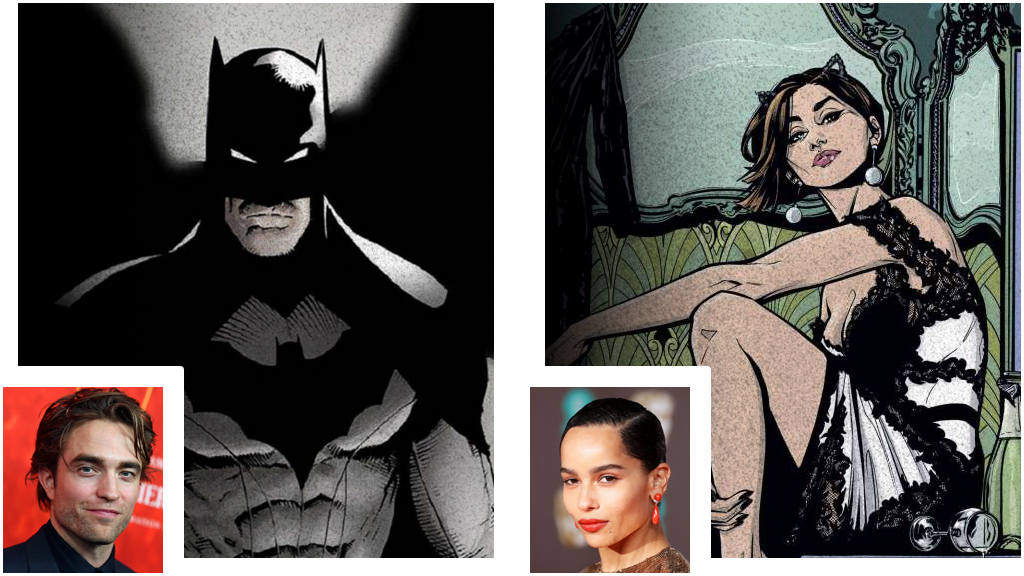
    • Robert Pattinson as Bruce Wayne/The Batman
    • Zoe Kravitz as Selina Kyle/Catwoman (unconfirmed)
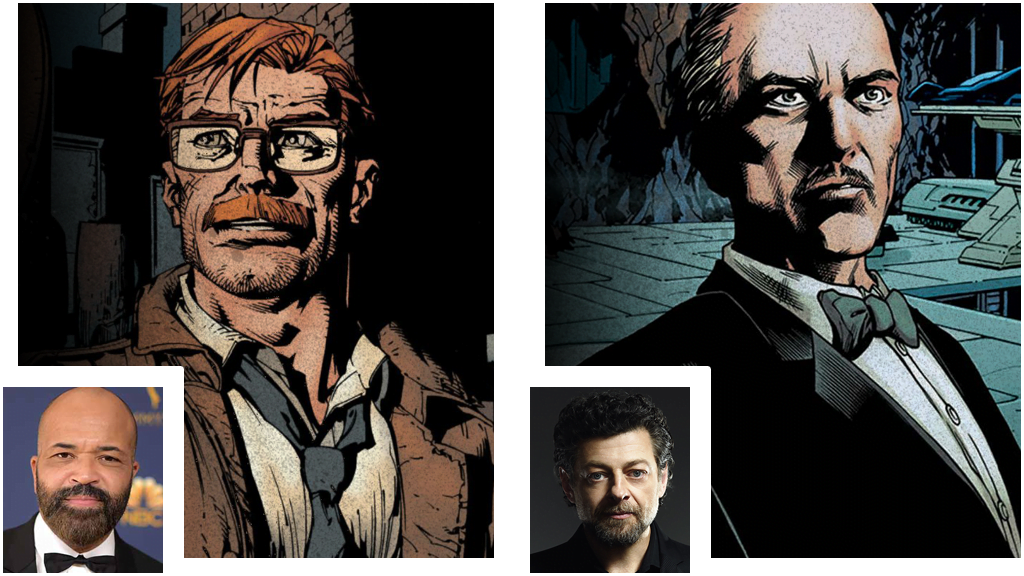
    • Andy Serkis as Alfred Pennyworth
    • Jeffrey Wright as Jim Gordon